
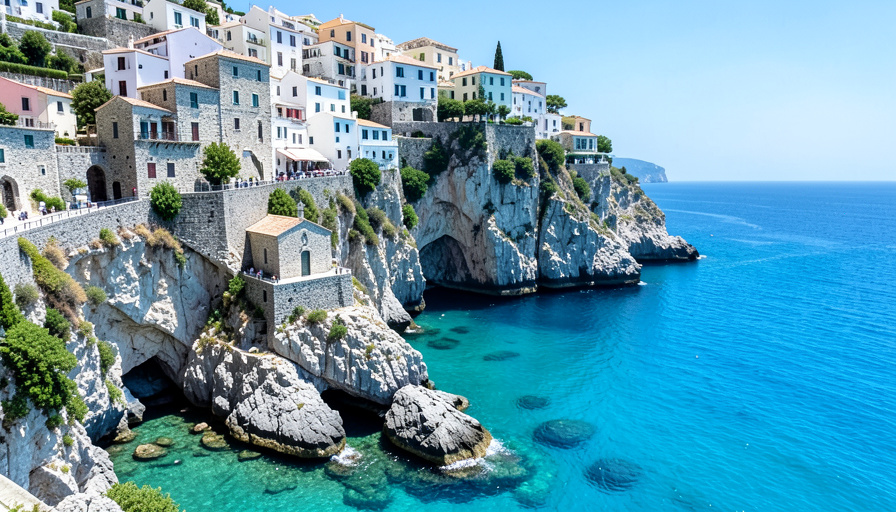
Everybody’s Italy trip seems to hit the same three stops: Rome, Florence, the Amalfi Coast, elbow to elbow with everyone else’s trip. Meanwhile, down in the toe of the boot, Calabria sits mostly empty, with sea so clear people keep comparing it to the Caribbean.
Calabria is the part of southern Italy that the big itineraries skip, and that is exactly its appeal. It is cheaper than the north, far less crowded, a little rough around the edges, and rich in beaches, mountains, ruins, and some of the boldest food in the country. If you are the kind of traveler tired of paying more to see the same postcard as everyone else, this is a strong answer. Here is what Calabria offers, when to go, and the honest trade-offs of choosing the road less booked.
At a glance
Calabria forms the toe of Italy’s boot, a peninsula between the Tyrrhenian and Ionian seas. Its headline draw is the coast around Tropea and Capo Vaticano, with white beaches, red cliffs, and famously clear water, but there is also serious mountain country in the Sila and Aspromonte national parks, ancient Greek history in Reggio Calabria, and a spicy, distinctive food culture built on ‘nduja and the sweet Tropea red onion. It is best in the shoulder seasons for smaller crowds, easiest with a rental car, and rewards travelers who do not mind less English and a slower pace.
Table of Contents
Where it is, and why it is worth the detour
Calabria is the southernmost mainland region of Italy, the toe kicking the island of Sicily across a narrow strait. That remoteness is the whole point. Because the mass-market crowds pool in the north and around Amalfi, Calabria stayed cheaper and quieter, which we think makes it one of the better antidotes to the sameness that has crept into popular travel. If you have felt that so many destinations now blur into one identikit experience, a subject we dug into in our piece on why everywhere you travel looks the same now, Calabria still feels like a specific place with its own character rather than a backdrop for photos.
Tropea and the coast
The coast is what pulls most people south, and Tropea is its star. The town sits on a cliff above a bright turquoise bay, with the little church of Santa Maria dell’Isola perched dramatically on a rock below. Just down the road, Capo Vaticano has coves where the cliffs drop into water clear enough to earn those Caribbean comparisons, with excellent snorkeling. Nearby, Scilla’s Chianalea quarter is a tiny fishing village with houses rising straight from the sea, and Pizzo is worth a stop for its clifftop old town and its famous tartufo ice cream. As a rough rule, the western Tyrrhenian coast is the rockier, clearer, more photogenic side.
Beyond the beaches
Calabria would be worth it for the coast alone, but the interior is the part people underrate. In Reggio Calabria, the National Museum of Magna Graecia holds the Bronzi di Riace, two extraordinary ancient Greek bronze warriors pulled from the sea and among the finest surviving works of their kind. Inland, the Sila and Aspromonte national parks offer real mountains, forests, and hiking, a cool contrast to the beaches only an hour or two away. Hill towns like Gerace and the old center of Cosenza reward anyone who likes wandering stone lanes without a tour group in sight. It is a region you can genuinely mix: sea in the morning, mountains or history in the afternoon.
The food is the sleeper attraction
Calabrian cooking is bold, rustic, and proudly spicy, and it might be the thing you remember most. The signature is ‘nduja, a soft, spreadable, fiery pork sausage that goes on everything, alongside sharp caciocavallo cheese and liberal use of the local peperoncino chili. The cipolla rossa di Tropea, a sweet, mild red onion grown only around Tropea, turns up in everything from salads to jam and even gelato. Add hand-rolled pastas, fresh swordfish along the coast, and regional oddities like licorice and bergamot, and you have a food scene that costs a fraction of what you would pay up north for something far more famous and often less interesting.
When to go and how to get there
Timing is where you protect the “uncrowded” part. High summer, especially August, brings Italian holidaymakers to the beach towns and the one stretch where Calabria does get busy, so the shoulder months on either side generally mean warm water, good weather, and far fewer people. For access, the regional airport at Lamezia Terme is the usual gateway, with trains connecting down from Naples and Rome, though the journeys are long. Once there, a rental car is close to essential, since the best coves, hill towns, and parks are scattered and public transport is patchy. Plan to drive, and the whole region opens up.
The honest trade-offs
Calabria is not a polished, frictionless destination, and pretending otherwise would do you no favors. English is less widely spoken than in tourist-heavy regions, so a few Italian phrases go a long way. Public transport is limited, some towns feel worn rather than manicured, and even here the marquee beaches fill up in August. The flip side is exactly what makes it special: lower prices, thinner crowds, and a sense of a real place living its own life rather than performing for visitors. If you want everything smooth and in English, go north. If you want value, space, and character, this is the trade worth making.
Frequently asked questions
Is Calabria worth visiting?
Yes, especially if you want a quieter, cheaper, and more authentic side of Italy. It offers striking beaches around Tropea, mountain national parks, ancient Greek history, and bold food, with far smaller crowds than Amalfi or Tuscany, in exchange for a rougher, less polished experience.
What is Calabria known for?
Its dramatic coastline around Tropea and Capo Vaticano, the Bronzi di Riace bronzes in Reggio Calabria, the Sila and Aspromonte national parks, and a spicy food culture built on ‘nduja sausage, peperoncino chili, and the sweet Tropea red onion.
When is the best time to visit Calabria?
The shoulder seasons on either side of summer usually offer warm water, good weather, and fewer crowds. August is the busiest, when Italian holidaymakers fill the beach towns, so travelers seeking quiet often avoid it.
How do you get to Calabria?
The main gateway is Lamezia Terme airport, with train connections down from Naples and Rome, though those trips are long. A rental car is close to essential once you arrive, since the best beaches, hill towns, and parks are spread out and public transport is limited.
Is Calabria good for beaches?
Very. The Tyrrhenian coast around Tropea and Capo Vaticano has clear, blue water and coves often compared to Sardinia or the Caribbean, with excellent snorkeling. The beaches are a major reason travelers head this far south.
The bottom line
Calabria is what a lot of travelers say they want but rarely book: an Italian region that still feels like itself, with world-class beaches, real mountains, deep history, and unforgettable food, all at southern-Italy prices and without the crush. It asks a little more of you in language and logistics, and it rewards that with space and character the famous spots lost years ago. Go in the shoulder season, rent a car, and eat everything. For more destinations off the usual track, browse The Other Stream’s Travel section.