

Can ACH be reversed? When a client’s ACH payment can still come back, how instant payments on FedNow and RTP differ, and what freelancers can put on an invoice to avoid payment surprises.
The client says they paid. Your invoicing tool marks the invoice settled, and you send the final files. Four days later, the payment comes back. It happens more than people expect: in August 2026, a landlord on Reddit described a tenant’s rent showing as paid in the portal for four days before the ACH was returned, leaving both sides confused. If you get paid by bank transfer, knowing when ACH can be reversed, returned or disputed tells you when money is yours to keep, and when an instant payment is the safer ask.
In Brief
ACH can be reversed, but only in narrow cases. The sender can reverse a payment within five banking days to fix its own error, such as a duplicate or wrong amount. Payments can also be returned when they cannot be posted, and ACH debits can be disputed. Instant payments on FedNow and RTP are final and irrevocable once sent, so they suit deposits and final invoices.
Table of Contents
Can ACH be reversed? Three ways the money comes back
“Reversal” gets used loosely, but in the ACH network it means something specific. Nacha, which writes the ACH rules, explained the difference in an August 2026 guide to reversals.

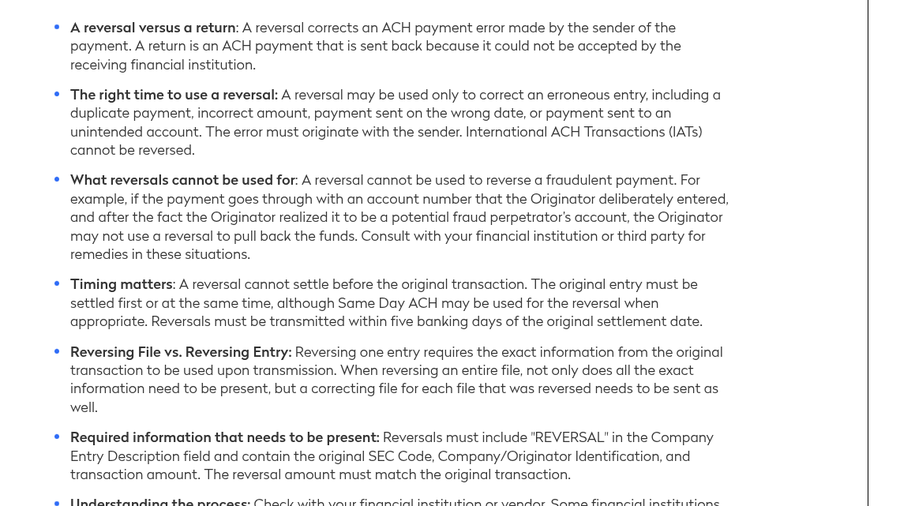
- A reversal corrects the sender’s own mistake. It is allowed only for a duplicate payment, an incorrect amount, a payment sent on the wrong date or a payment sent to an unintended account. It must be sent within five banking days of the original settlement date. Nacha is explicit that a reversal cannot be used because the sender wants to cancel a payment or disputes a legitimate one.
- A return happens when the receiving bank cannot accept the payment, for example because of insufficient funds or a closed account. That is what the landlord’s portal ran into.
- A dispute applies when you pull money from a client’s account through an ACH debit. Stripe’s ACH Direct Debit documentation lists a 60-day dispute window and notes that success or failure can take up to four business days to confirm.
For freelancers, the practical meaning is simple. If a client pushes an ACH credit to you, it can only come back for the client’s own error within five banking days. If you pull the payment as a debit, the window is much longer.
ACH vs instant payments at a glance
| Question | ACH (standard and Same Day) | FedNow and RTP |
|---|---|---|
| Speed | Same day to a few business days | Seconds, any time of day |
| Can the sender take it back? | Only to fix its own error, within five banking days | No, payments are final and irrevocable |
| Can it bounce? | Yes, returns for reasons such as insufficient funds | No, funds move only if they are available |
| Dispute risk when you pull funds | Yes, with ACH debits | Not applicable, the payer sends it |
| Per-payment limit | Set by banks and processors | Network limit raised to $10 million in 2025 |
| Availability | Almost every U.S. bank account | Only at participating banks and credit unions |
The Federal Reserve’s FedNow product sheet describes its payments as “final and irrevocable.” That is the upside and the risk: once you receive an instant payment, the client cannot pull it back, but a client who sends it to the wrong account cannot easily recover it either.
What the 2026 numbers say
ACH is still the default. Nacha’s network statistics show 35.2 billion ACH payments worth $93 trillion in 2025, up nearly 4.9% from 2024. Same Day ACH reached 1.4 billion payments.
Instant payments are growing from a much smaller base. According to a Richmond Fed economic brief from August 2026, RTP processed 128 million transactions worth $480 billion in the first quarter of 2026. FedNow had 1,725 participating banks and credit unions, about 19.7% of U.S. financial institutions. The brief also notes that services like Zelle feel instant but have historically settled much of their volume through ACH.
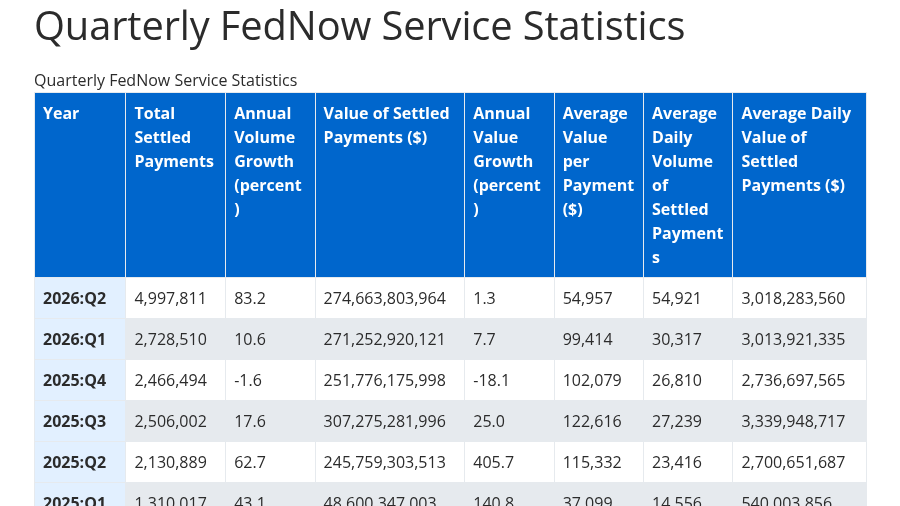
FedNow’s own figures show 4,997,811 settled payments in the second quarter of 2026, up 83.2% from a year earlier. The practical takeaway for freelancers: your client’s bank may not offer instant payments yet, so ask before you make it a requirement.
Wrong accounts and name mismatches
Bank transfers route on the routing and account numbers, so a single typo can send money to a stranger. In May 2026, a worker on Reddit described a paycheck landing in the wrong account because of a typo in their direct deposit setup, with the employer and bank each pointing to the other. Commenters noted the employer could send an ACH reversal within five banking days, which matches Nacha’s rule on payments sent to an unintended account. With an instant payment, that window does not exist.
Fraud adds another layer. In an August 2026 thread about a misdirected government payment, one commenter warned that fake bank-change requests sent from compromised email threads are among the most common attacks on contractors. Our list of vendor bank-change requests that are almost always fraud covers the warning signs.
An invoice checklist that prevents payment surprises
- Match names exactly. Put your legal or business name on the invoice exactly as it appears on the receiving account.
- Share bank details securely. Send them through your invoicing tool or a secure portal, not in a plain email that can be copied or altered.
- Confirm changes by phone. If you ever change accounts, call the client, and ask clients to call you before acting on any emailed change.
- Add a clear reference. Ask clients to include the invoice number in the payment memo so you can match it quickly.
- Get written authorization for debits. If you pull payments by ACH debit, keep the client’s signed authorization and your agreed terms, since they are your evidence in a dispute.
- Wait for settlement on big deliverables. For new clients paying by ACH, release final files after the payment clears rather than when your invoicing app first says “paid.”
- Ask for instant payment on deposits. For project deposits or rush jobs, request FedNow or RTP if the client’s bank supports it.
For more on keeping payment records clean, see our explainer on whether an invoice spreadsheet can cause duplicate autopay charges and our guide to fake invoice tactics that trick small businesses.
This article is for general information only and is not financial or legal advice. Payment rules, bank policies and processor terms vary, so confirm details with your bank or payment provider before relying on them.
What Matters Most
- An ACH credit can be reversed only to fix the sender’s own error, within five banking days.
- ACH payments can also be returned when they cannot be posted, and ACH debits can be disputed for longer.
- FedNow and RTP payments are final and irrevocable, but not every bank offers them yet.
- Exact names, secure bank details and phone-confirmed changes prevent most payment problems.
Frequently Asked Questions
Can an ACH payment be reversed after it clears?
An ACH payment can be reversed after it settles only to correct the sender’s error, such as a duplicate or wrong amount, and only within five banking days of the settlement date. A sender cannot use a reversal to cancel a payment it simply regrets.
Can a FedNow or RTP payment be reversed?
FedNow and RTP payments cannot be reversed by the sender because they are final and irrevocable. If money goes to the wrong account, the sender has to ask the receiving bank or recipient to send it back.
What is the difference between an ACH return and an ACH reversal?
An ACH return happens when the receiving bank cannot accept a payment, for example because of insufficient funds or a closed account. A reversal is initiated by the sender to correct its own mistake.
How long does a client have to dispute an ACH debit?
The dispute window depends on the processor and account type. Stripe, for example, lists a 60-day dispute window for ACH Direct Debit payments.
Is Same Day ACH the same as an instant payment?
Same Day ACH is faster than standard ACH but still settles in batches and follows ACH return and reversal rules. FedNow and RTP settle individual payments within seconds and are final.
Final Word
Treat an ACH payment as final only after it settles, and remember that debits you pull can be disputed for weeks. For deposits and final invoices from new clients, ask whether their bank supports FedNow or RTP. Whatever the rail, confirm bank details by phone and put the invoice number on every payment.