

How to check if a doctor is in network before you book, using five free tools, the questions that catch billing surprises and the federal protection that applies when your plan’s directory is wrong.
In January 2026, a Reddit user did what employers tell everyone to do. Before picking a health plan, they checked the insurer’s directory, saw a handful of in-network doctors nearby and enrolled. When they tried to book, the doctors’ own websites said the plan was out of network. Months later, another user filtered their insurer’s search tool to in-network urgent care, confirmed at the front desk and still got a $400 out-of-network bill. The doctor they saw was affiliated with a different health system. One directory search isn’t enough. These five free tools, used together, get you much closer to certain.
The best free tools for checking if a doctor is in-network in 2026 are:
- Your plan’s provider directory: best for building a shortlist
- Your insurer’s member services line: best for a confirmation you can document
- The NPPES NPI Registry: best for confirming exactly who and where
- Medicare Plan Finder: best for Medicare Advantage shoppers
- The No Surprises Help Desk: best for when a directory turns out wrong
Quick Picks
| Tool | Best For | What It Tells You | What It Can’t Tell You | Cost |
|---|---|---|---|---|
| Plan provider directory | A shortlist | Who your plan lists as in-network | Whether the listing is current | Free |
| Member services line | Documented confirmation | Network status for a specific provider | How the office will bill | Free |
| NPPES NPI Registry | Matching the exact provider | Name, specialty and practice address | Insurance networks | Free |
| Medicare Plan Finder | Medicare Advantage | Which plans list your doctor | Commercial or employer plans | Free |
| No Surprises Help Desk | Wrong-directory bills | Your rights and next steps | Network status before you book | Free |
Table of Contents
Why “in-network” is so hard to confirm
Inaccurate directories have a name: ghost networks. In a 2023 secret shopper study, Senate Finance Committee staff called 120 mental health providers listed by 12 Medicare Advantage plans in six states. A third of the listings had wrong or non-working numbers or never called back. Staff could book an appointment with an in-network provider accepting new patients only 18% of the time.
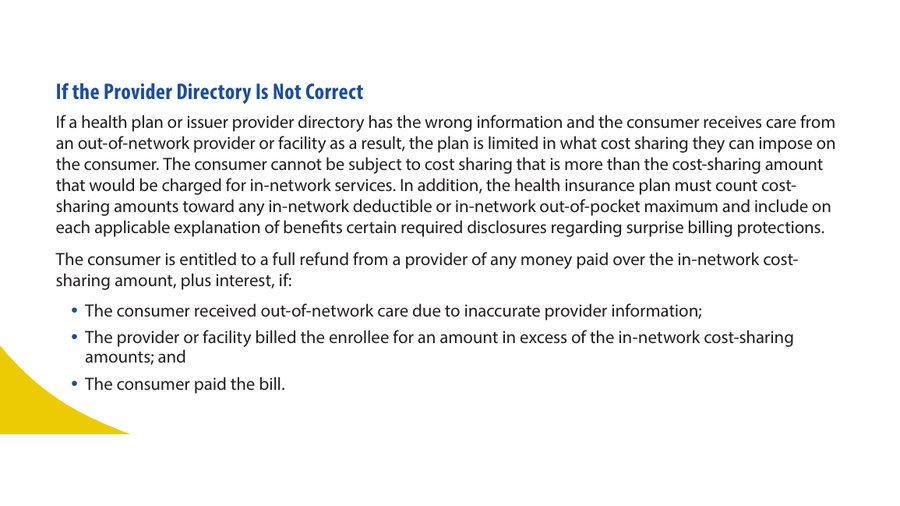
There is a safety net. The CMS No Surprises Act overview says that if a plan’s directory has the wrong information and you get out-of-network care as a result, you can’t be charged more than your in-network cost sharing. If you already paid more, you’re entitled to a refund of the difference plus interest. That protection is why documenting every check below matters.

1. Your plan’s provider directory
Best for: Building a list of doctors to verify.
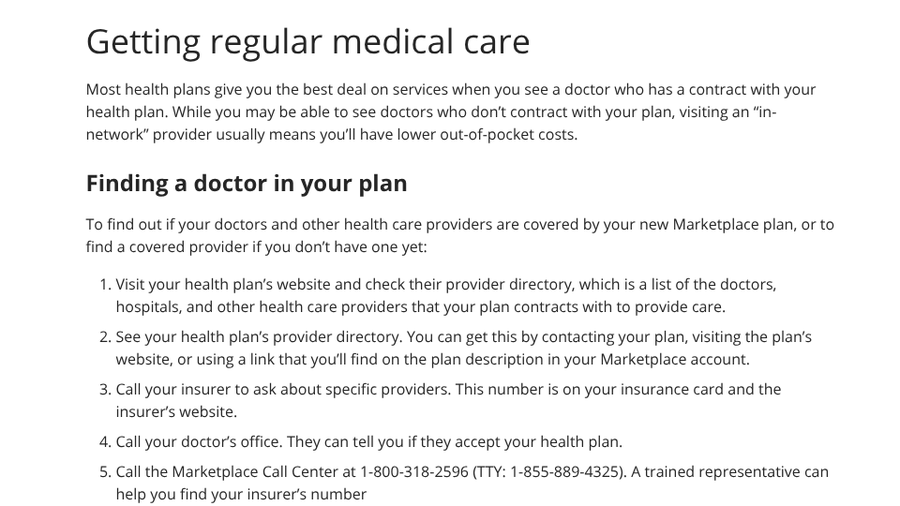
Every search should start here. HealthCare.gov’s guide to finding a doctor in your plan describes the provider directory as the list of doctors, hospitals and other providers your plan contracts with. You can find it on the plan’s website, by calling the plan or through the link in your Marketplace account. Employer plans have the same tool, usually behind the member login. If you bought coverage through the Marketplace and can’t find your insurer’s number, HealthCare.gov says the Marketplace Call Center at 1-800-318-2596 can help.
The key is searching the right network. Many insurers sell several network products under one brand name. In September 2026, a Reddit user who changed jobs discovered their new Blue Cross plan used a narrower network than the “real” PPO they’d had before. Doctors at their city’s main hospital came up flagged as affiliated with a medical group that doesn’t contract with the plan. Log in to your member account instead of using the public search, so results match your exact plan.
Filter for providers accepting new patients, check the specific office location and note the specialty listed. A doctor can be in-network at one clinic and not at another.
Then save proof. Take a dated screenshot of the listing showing the provider’s name, location and your plan. If the directory turns out to be wrong, that record supports the No Surprises Act protection described above. It also helps when you call your plan or file a complaint.
Treat the directory as a starting point, not a final answer. The January 2026 Reddit user’s experience is common, and the ghost network numbers show why. The next two checks exist because directories lag behind real contracts.
- Pros: Free, always available and tailored to your plan when you’re logged in.
- Cons: Listings can be outdated, and public searches may show the wrong network product.
Pricing: Free with your health plan.
2. Your insurer’s member services line
Best for: A documented confirmation before a big appointment.
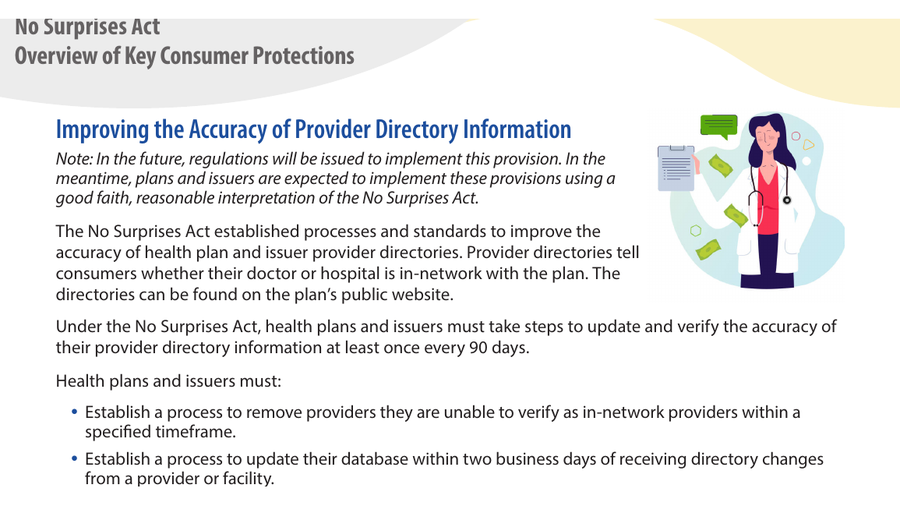
The number on your insurance card is the second check, and HealthCare.gov recommends calling your insurer to ask about specific providers. Plans are expected to handle these questions quickly. Under the No Surprises Act, CMS says plans must set up a process to answer questions about a provider’s network status within one business day. They must also verify directory information at least once every 90 days and update their database within two business days of getting changes from a provider.
CMS notes that federal regulations for these directory rules haven’t been issued yet. In the meantime, plans are expected to follow a good-faith, reasonable reading of the law. In practice, that means you should ask clearly and write everything down.
When you call, give the doctor’s full name and the exact office address. Ask whether that doctor, at that location, is in-network for your specific plan. For procedures, also ask about the facility and any lab, imaging or anesthesia providers involved. Before you hang up, get the representative’s name, the date and a call reference number.
Ask about each piece of a procedure separately. In April 2026, a Reddit user said they confirmed their doctor and anesthesiologist with both the office and Cigna, then learned the facilities involved were out-of-network.
That record can pay off. In May 2026, the Reddit user who got the $400 urgent care bill said a “super helpful and empathetic” UnitedHealthcare agent fought the charge on their behalf. A commenter who hit the same problem was advised to call the urgent care first to see if it would resubmit the claim.
- Pros: A live answer tied to your exact plan, plus a reference number for disputes.
- Cons: Hold times can be long, and agents can only confirm what the plan’s records show.
Pricing: Free with your health plan.
3. The NPPES NPI Registry
Best for: Making sure the provider in the directory is the one you’re booking.
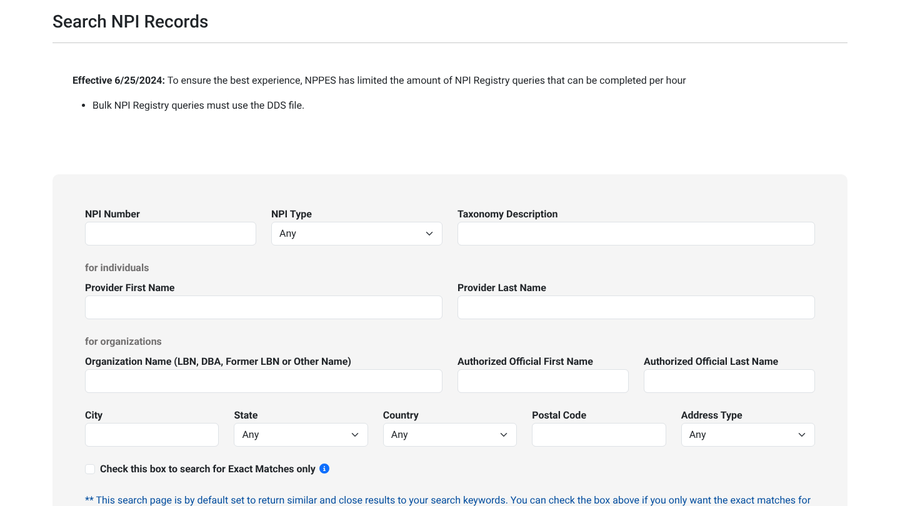
Every health care provider that bills insurance has a National Provider Identifier, a unique 10-digit number. The NPPES NPI Registry, run by the Centers for Medicare & Medicaid Services, is a free public directory of active NPI records. It publishes the parts of each record that are publicly relevant, including the provider’s name, specialty and practice address.
The registry doesn’t show insurance networks, so it won’t tell you if a doctor is in-network. What it does is help you avoid mix-ups. You can confirm the full legal name, specialty and practice locations, then check that they match the directory listing. You can also look up the organization, since many doctors bill under a medical group’s number rather than their own.
That distinction causes real bills. In August 2026, a Reddit user with a Blue Cross Blue Shield PPO said a doctor they’d seen for over a year suddenly billed under an ID number that was out of network. Their visit came back at $291 with only $95 covered, after five earlier visits cost them a $30 copay. Commenters on a similar May 2026 thread said tax ID and provider number mismatches are common and usually fixable by the practice.
Search by last name and state, or enter the NPI if the office gives you one. Checking the exact-match box cuts down the results. Use the registry to write down both the individual and group NPI before you call the billing office. The registry also notes that having an NPI doesn’t mean a provider is licensed or credentialed, so it’s a matching tool, not a quality check.
- Pros: Official and free, with both individual and organization records for matching.
- Cons: No network information, and common names can return many results.
Pricing: Free.
4. Medicare Plan Finder
Best for: People comparing Medicare Advantage plans during open enrollment.
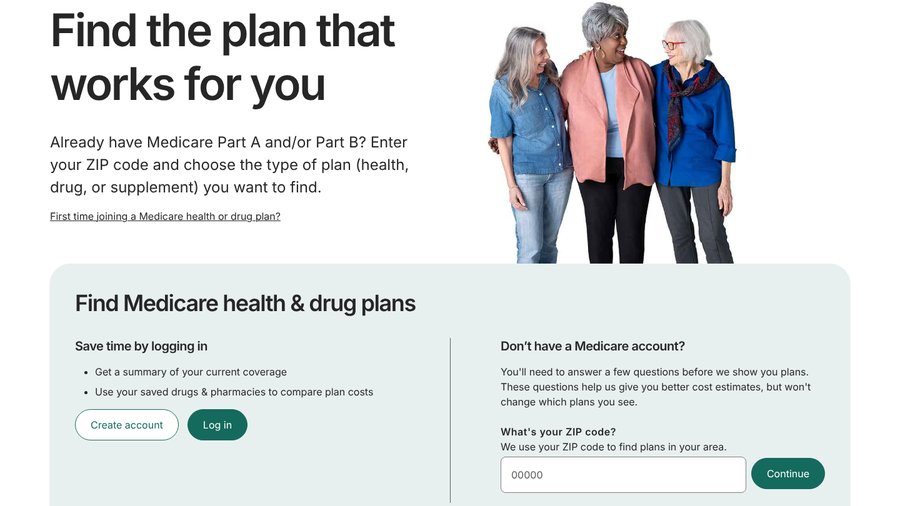
If you’re on Medicare, Medicare Plan Finder is the official place to compare health and drug plans by ZIP code. It recently became more useful for network checks. According to AARP, Plan Finder began posting in-network provider directories for many Medicare Advantage plans on October 1, 2025. That lets people see whether a preferred doctor or hospital is in a plan’s network before choosing it. Before that, AARP noted, people had to visit each plan’s website or call each insurer to find out.
AARP reported that Medicare Advantage plans must update that directory information within 30 days of learning about changes and attest to its accuracy at least once a year, according to CMS. For 2026 plans, CMS also offered a temporary special enrollment period. People who used Plan Finder to pick a plan and found within three months that their preferred provider wasn’t in-network could switch.
That matters because Medicare Advantage plans limit you to their networks, while Original Medicare lets you see any provider that accepts Medicare. The 2023 Senate ghost network study focused on Medicare Advantage directories for a reason. If you have Original Medicare, Medicare’s Care Compare tool is the closer match, with general information about doctors, clinicians and groups enrolled in Medicare.
Use Plan Finder alongside the plan’s own directory and a phone call. Search for every doctor you see regularly, including specialists, and your preferred hospital. Then confirm with each office before you enroll, especially during open enrollment, which runs from October 15 to December 7. Plans you choose then take effect January 1, so a network mistake can follow you into the new year.
- Pros: Official, free and built for comparing several Medicare Advantage plans at once.
- Cons: Only for Medicare, and listings still depend on plans reporting changes on time.
Pricing: Free.
5. The No Surprises Help Desk
Best for: Getting help when a directory was wrong and you got a bill.
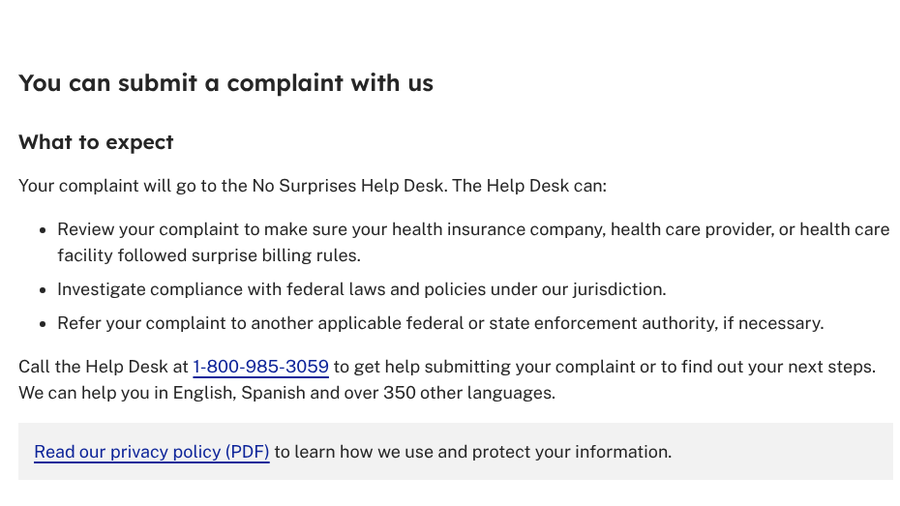
The last tool is for when the other checks failed. CMS’s complaint page says the No Surprises Help Desk reviews complaints to make sure your insurer, provider or facility followed surprise billing rules. It can also investigate compliance with federal law and refer complaints to other federal or state enforcement agencies.
You can call the Help Desk at 1-800-985-3059 for help filing a complaint or working out next steps. CMS says it can help in English, Spanish and more than 350 other languages. The complaint page suggests gathering your medical bill, a photo of your insurance card and your explanation of benefits. Add the dated directory screenshot and call reference number from checks one and two.
Keep the confirmation number you get after filing. CMS says it will review your complaint and documents and, if it needs more information, contact you within 60 days. You can return to your submission later to add documents, but the online form resets after 15 minutes of inactivity, so have everything ready before you start.
If the bill resulted from a wrong directory listing, remember the rule CMS spells out. You can’t be charged more than in-network cost sharing, and you’re entitled to a refund with interest for anything you overpaid. Our guide to medical bill errors to catch covers what else to check on the bill itself.
Commenters on the January 2026 Reddit thread also suggested filing a grievance with the insurer and a complaint with your state’s insurance regulator. That’s a sensible parallel step, especially for state-regulated plans.
- Pros: Free federal help with multilingual support and the power to refer cases to enforcement agencies.
- Cons: It resolves problems after the fact, so it can’t confirm network status before you book.
Pricing: Free.
How to check if a doctor is in network with the billing office
HealthCare.gov also suggests calling your doctor’s office, which can tell you if it accepts your plan. The wording of your questions matters. In April 2026, a Reddit user warned that “we accept your insurance” doesn’t mean “we are in network,” after a dentist who accepted their new plan billed them about $450 for two fillings. Ask these instead:
- Are you in-network with my exact plan and network name, as printed on my card?
- Is this specific doctor contracted, or only the practice?
- Which name and tax ID will the claim be billed under?
- Are the lab, imaging center or facility you use also in-network?
- Can you note my plan confirmation in my file?
If you still need an appointment fast after all this checking, our roundup of Zocdoc alternatives for same-week in-network visits covers booking tools that filter by insurance.
How We Chose These
We focused on free tools anyone with health insurance can use to check a provider’s network status. We favored official government resources and the plan’s own channels over third-party booking sites, whose insurance filters can lag behind real contracts. For each tool, we looked at what it confirms, what it can’t tell you and how it helps you build a record in case a directory turns out to be wrong. We also read recent patient experiences with directory errors and billing mix-ups to see where the usual advice breaks down.
This article is general information and isn’t legal, insurance or medical advice. Network rules and protections vary by plan type and state. Confirm details with your health plan, your provider and, if needed, your state insurance regulator or a patient advocate.
The Bottom Line
No single tool proves a doctor is in-network. Start with your plan’s directory while logged in, confirm by phone with a reference number and check the exact provider and group in the NPI Registry. Medicare Advantage shoppers should add Plan Finder during open enrollment. Save screenshots and notes at every step. If a wrong directory still leads to a bill, the No Surprises Help Desk and your in-network cost-sharing protection are there to back you up.
Frequently Asked Questions
What is the best way to check if a doctor is in network?
The best way is to combine checks. Search your plan’s provider directory while logged in, then call member services and the doctor’s billing office to confirm your exact plan and location. Keep a screenshot and a call reference number.
What happens if my insurance directory said a doctor was in-network but they weren’t?
Under the No Surprises Act, CMS says you can’t be charged more than in-network cost sharing if you got out-of-network care because the directory was wrong. If you already paid more, you’re entitled to a refund with interest.
Does “we accept your insurance” mean a doctor is in-network?
No. An office can accept your insurance and still be out-of-network, which usually means higher costs. Ask whether they’re in-network with your exact plan and network name.
How often do insurers have to update provider directories?
CMS says plans must verify directory information at least once every 90 days. They must also update their database within two business days of receiving changes from a provider.
How do I report a ghost network or wrong directory?
Call the No Surprises Help Desk at 1-800-985-3059 or file a complaint online with CMS. You can also file a grievance with your insurer and a complaint with your state insurance regulator.