

Do I need a permit for this? A pre-hire checklist for small remodels: what’s usually exempt, where local rules split and what a handyman can legally do.
In August 2026, a first-time buyer in New Jersey posted a list of work the sellers had done over 11 years: a new roof, a finished basement, a 2024 HVAC unit and a water heater replaced in March 2025. None of it had permits. Most replies said it wasn’t a dealbreaker, except the basement. One commenter said a friend’s unpermitted garage conversion held up their closing for two weeks when the township inspected before the sale.
That’s when permit questions usually surface, years after the handyman has left. The fix is cheap if you ask before the work starts, and expensive after.
Bottom Line First
Cosmetic work usually doesn’t need a permit. That covers painting, tiling, cabinets and countertops, plus small fences and low detached decks. Anything that moves or adds plumbing, wiring, gas or walls usually does, and so does a water heater replacement in many places. Rules are local, so check your city’s permit page before you hire. If a job needs a permit, confirm who will pull it and that the person is licensed to do the work in your state.
Table of Contents
What usually doesn’t need a permit
Most US cities build their residential rules on the International Residential Code, then amend it. Its section R105.2 on work exempt from permit is the baseline list. It exempts finish work such as painting, tiling, cabinets and countertops. Fences up to 7 feet and one-story detached sheds up to 200 square feet are also on it.

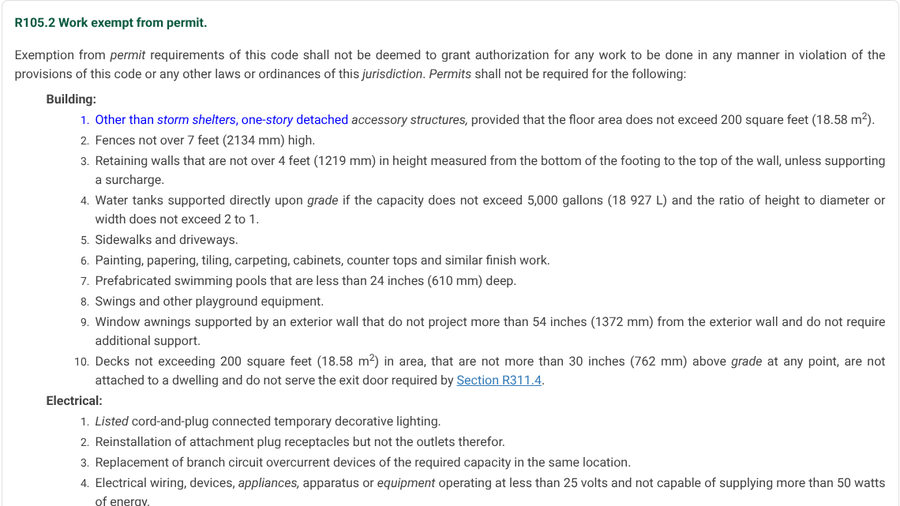
Decks are exempt only under tight conditions. The deck must be 200 square feet or less and no more than 30 inches above grade. It can’t be attached to the house or serve a required exit door. On the plumbing side, stopping leaks and clearing clogs are exempt. So is pulling and resetting a toilet, as long as no pipes or valves get replaced or moved. Minor electrical repairs, like replacing a lamp or reinstalling a receptacle, are exempt too.
The code adds a warning that people skip: an exemption doesn’t authorize work that violates the code. No permit doesn’t mean anything goes.
Where city rules split
That baseline gets rewritten locally, sometimes in the homeowner’s favor and sometimes not. Three official pages show how far apart the answers can be:
| Project | IRC baseline | Bellevue, WA | Bedford, TX |
|---|---|---|---|
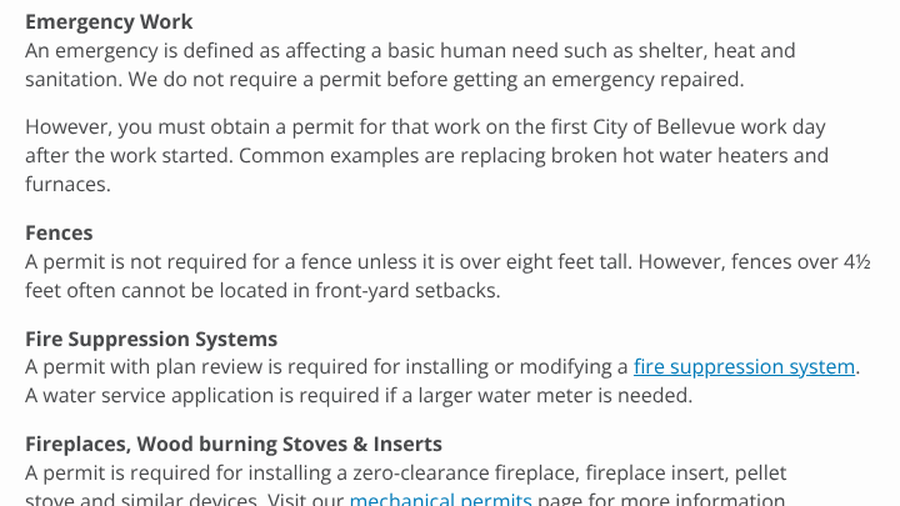
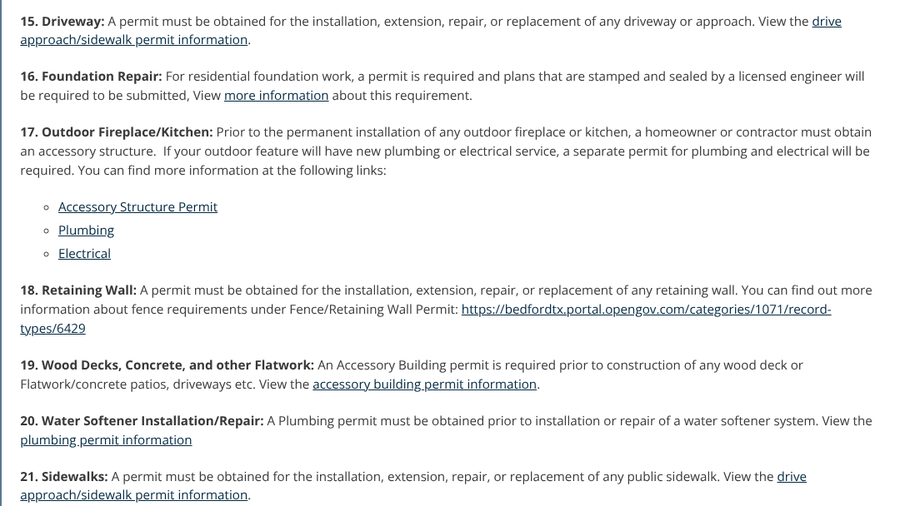
| Fence | Exempt up to 7 feet | Permit only over 8 feet | Permit for a new fence or replacing over 25% of a side |
| Deck | Exempt if small, low and detached | No permit under 30 inches high | Permit for any wood deck |
| Water heater | Not on the exempt list | Emergency swap allowed, permit by the next work day | Plumbing permit and licensed plumber |
| Cabinets and countertops | Exempt | No building permit | Not listed |
Bellevue’s permit page has a practical rule for emergencies that affect shelter, heat or sanitation. You can get the repair done first, then obtain the permit on the next city work day. It names broken water heaters and furnaces as the common examples. Plumbing or electrical work around new cabinets may still need its own permit.
Bedford, Texas is stricter. It requires a permit before building any wood deck, and plumbing work, water heaters included, must be done by contractors licensed by the state and registered with the city. The Oregon Building Codes Division also requires a permit to replace a water heater. It calls water heaters pressure vessels that can explode if they’re installed wrong. If you’re weighing a new unit, our comparison of heat pump and tankless water heaters covers the fit questions.
What a handyman can legally do
Handyman rules are set mostly by states, and they vary widely. California’s are among the clearest. A Contractors State License Board bulletin explains that since January 1, 2025, unlicensed people can take jobs under $1,000 in labor and materials. The catch is in the same sentence. The work can’t require a permit, and the handyman can’t employ anyone on the project.
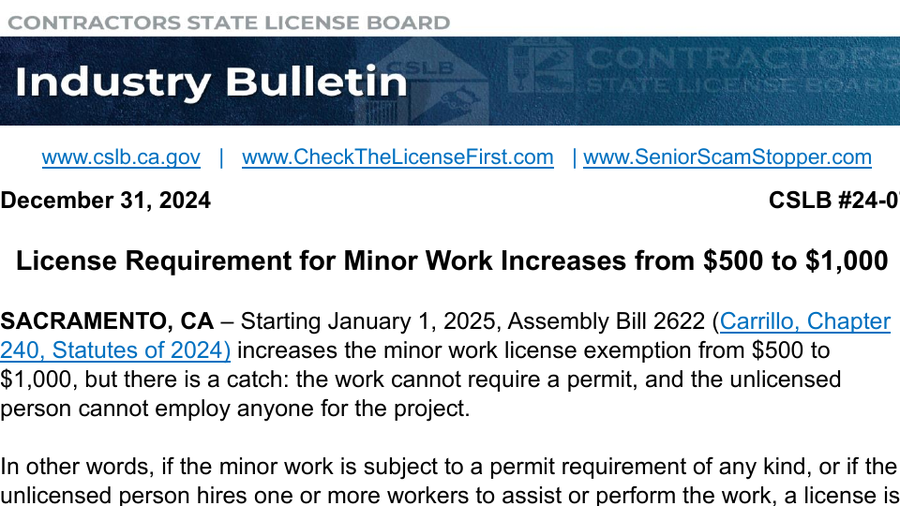
So in California, a $400 job that needs a permit still requires a licensed contractor. There, the handyman versus contractor line is drawn by the permit, not by the size of the job.
Good handymen know where their line is. In June 2026, someone starting a handyman business posted on Reddit that landlords and investors seemed surprised when they turned down permit-required plumbing and electrical work. One reply described a contractor bidding on a kitchen remodel who said the permit route would cost three times as much. He also wouldn’t share his license number until a contract was signed. The commenter suspected he was unlicensed, and the job involved structural work.
Your pre-hire permit checklist
- Write the scope in one sentence. If it moves plumbing, wiring or a wall, or adds a circuit, assume a permit until your city says otherwise.
- Check your city’s permit page or call the permit desk with that sentence. Save the answer.
- Ask who pulls the permit. Put it in the contract, and get the permit number before work starts.
- Look up the license on your state’s contractor board, and ask for proof of insurance.
- Ask when inspections happen. Plumbing and electrical usually get a rough-in inspection before walls close, then a final.
- Walk away from a “permit price” and a “no-permit price.” Two prices usually mean the contractor is pricing your risk, not theirs.
- Keep the permit and final inspection records with your house papers for when you sell.
Electrical work deserves extra care. Before a larger upgrade, our list of load checks before a 200-amp panel upgrade covers the questions to ask the electrician.
What skipping a permit can cost
Asking for a permit doesn’t guarantee one. In September 2026, a homeowner who was out of state during a full kitchen renovation posted that the contractor never pulled the permit they’d asked for. Walls came out, plumbing and electrical moved, and none of it was inspected.
The bill can arrive years later. In an April 2026 Seattle thread, a homeowner said their insurer sued the previous owner over undisclosed unpermitted work. The shortcuts led to leaks. When the ceilings came open, the city made them tear out and redo more of the work. By their account, it cost about $18,000 for a new roof and $9,000 for water damage. Others in the thread warned about “red tags,” a stop-work order that can freeze a project for months once an inspector finds unpermitted work.
This article is general information and isn’t legal advice. Permit and licensing rules vary by state, county and city and change over time. Confirm requirements with your local building department and your state’s contractor licensing board before you start work.
Practical Takeaway
- Finish work like paint, tile, cabinets and countertops rarely needs a permit.
- Moving plumbing, wiring, gas or walls usually does, and water heater swaps often do.
- Fences and decks vary widely by city, from permit-free to always permitted.
- In California, an unlicensed handyman can’t legally take any job that needs a permit.
- Get the permit number, inspection plan and license check in writing before work starts.
Frequently Asked Questions
Do I need a permit to remodel my bathroom?
Usually not for cosmetic work like new tile, paint or a vanity in the same spot. You usually do if the remodel moves or adds plumbing fixtures, adds electrical circuits or opens walls. Check your city’s permit page for its exact rules.
Do you need a permit to replace a water heater?
In many places, yes. Oregon requires one, and Bedford, Texas requires a plumbing permit and a licensed plumber. Bellevue, Washington lets an emergency replacement happen first, with the permit due the next city work day.
Do I need a permit to build a deck?
It depends on size, height and your city. The model code exempts decks of 200 square feet or less that sit no more than 30 inches above grade and aren’t attached to the house. Some cities, like Bedford, Texas, require a permit for any wood deck.
Can a handyman pull a permit?
Usually only if they hold the license the permit requires. In California, unlicensed handymen can’t take work that needs any permit, even under $1,000. Many places let homeowners pull permits for their own homes instead.
What happens if you remodel without a permit?
You can face stop-work orders, fees and orders to open finished walls for inspection. Unpermitted work can also complicate a sale or an insurance claim years later.
Final Word
The best time to ask about a permit is before the handyman gives you a price. Write down what the job changes, check it against your city’s list and make the license and permit part of the deal. Small jobs stay small that way.