
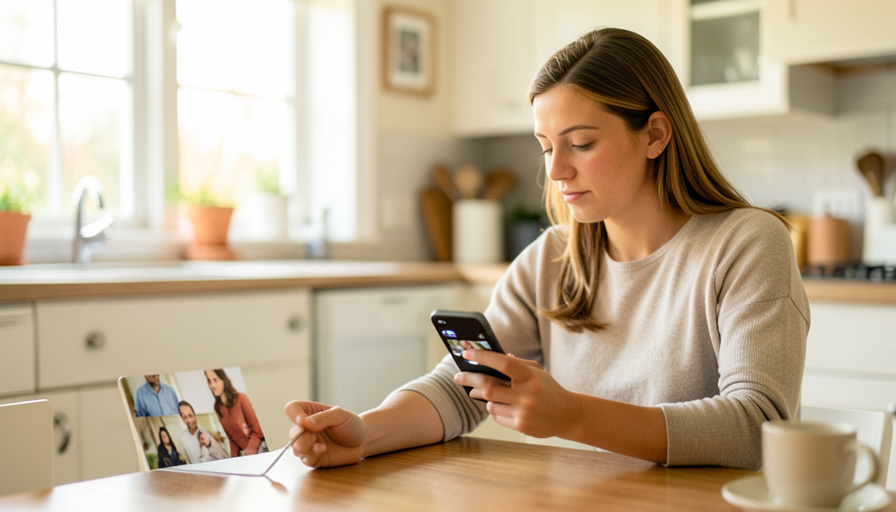
You take a photo of your kid grinning outside the school gate, drop it in the family album or a group chat, and think nothing of it. The image itself looks harmless. What travels with it, hidden in the file and sitting in the background of the frame, can be enough for a stranger to work out exactly where your child is at 8:30 on a Tuesday.
Most of this leaking is accidental. Phones record location by default, and almost nobody checks what a photo actually carries before sending it. The good news is that every one of these habits has a fix that takes seconds. Here are nine ways a family photo quietly gives away a kid’s location, and what to do about each.
The short version
A photo can reveal your child’s location two ways: through hidden data baked into the file, and through what is visible in the shot. Phones often stamp photos with GPS coordinates accurate to within a few meters, so a single image can pin your home or your kid’s school. On top of that, geotags, uniforms, street signs, house numbers, and a predictable posting routine all hand over the same information. The fixes are simple: strip location data before sharing, turn off camera geotagging, lock down who can see albums, post after you have left a place rather than while you are there, and check the background before you hit send.
Table of Contents
1. Leaving GPS data baked into the photo file
When your phone takes a picture with location services on, it usually writes the exact GPS coordinates into the file’s hidden metadata, the EXIF data. Send that original file to someone, or upload it somewhere that keeps the metadata, and you have handed over the precise spot the photo was taken, often your home or the school. Big social networks strip this data on upload, but direct file shares, email attachments, some cloud albums, and messaging apps that send “as a file” often do not. The fix: turn off location for your camera, or use your phone’s share options to remove location before sending.
2. Trusting a crop to remove the location
People assume that cropping out a street sign or editing the visible image also cleans the file. It does not. Cropping changes the pixels you can see but leaves the EXIF block, including the GPS coordinates, completely intact, and it can even leave a small uncropped thumbnail buried in the file. If your goal is to remove location, you have to actively strip the metadata, not just edit the picture. On iPhone, use the Options menu in the share sheet and switch off Location; on Android, use the share menu’s “remove location data” or a metadata tool.
3. Turning on geotags and location check-ins
Separate from hidden file data, you can also volunteer a location by tagging it. Adding a place to a post, checking in at the trampoline park, or tagging the specific playground puts your child at a named spot at a known time. A one-off tag of somewhere you visit rarely is lower risk, but tagging the places your kid goes regularly, home, school, their sports club, builds a usable map. Leave the location tag off anything tied to your child’s routine.
4. Missing the school clues in the background
The frame itself talks. A school logo on a jumper, a team mascot, a crest on a bag, or a recognizable building entrance can identify the exact school to anyone who looks. Combine a uniform with a caption naming the grade or teacher and you have narrowed things down to a single classroom. Before you share a school-gate or sports photo, scan the background and the clothing for anything that names the place, and skip or blur it.
5. Posting street signs, house numbers, and plates
Everyday backgrounds give away home. A street sign at the corner, your house number by the door, a distinctive shopfront, or a car number plate in the driveway each point at where you live, and together they are as good as an address. Kids photographed “in front of our new house” with the number visible are a common example. Check for street signs, numbers, and plates before sharing, and frame the shot so they are out of view.
6. Sharing albums with links anyone can open
A shared cloud album is convenient, but a “anyone with the link can view” setting means the link is the only lock, and links get forwarded, screenshotted, and sometimes indexed. Once it is out of your hands, you cannot control who opens it or pull it back cleanly. Set shared albums to named people only, avoid public link sharing for anything with your kids in it, and review who currently has access to albums you set up a while ago and forgot about.
7. Keeping the whole account public
A public profile turns every photo you post into something a stranger can browse, cross-reference, and build a picture from. It is worth deciding deliberately: an account that features your children is a strong candidate for private, with followers you actually recognize. Public accounts make sense for some people, but if yours is full of your kids’ daily life, locking it down is the single change that removes the largest audience from the equation.
8. Posting in real time, from the spot
Sharing a photo the moment you take it tells people where your child is right now, not just where they were. Posting from the park, the match, or the restaurant as it happens turns a nice picture into a live location update. Nothing is lost by waiting: post after you have left, or later that evening. The memory is identical, but the real-time “here we are” signal is gone.
9. Building a predictable routine across posts
Even careful, individually harmless photos add up. The same park every Saturday morning, the walk to the same school each weekday, the regular Thursday swimming class, posted week after week, sketch out a routine and route that a stranger can follow. This is the pattern that back-to-school “first day” posts feed too, especially when they list the school and grade. Vary what you show, avoid narrating the standing schedule, and treat your child’s weekly pattern as private by default.
How to lock this down in ten minutes
You do not need to stop sharing photos of your kids, just close the location leaks. Turn off location for your camera app so new photos carry no GPS data. When you do send an original file, use your phone’s share options to strip the location first. Set social accounts that feature your children to private, and switch shared albums to named people rather than open links. Get in the habit of a two-second background check, signs, numbers, uniforms, plates, before you post, and wait until you have left a place to share from it. For a wider look at keeping kids safe in the apps and games they use, see our guide on whether Minecraft is good for kids.
This article is general information to help you make your own choices about your family’s privacy, not legal or security advice. If you have a specific safety concern, such as a custody situation or a known threat, speak with a qualified professional or local authorities.
Frequently asked questions
Do photos really contain my location?
Often, yes. If location services are on for your camera, your phone writes GPS coordinates into the photo’s hidden EXIF metadata, frequently accurate to within a few meters. Major social platforms strip this on upload, but files shared by email, message, or some cloud albums can keep it.
How do I remove location data from a photo before sharing?
On iPhone, tap Share, then Options at the top, and turn off Location before sending. On Android, use the share menu’s remove-location option or a metadata-cleaning app. Better still, turn off location access for your camera app so new photos never record it.
Does cropping a photo remove the GPS data?
No. Cropping only changes the visible image and leaves the hidden EXIF data, including GPS coordinates, untouched. It can even leave a small original thumbnail behind. To remove location, you must strip the metadata itself, not just edit the picture.
Is it safe to post my child’s first day of school photo?
It can be, with a few checks. Avoid showing the school name, logo, or uniform crest, skip captions that name the school, grade, or teacher, and do not post it in real time from the gate. Those details together can identify exactly where your child is each day.
Should my social account be private if I post my kids?
For most families, yes. A private account with followers you recognize removes the largest audience of strangers who could browse and cross-reference your photos. Public sharing is a personal choice, but if your feed features your children’s daily life, private is the safer default.
The bottom line
A family photo can leak your child’s location through data you cannot see and details you did not notice, but neither takes much to shut off. Turn off camera geotagging, strip location from files you send, lock down accounts and albums, check the background, and post after you leave rather than from the spot. None of it stops you sharing the moments you want to keep, it just stops the photos from carrying a map. For more on raising kids safely in a connected world, browse The Other Stream’s Family & Personal section.