
What the Flo lawsuit was about, what a 2026 privacy test found in the app, and eight settings to check in any period tracker so your cycle data stays as private as possible.
In September 2026, a Reddit user asked for a new period tracker because their girlfriend had used Flo for a long time. They said they “recently came to know the app steals your data and sells it.” That fear traces back to the Flo lawsuit, a class action that ended with a jury verdict against Meta and $59.5 million in settlements. The reality in 2026 is more specific. Flo says it doesn’t sell health data, but an independent test this summer still caught the app contacting an ad tech partner even when testers declined tracking. Here’s what happened and what to switch on or off.
The Short Version
The Flo lawsuit claimed that Flo let Facebook, Google and others collect users’ in-app health information through tools built into the app between 2016 and 2019. Google, Flurry and Flo settled for a combined $59.5 million, and a jury found Meta liable in August 2025. Claims were due October 15, 2026. To protect your data now, turn on Anonymous Mode in Flo before anything else, decline ad and analytics sharing, deny app tracking and delete accounts you no longer use.
Table of Contents
What the Flo lawsuit was about
The case is Frasco v. Flo Health, filed in federal court in San Francisco. According to class counsel’s case page, it alleged that Flo allowed Facebook, Google and others to eavesdrop on users’ confidential in-app health communications through software development kits (SDKs) inside the app. The nationwide class covered people who used Flo in the U.S. between November 1, 2016 and February 28, 2019 and entered menstruation or pregnancy information.
Google and Flurry settled before trial. Flo settled on July 31, 2025, in the middle of the trial. The next day, a jury found Meta liable for its role in collecting and commercially using that health data, which plaintiffs argued strengthened Meta’s advertising business. The verdict applies only to Meta.

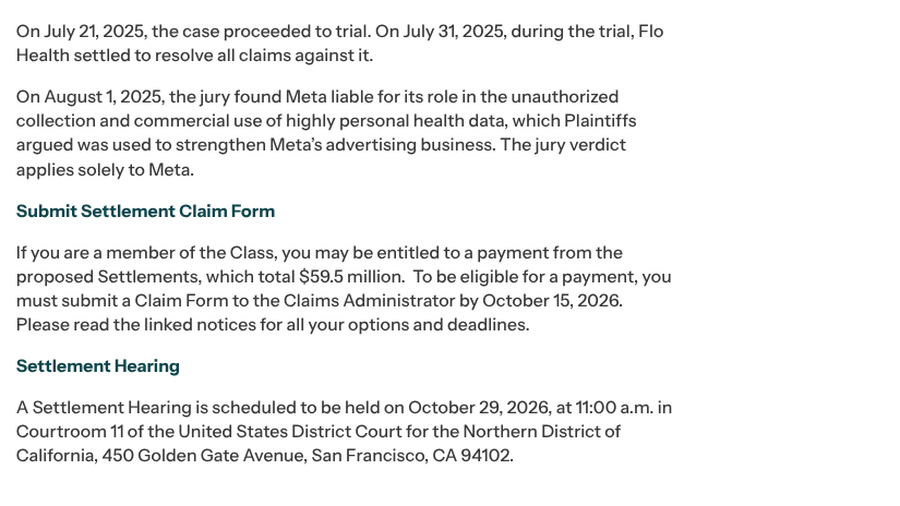
The three settlements total $59.5 million. Class members had to submit a claim form by October 15, 2026, and a final approval hearing was scheduled for October 29, 2026. If you filed, watch the official settlement website for payment updates. The lawsuit wasn’t Flo’s first privacy problem, either. The FTC finalized an order with Flo in 2021 over allegations that it shared sensitive health data with Facebook, Google and others.
What period apps still share in 2026
The lawsuit covered 2016 to 2019. Mozilla’s Flo privacy review, updated July 16, 2026, looks at the app today. Mozilla says Flo has about 81 million monthly active users and that its privacy policy grew again by April 2026, naming TikTok Ad Manager and Firebase as advertising partners. Mozilla also found no sign that Flo shares user health data with advertising partners.
The testing is where it gets useful. Flo’s setup asks if you want to share basic app and device data with its ad and analytics partners. Saying yes brought in AppsFlyer, Moloco and Google’s Firebase, and turning tracking off made those systems mostly disappear. But AppsFlyer was contacted at launch either way. When Mozilla’s testers denied tracking, AppsFlyer still received the phone’s Apple-specific device identifier. The settings below close as many of those gaps as possible.
8 period app privacy settings to check now
1. Turn on Flo’s Anonymous Mode before anything else
Flo’s Anonymous Mode lets you track your cycle without your name, email address or IP address being linked to your health data. Flo says it’s available to all users at no cost and that not even Flo can identify you once it’s on. It routes your data through a Cloudflare relay, so Flo sees your health data but not the IP address it came from.
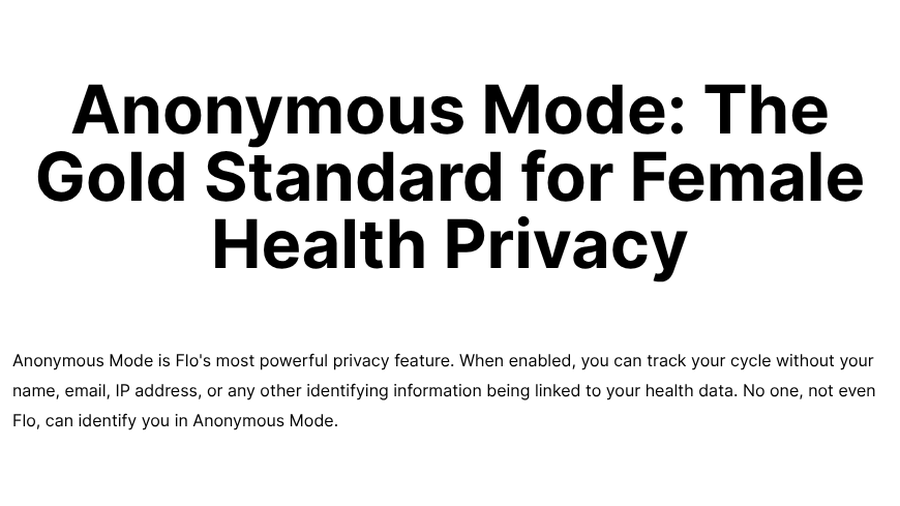
Timing matters. In Mozilla’s test, AppsFlyer went quiet once Anonymous Mode was on, but the testers had turned it on six minutes into their session. By then, AppsFlyer already had the device identifier. Make it the first thing you do after installing.
2. Say no to ad and analytics partners at setup
Many period apps ask during onboarding if you’ll share app and device data with partners. It’s easy to tap through. Mozilla found that declining this option in Flo made most partner traffic disappear, so the toggle does real work. If you already said yes, check the app’s privacy settings for a way to turn it off.
3. Deny app tracking on your iPhone
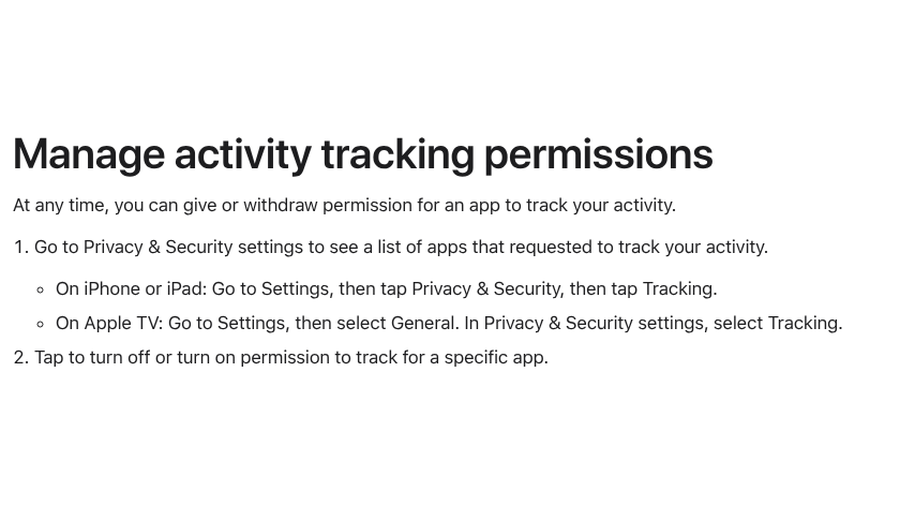
Apple’s App Tracking Transparency lets you stop apps from tracking you across other companies’ apps and websites. Apple says that if you choose Ask App Not to Track, the app can’t access your device’s advertising identifier. To review every app, go to Settings, then Privacy & Security, then Tracking. Turn off the switch for any app, or turn off Allow Apps to Request to Track so apps can’t ask.
4. Check which apps can read your health data
Period apps often connect to Apple Health or Android’s Health Connect to pull in steps, sleep or temperature. That connection can also let other apps read your cycle data. On iPhone, open Settings and go to Privacy & Security, then Health. Review each app’s read and write permissions. On Android, open Health Connect and check its app permissions. Remove access for apps that don’t need it.
5. Use Apple’s Cycle Tracking with two-factor authentication
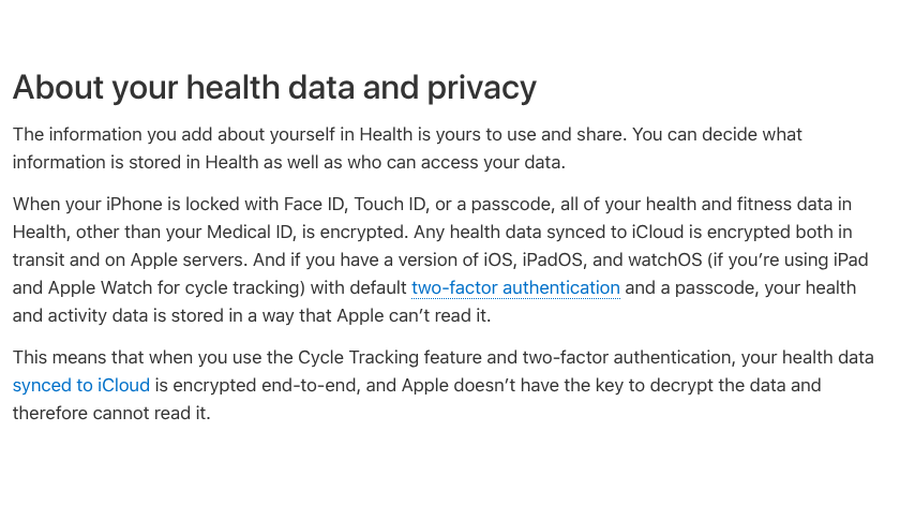
If you want fewer companies involved, the Health app’s built-in tracker is a strong option. Apple’s page on logging cycle information in Health says your health data is encrypted when your iPhone is locked. With two-factor authentication and a passcode, Cycle Tracking data synced to iCloud is encrypted end-to-end, and Apple doesn’t have the key to read it. Turn on both if they’re off.
6. Hide notification previews
Period and fertility reminders can show up on your lock screen for anyone nearby to read. On iPhone, open Settings and go to Notifications, then Show Previews. Choose When Unlocked or Never. You can also change previews for the period app alone in its own notification settings. It’s a small step that matters on shared or work phones.
7. Limit Meta’s use of activity from other apps
Businesses can send Meta information about what you do in their apps and websites. In a June 2026 announcement, Meta said it was discontinuing the “Your activity off Meta technologies” setting, which let people disconnect that activity from their accounts. It kept a setting called “Activity from other businesses,” which controls whether Meta uses that data to personalize ads and other content. Meta said the changes would reach the U.S. the following month. Turning that setting off limits how the data is used, though businesses can still send it.
8. Delete your account when you switch apps
Deleting a period app from your phone doesn’t delete your account. Flo’s help article on deleting your account says to open Flo, tap your avatar, tap Privacy settings, then tap Delete account and follow the instructions. Cancel any subscription separately. If you’re moving to a new tracker, export or note the history you need first. Our look at private MyFitnessPal alternatives covers similar trade-offs for other health logs.
The same logic applies to any sensitive health upload. Our guide to DNA raw data privacy traps explains why deleting old accounts beats leaving them dormant.
This article is general information and isn’t legal or medical advice. Settlement details, app features and privacy settings change, so check the official settlement website and each app’s current privacy policy and help pages before relying on them.
Key Takeaways
- The Flo lawsuit ended with $59.5 million in settlements from Google, Flurry and Flo, plus a jury verdict against Meta.
- Claims for U.S. users from 2016 to 2019 were due October 15, 2026.
- A July 2026 test found Flo contacting an ad tech partner at launch, even when testers declined tracking.
- Turn on Anonymous Mode first, decline partner sharing and deny app tracking.
- Delete old period app accounts, since removing the app alone doesn’t erase your data.
Frequently Asked Questions
What is the Flo lawsuit about?
The Flo lawsuit claimed that the Flo period app let Facebook, Google and others collect users’ in-app health information through built-in tools between 2016 and 2019. Google, Flurry and Flo settled for $59.5 million, and a jury found Meta liable in August 2025.
Can I still file a claim in the Flo settlement?
The claim deadline was October 15, 2026, for U.S. users who entered period or pregnancy data in Flo between November 1, 2016 and February 28, 2019. Check the official settlement website for updates on payments.
Does Flo sell your data?
Mozilla’s July 2026 review found no sign that Flo shares health data with advertising partners, and Flo pledges not to sell personal data. The app does work with ad and analytics partners for app and device data, which you can limit in its settings.
What is Flo Anonymous Mode?
Flo Anonymous Mode is a free setting that lets you track your cycle without your name, email or IP address being linked to your health data. Turn it on as soon as you install the app.
Is Apple Health safer for period tracking?
Apple Health keeps Cycle Tracking data encrypted, and with two-factor authentication and a passcode, data synced to iCloud is end-to-end encrypted so Apple can’t read it. That makes it a strong option if you don’t need a separate app.
The Bottom Line
The Flo lawsuit is mostly resolved, but the lesson isn’t. Period apps are built on data, and the privacy you get depends on settings most people skip. Spend five minutes now: turn on Anonymous Mode, decline partner sharing, deny tracking, check Health permissions and hide lock-screen previews. Then delete any cycle tracker you’ve stopped using.