
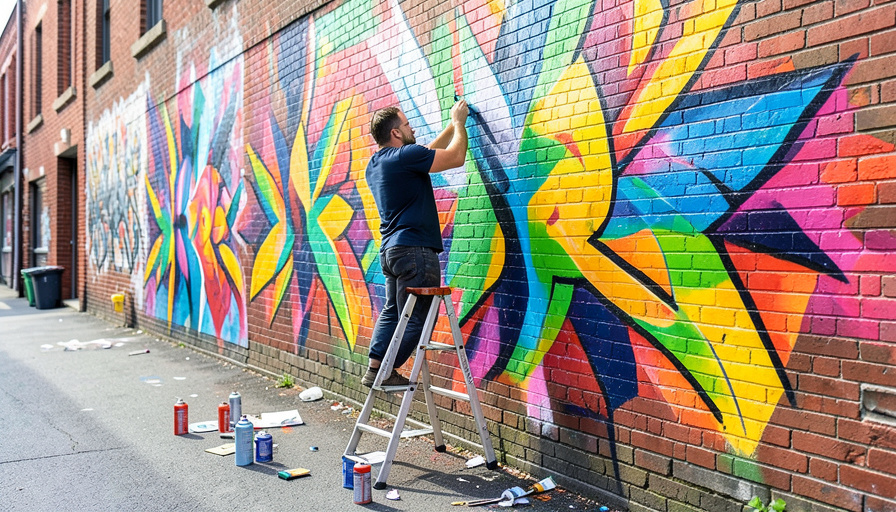
The same painting can be public art or a criminal charge. The only thing that decides which is whether you had permission before the first coat went up.
Murals are having a moment, and clips of huge, gorgeous walls rack up millions of views. What those videos never show is the paperwork: the owner sign-off, the city permit, the contract. Skip that part and even a beautiful mural is legally vandalism, which can mean fines, a cleanup bill, and the owner painting straight over your work the next morning. Get it right and you have a piece that is protected, sometimes by a federal law most artists have never heard of.
Here is how to paint a mural the legal way, from landing a wall to keeping the finished piece safe.
In brief
Get written permission from whoever owns the wall before anything else, because that consent is the entire line between a mural and a crime. Then check your city’s rules, since many require a mural permit or a design review, and the requirements vary wildly by location. Put the deal in a contract that covers payment, copyright, and what happens if the mural is removed later. And know that a federal law called VARA can give a finished mural real protection, which cuts both ways for artists and owners.
Table of Contents
Permission is the whole ballgame
Everything else is detail next to this: you need the property owner’s written agreement before you touch the wall. A verbal yes from a shop manager is not enough, because the person who owns the building may feel very differently, and you are the one holding the spray can if they do. Written permission is what turns the same act from vandalism into commissioned art, and it is the first thing any city permit or contract will ask you to prove.
How to find a wall, and convince the owner
Most legal walls start with an artist pitching a nervous property owner. Make it easy to say yes. Approach businesses with big blank walls facing foot traffic, and come with a specific design mockup rather than a vague idea, so the owner can picture exactly what goes up. Address their real worries up front: that you will handle materials and prep, carry your own insurance, keep the content non-controversial, and leave the wall better than you found it. A mural can genuinely help a business by making its building a landmark and a photo spot, so frame it as a benefit, not a favor. Then get the yes in writing.
Check your city’s rules before you prime the wall
Permission from the owner is necessary but often not sufficient, because a lot of cities regulate murals separately. Some require a mural permit, a design submitted for review, or registration with an arts commission, and rules get stricter in historic districts or where a sign code might classify your mural as signage. The City of Hayward’s Mural Art Plan is one example of a formal city process, but every place is different, so call your local planning department or arts office and ask before you buy paint. Finding out you needed a permit after the mural is finished is an expensive way to learn.
The law that protects a finished mural
Here is the part almost nobody expects. The federal Visual Artists Rights Act, or VARA, passed in 1990, gives visual artists certain moral rights over their work, including protection against having it destroyed. For a mural painted onto a building, VARA generally means the owner cannot simply erase a protected work without first giving the artist written notice, usually 90 days, so the artist can document or attempt to salvage it.
This is not theoretical. In the 5Pointz case in New York, a court awarded a group of aerosol artists 6.75 million dollars after a developer whitewashed their murals without that required notice. VARA can be waived in a written contract, and property owners frequently ask for a waiver precisely because of cases like that. Both sides should understand it going in: for artists it is real bargaining power, and for owners it is a reason to get the terms in writing.
Put the deal in a contract
A short written agreement protects everyone and prevents the ugly disputes. Cover the basics: the scope and location, the payment and schedule, who owns the copyright (usually the artist keeps it, while the owner gets the physical wall), whether VARA is waived or the mural is to be preserved for a set time, and who handles maintenance or touch-ups. If real money or a prominent wall is involved, having a lawyer look it over is worth the cost, because a mural contract quietly mixes property, copyright, and those moral rights together.
Materials and prep, briefly
The legal work matters more than most guides admit, but the wall still has to last. Clean and prime the surface, use exterior-grade, UV-stable paint so the colors do not fade in a season, and finish with an anti-graffiti clear coat that lets future tagging be washed off without damaging your work. Weather matters too, so plan around temperature and rain. A mural that peels in a year does the owner no favors and does not help your reputation.
What happens if you skip permission
Painting a wall you were not authorized to paint is vandalism, full stop, no matter how good the result looks. Depending on where you are, that can mean fines, a bill for the cleanup, and in some places criminal charges, plus the owner is free to paint over it immediately. The viral video is not worth a record. If you want to practice or build a portfolio, look for legal walls and community mural programs, which exist in many cities specifically so artists can paint without the risk.
This article is general information, not legal advice. Mural and permit rules vary by city and state, and VARA questions can get complex, so check your local regulations and consult a qualified attorney for a specific project or contract.
Frequently asked questions
Do I need permission to paint a mural?
Yes. You need written permission from whoever owns the wall before you start. Without it, the mural is legally vandalism regardless of how it looks, and that written consent is also what any city permit will require you to show.
Do I need a city permit for a mural?
Often, but it varies. Many cities require a mural permit, a design review, or registration, and rules are tighter in historic districts. Owner permission does not replace a city permit, so check with your local planning or arts department first.
Who owns the copyright to a mural?
Usually the artist keeps the copyright to the design, while the property owner owns the physical wall. It is worth stating this clearly in a contract so both sides know who can reproduce images of the mural and who controls the surface.
Can a property owner paint over my mural?
Sometimes, but not always freely. Under VARA, an owner may have to give the artist written notice, often 90 days, before destroying a protected mural, unless the artist waived those rights in a contract. This is why the terms should be agreed in writing up front.
Is painting a mural without permission illegal?
Yes. Unauthorized painting is vandalism and can bring fines, cleanup costs, or criminal charges depending on the location. Legal walls and community mural programs are the safe way to paint without permission problems.
The bottom line
A great mural is a legal project first and an art project second, and the artists who avoid trouble treat it that way. Lock down written owner permission, clear your city’s permit rules, sign a contract that settles copyright and removal, and use materials that last. Do that and you get the part the viral clips leave out: a wall that stays up and stays yours. For more on creativity and culture, browse The Other Stream’s Arts section, and for the rules side our Law coverage helps.