
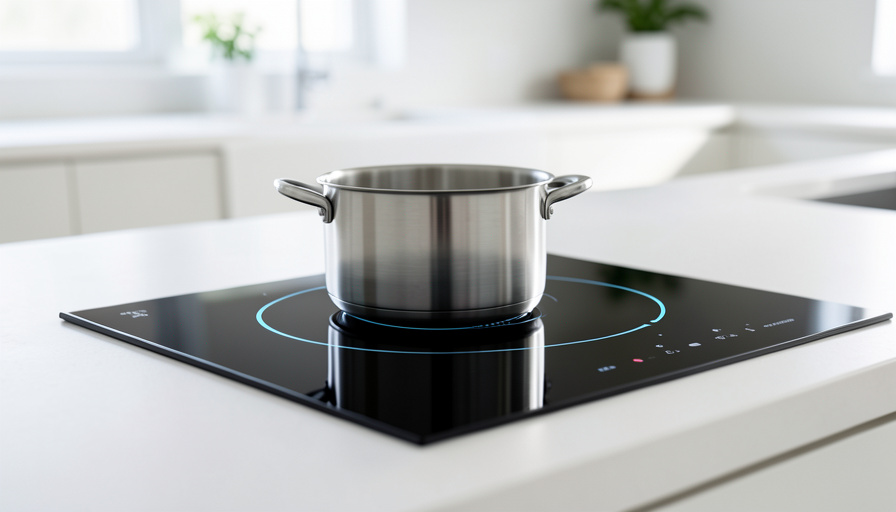
The induction-versus-gas debate usually gets argued on feel: gas cooks swear by the visible flame, induction fans point to speed and a cool kitchen. But if you are actually deciding for your own kitchen, the numbers that matter are less romantic. How many people who switch to induction end up unhappy, and why? What does each one demand of your ventilation? And how much of your cookware ends up in a donation box? Those are the figures that decide whether a switch goes smoothly or turns into a return, so here is what the data and consumer reports point to for 2026.
A note up front: this is a directional picture drawn from appliance testing, consumer surveys, and government findings, not a single tidy dataset. Where solid figures exist, they are described as such; where the honest answer is a trend rather than a precise number, it is framed that way.
Key findings at a glance
The short version of what the numbers show:
- Adoption is rising. Induction has moved from a niche choice to a mainstream option across 2025 and 2026 appliance lineups, including hybrid gas-and-induction ranges aimed at hesitant switchers.
- Returns cluster around a few reasons. The most common regrets are incompatible cookware, the auto shut-off that pauses heat when a pan is lifted or is too small, a learning curve in heat control, reliability issues on cheaper units, and upfront cost.
- Ventilation differs in kind. Gas burners produce combustion byproducts, including nitrogen dioxide, particulate matter, and carbon monoxide, so a vented range hood matters; induction produces no combustion byproducts but still needs venting for steam and grease.
- Cookware replacement depends on what you own. Only magnetic, ferrous-based cookware works on induction, so cast iron and much stainless steel are fine while aluminum, copper, and glass are not, and a simple magnet test tells you which you will have to replace.
Table of Contents
Adoption: induction is going mainstream
The clearest trend is direction, not a single percentage. Induction has spent years as the enthusiast’s pick, and the 2025 and 2026 product cycles show it moving into the mainstream, with more models at more price points and even hybrid ranges that pair induction zones with a gas or radiant burner. Those hybrids exist for a reason worth noting: they let people keep cooking the way they know while trying induction, and they reduce the need to replace all your cookware at once. The takeaway is that induction is no longer fringe, but the growth is happening alongside a real set of adjustment problems that show up as returns and complaints, which is where the useful numbers live.
Why people return induction ranges
When switchers are unhappy, the reasons repeat. The single biggest one is cookware: buyers discover that pans they have used for years do not work because they are not magnetic, which feels like a hidden cost. Close behind is the auto shut-off behavior, where the cooktop cuts heat when a pan is lifted or when a pan is too small for the zone to detect, which frustrates cooks who move pans around or use small pots. A learning curve in heat control comes up often too, since induction responds differently from a gas flame and takes some recalibrating. On lower-priced units, reliability issues like touch-sensor glitches and error codes drive returns, and the upfront cost and, for some homes, the electrical work push others to hesitate. Consumer Reports’ rundown of the pros and cons of induction ranges lines up with these themes.
Ventilation: the real difference
This is where gas and induction differ in kind, not just degree. A gas burner is combustion, so it releases byproducts into your kitchen air, including nitrogen dioxide, particulate matter, and carbon monoxide, which is why a vented range hood matters with gas. A U.S. Government Accountability Office review of gas stoves and ventilation notes that the emissions can pose health risks and that those risks can be reduced with ventilation. Induction, by contrast, does not burn anything, so it does not add those combustion byproducts to the room, which is a genuine indoor-air advantage. That does not mean induction needs no hood: cooking itself still produces steam, smoke, and grease that a vent should carry away. The practical point is that gas makes good ventilation close to mandatory, while induction lowers the stakes without removing the need entirely.
Cookware replacement: what actually has to go
Induction works by creating a magnetic field, so a pan only heats if it is magnetic, which is the requirement behind most cookware complaints. The good news is that a lot of common cookware already qualifies: cast iron and enameled cast iron work well, and much stainless steel does too, though not all of it. What does not work is aluminum, copper, and glass or ceramic cookware, unless a piece has a special magnetic base added. You do not have to guess, because a fridge magnet is a reliable test: if it sticks firmly to the bottom of a pan, that pan will work on induction. Before switching, running the magnet test across your set tells you exactly how much you would need to replace, and it is often less than people fear. This is also why hybrid cooktops appeal to some households, since they let you phase cookware out rather than replace it all on day one.
Electrical and installation notes
One practical figure people miss is the electrical demand. A full induction range typically needs a dedicated 240-volt circuit, and depending on your panel’s capacity, a switch from gas can involve running a new circuit or checking that your electrical panel can handle the load. That is not a reason to avoid induction, but it is a real cost and planning item that belongs in the comparison, and it is part of why some switches stall at the quote stage. If you are weighing whether your home can support the added load, our guide to electrical panel load calculation checks walks through how to tell. Confirm the circuit and panel details with a licensed electrician before committing to a range.
How we compiled these figures
The picture here is drawn from appliance-testing organizations, consumer reviews and surveys, manufacturer specifications, and government findings on stove emissions and ventilation. Because there is no single authoritative dataset that combines adoption, return reasons, ventilation, and cookware replacement, we favored directional trends that appear consistently across sources over any one precise statistic, and we described figures as trends where the underlying data is a range rather than a firm number. The aim was to reflect what buyers actually run into, weighted toward findings that recur across independent testing and real owner reports.
This article is general information, not professional installation advice. Appliance specifications, models, and local building and electrical codes change and vary by location, so confirm current product specs, ventilation requirements, and electrical needs with the manufacturer and a licensed professional before you buy or install.
Frequently asked questions
What is the most common reason people return an induction range?
Incompatible cookware is the reason that comes up most, because buyers find that pans they have used for years will not heat since they are not magnetic. After that, the auto shut-off that pauses heat when a pan is lifted or is too small, a learning curve in heat control, reliability problems on cheaper models, and upfront cost are the frequent complaints. Running a magnet test on your cookware and choosing a well-reviewed unit heads off most of these.
Does induction really need less ventilation than gas?
It needs ventilation for different reasons. Gas burners release combustion byproducts like nitrogen dioxide, particulate matter, and carbon monoxide, so a vented range hood matters for indoor air quality. Induction does not burn anything, so it does not add those byproducts, which is a real advantage. But induction still produces steam, smoke, and grease from the food itself, so a good hood is still worth having, just less of a health necessity than with gas.
Will I have to replace all my cookware for induction?
Usually not all of it. Induction requires magnetic, ferrous cookware, so cast iron and much stainless steel work, while aluminum, copper, and glass generally do not. Test each pan with a fridge magnet: if it sticks firmly to the base, the pan will work. Many kitchens already own enough compatible pieces to start, and you can replace the rest over time rather than all at once, especially with a hybrid cooktop.
Why does my induction cooktop keep shutting off?
Induction cooktops use pan detection, so they cut or pause heat when no pan is present, when a pan is lifted, or when a pan is too small or not centered for the zone to sense. It is a safety feature rather than a fault, but it frustrates cooks who move pans frequently or use small pots. Using an appropriately sized, compatible pan on a matching zone usually resolves it. Persistent shut-offs on a properly sized pan can point to a unit issue.
Is induction more expensive than gas overall?
The upfront picture often favors gas, because induction ranges can cost more and a switch may require electrical work such as a dedicated 240-volt circuit or panel checks. Against that, induction is generally more energy efficient in use and avoids gas combustion in your kitchen. Whether it is cheaper overall depends on the model, your existing wiring, cookware you must replace, and local energy prices, so the comparison is worth running for your specific home.
The bottom line
Comparing induction and gas ranges by the numbers that matter, the story for 2026 is that induction is going mainstream, but successful switches depend on a few practical realities: check your cookware with a magnet, plan for the auto shut-off and heat-control learning curve, budget for possible electrical work, and know that gas leans harder on ventilation because it burns fuel indoors. None of that is a reason to avoid induction, and for indoor air quality it has a real edge, but the returns almost always trace back to a surprise that a little upfront checking would have caught. Measure your kitchen against these points before you buy, not after. For more on planning kitchen upgrades, browse The Other Stream’s Home Improve section.