
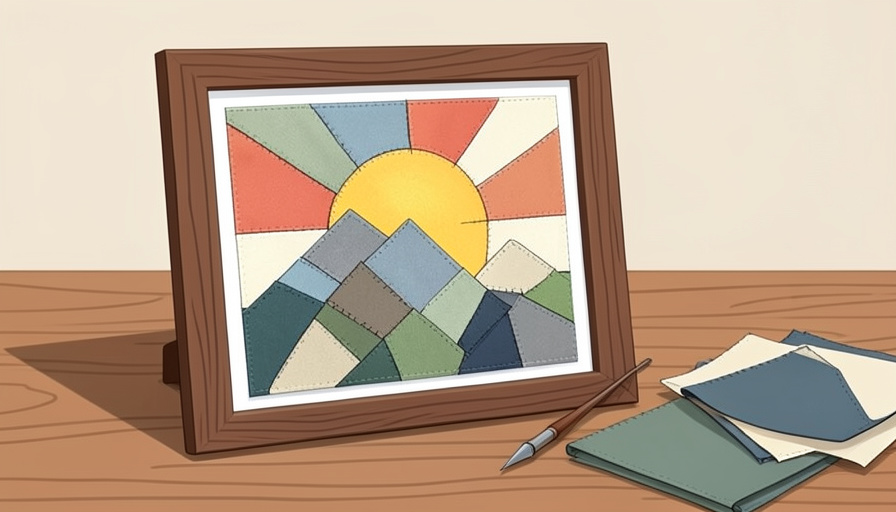
Some crafts look intimidating and turn out to be easy. Kinusaiga is the rare one that looks like a painting, needs zero sewing, and can be finished in an afternoon. That combination is exactly why it keeps resurfacing, and it is having another moment right now, with beginner posts filling craft feeds and kits showing up everywhere from Etsy to the big-box shelves. If you have ever wanted to make something that looks far more skilled than the effort it takes, this is the one to try.
Kinusaiga is a Japanese fabric art where small pieces of cloth are tucked into grooves to build up an image, like a stained-glass window made of fabric. There is no needle, no thread, and no drying time. You end up with a framed picture that has real depth and texture, made largely from scraps you probably already own. Here is what it actually is, why it is spreading again, and the simplest ways to get started.
Key Takeaways
Kinusaiga is a no-sew Japanese fabric craft: you press small pieces of cloth into narrow grooves cut into a board so the finished piece looks painted or like stained glass. It grew out of reusing old kimono silk, and the modern version uses a foam board instead of carved wood, which makes it very beginner-friendly. It is trending again because it is meditative, produces an impressive result in a single session, and uses up fabric scraps. To start, you can take a workshop, buy a beginner kit (which includes a framed board, a template, pre-cut fabric, and a tucking tool), or improvise with foam board, scraps, and a blunt stylus. Begin with a simple design of 10 to 15 sections.
Table of Contents
What kinusaiga actually is
The technique is simple to describe and oddly hypnotic to do.

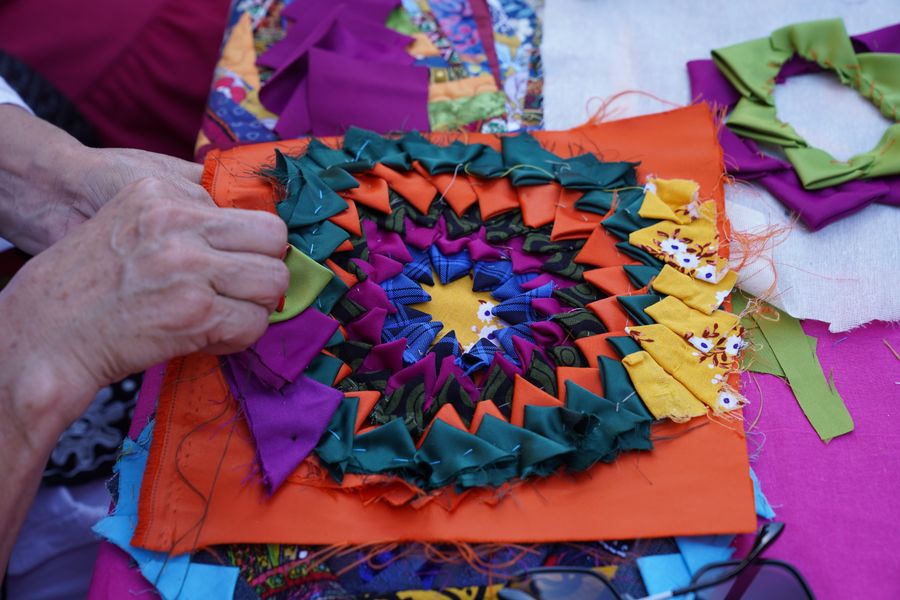
You start with a board that has a design carved or cut into it as a set of shallow channels. For each section of the picture, you cut a piece of fabric slightly larger than the shape, lay it over, and tuck the raw edges down into the surrounding grooves with a small pointed tool. Section by section, the fabric fills the design like colored glass filling the lead lines of a window. Because the edges are hidden in the grooves, there is no fraying to manage and no stitching at all. The result looks detailed and painterly, as craft guides to the technique show, but the actual skill is closer to careful coloring-in than to sewing.
Where it comes from
The craft has a genuinely lovely origin rooted in thrift. Kinusaiga grew out of a Japanese tradition of not wasting beautiful cloth, specifically the silk from old kimono that were too worn to wear but too precious to throw away. Rather than discard the fabric, makers gave it a second life as art, tucking the pieces into carved wooden panels to create scenes. That upcycling spirit is still at the heart of it, which is part of the modern appeal. In a moment when people are trying to waste less and make more by hand, a craft built entirely on reusing scraps of meaningful fabric lands just right. The old shirt you cannot part with can literally become part of a picture on your wall.
Why it is trending again
A few things are driving the current wave, and they reinforce each other. It is deeply satisfying to watch, which is why clips of the tucking process rack up views and why craft communities are full of first-attempt posts. It is meditative in the way that repetitive, low-stakes handwork tends to be, a quiet antidote to screen time. It is genuinely beginner-friendly, since the modern foam-board method removes the need to carve wood, so anyone with a craft knife and patience can do it. And unlike many crafts, you finish something in one sitting rather than abandoning a half-done project in a drawer. Add cheap, widely available kits to that mix and you get a craft that is easy to start on a whim and rewarding enough to keep doing.
Three ways to get started
You can begin at whatever level of commitment suits you:
- Take a workshop. Local craft studios and online classes run kinusaiga sessions where everything is provided and you leave with a finished framed piece. Best if you want guidance and the social side.
- Buy a beginner kit. Kits typically include a framed foam board with the design ready to cut, a template, pre-cut or assorted fabric, a tucking tool, and instructions. This is the easiest at-home entry point, and kits are widely sold online and in stores.
- Improvise from scraps. If you are thrifty or already crafty, you need only a piece of foam board, a printed design, a craft knife, a blunt stylus or tucking tool, and fabric scraps. This is the cheapest route and the truest to the craft’s reuse-it origins.
Whichever you choose, start small. A simple design with 10 to 15 sections, like a sunrise, a leaf, or a geometric pattern, is very manageable for a first piece and still looks impressive when framed.
A few tips for a clean first piece
The craft is forgiving, but a handful of habits make the result look sharper. Cut your fabric a little larger than each section so there is enough to tuck, since trimming down is easier than coming up short. Keep the grooves clean and deep enough to hold the edges, roughly a quarter inch, so nothing pops back out. Choose fabrics with some body, cotton works beautifully, while very thin or very stretchy material can be fiddly. And think about color and contrast the way you would a painting, letting darker pieces define shapes and lighter ones open them up. None of this is difficult, and the mistakes are easy to fix while the fabric is still loose.
What To Know
- Kinusaiga is a no-sew Japanese fabric art where cloth is tucked into grooves to form a picture.
- It grew from reusing precious old kimono silk, and the modern version uses foam board.
- It is trending because it is satisfying, meditative, beginner-friendly, and finished in one session.
- You can start with a workshop, a beginner kit, or improvised foam board and scraps.
- Begin with a simple 10-to-15-section design and fabric with some body, like cotton.
Frequently Asked Questions
Do you need to know how to sew for kinusaiga?
No. Kinusaiga involves no needle, thread, or stitching. You tuck fabric pieces into grooves cut in a board, so the skill is closer to careful cutting and placing than to sewing. That is a big part of why it is so beginner-friendly.
What do you need to start kinusaiga?
At minimum, a foam board, a printed design, a craft knife to cut the grooves, a blunt tucking tool or stylus, and fabric scraps. Beginner kits bundle a framed board, template, fabric, and tool together, which is the simplest way to begin at home.
What fabric works best for kinusaiga?
Fabric with some body, such as cotton, tucks in cleanly and holds its edges well. Very thin, slippery, or stretchy fabrics can be harder to manage for a first project. Since the craft is built on reuse, old shirts and leftover scraps are ideal material.
How long does a kinusaiga piece take?
A simple beginner design can be finished in a single afternoon, which is a big reason for its appeal. Larger or more detailed pieces take longer, but the one-session payoff on small projects is unusual among crafts and very satisfying.
Is kinusaiga expensive to try?
It can be very cheap. If you improvise with foam board and fabric scraps you already own, the cost is minimal. Kits and workshops cost more but remove the guesswork, so you can start at whatever budget and commitment level suits you.
The Bottom Line
Kinusaiga keeps coming back because it delivers something rare: a finished piece that looks genuinely artful, made with no sewing, from fabric you might otherwise throw away, in the space of an afternoon. It is calming to do, cheap to try, and forgiving enough that a first attempt usually looks good on the wall. Whether you book a workshop, grab a kit, or dig through your scrap drawer, it is one of the easiest ways to make something you will actually want to keep. For more on making and creativity, browse The Other Stream’s Arts section, or our Family & Personal coverage on hobbies and home life.