
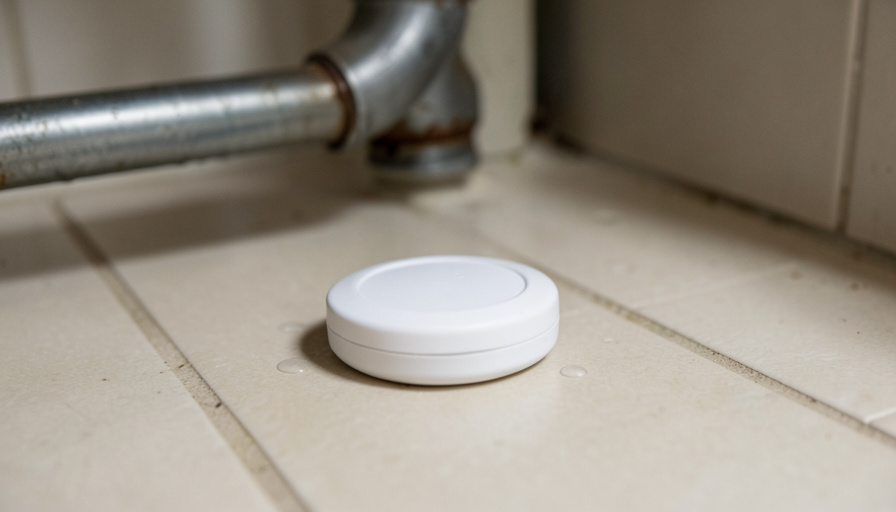
A water leak sensor has one job: warn you before a slow drip becomes a ruined floor. But a lot of them do that warning entirely through your home WiFi and a cloud app, which means the alert only reaches you if the internet is up. The trouble is that the events most likely to cause a leak, a storm, a power flicker, a frozen pipe snapping, are also the events most likely to knock your WiFi or power offline. So the sensor sits there detecting water and quietly failing to tell anyone. If you want protection you can count on, you want a leak alarm that speaks up without needing a connection.
Here are nine leak sensor alternatives that still alert you during a WiFi outage, with what each does well and where it falls short.
The short version
The weakness of a WiFi-only leak sensor is that it goes silent when the internet drops, which is often the worst moment. The dependable alternatives alert in one of two ways that do not need your home WiFi: a loud local siren you can hear in the house, or a cellular connection that texts you independently of your router. The strongest options are a standalone battery water alarm, sensors on a local Z-Wave or Zigbee hub, a sensor with its own built-in siren, a cellular-backed monitor, an automatic shutoff valve with a local alarm, cheap alarm pucks under each appliance, a hub with battery backup, a mechanical pan or float alarm, and a combined freeze-and-leak alarm. The right pick depends on whether you are usually home to hear an alarm or need a remote alert that does not rely on WiFi.
Table of Contents
1. A standalone battery water alarm
The simplest fix is a small battery-powered water alarm that has no WiFi at all: it sits on the floor, and when its contacts get wet it lets out a loud, smoke-detector-style shriek. It cannot fail because of an internet outage because it never used the internet, and the batteries last a long time. The obvious limit is that it only helps if someone is close enough to hear it, so it is ideal near a water heater, under a sink, or by a washing machine in an occupied home, and less useful for a property you leave empty for long stretches.
2. Z-Wave or Zigbee sensors on a local hub
Sensors that use Z-Wave or Zigbee talk to a local hub in your home rather than straight to the cloud, so they can trigger an alarm or an action even when your internet is down. Set up this way, a detected leak can sound a siren, flash lights, or trigger a shutoff through the hub locally, no connection required. The trade-offs are that you need a compatible hub and a bit more setup, and if you want the alert to reach your phone while you are away, that part still relies on the internet, so pair it with a local siren for the offline case.
3. A sensor with a built-in siren
Some smart leak sensors include their own onboard siren, which is the detail that matters here. Even if the WiFi or the cloud service is down, the sensor itself screams when it detects water, so you get the local warning regardless of connectivity, and you still get the app alert when the connection is working. It is a good middle ground between a dumb alarm and a fully connected system. The downsides are a higher price than a basic puck and the fact that, like any siren-based device, the audible alert only helps someone within earshot.
4. A cellular or LTE-backed water monitor
If your priority is a remote alert that does not depend on home WiFi, a monitor with its own cellular connection sends you a text or app notification over the mobile network instead of your router. That means a leak reaches your phone even if the house internet or power to the router is out, which is exactly the scenario WiFi sensors miss. The catch is cost: cellular monitors usually carry a subscription for the mobile service, so you are paying ongoing for the independence, which is worth it for a second home or a property you cannot check often.
5. An automatic shutoff valve with a local alarm
The most complete protection is a system that not only detects a leak but shuts the water off at the main and sounds a local alarm, working on its own logic rather than waiting for the cloud. If a pipe bursts while you are away and offline, it stops the flow instead of just trying to notify you, which is the difference between a mopped floor and a flooded house. The costs are real: these systems are pricier and often want professional installation on your main line, so they suit higher-value protection rather than a quick under-sink fix.
6. Alarm pucks under each appliance
Because basic battery water alarms are inexpensive, you can buy several and place one under every likely culprit: the dishwasher, the washing machine, the water heater, behind a toilet, under each sink. Each one alarms locally the instant it gets wet, with no WiFi and no hub, and covering many spots cheaply beats one clever sensor in a single place. The limitation is the same as any local alarm, that it only alerts someone present, so this approach is strongest in a home that is usually occupied, used as a wide, cheap first layer.
7. A hub with battery backup and a local chime
An outage often takes power as well as internet, so a hub or base station with a battery backup keeps a local alarm working through it. Paired with sensors that chime or sound at the hub, you keep getting warnings during the exact blackout that would silence a plug-in, cloud-only setup. It is a sensible upgrade to a local-hub system. The caveats are that the backup only lasts as long as its battery, and the remote-notification side still needs connectivity, so the battery hub is mainly protecting the local, audible alert you can rely on.
8. A mechanical pan or float alarm
For specific trouble spots like a water heater or a sump pit, a mechanical pan alarm or float switch is about as reliable as it gets, because it is a simple battery-and-sensor device with no network at all. When water rises into the drip pan or the pit past a set point, it sounds. There is very little to break and nothing to go offline. Its narrowness is the point and the limit: it watches one location well and does nothing elsewhere, so it is a targeted guard for a known risk rather than whole-home coverage.
9. A combined freeze-and-leak alarm
Since frozen pipes are a common cause of the leaks that strike during winter storms, a device that alarms on both a dangerous temperature drop and on water gives you an earlier, offline warning. A local freeze-and-leak alarm can shriek when the room gets cold enough to threaten pipes, before anything has even burst, and again if water appears, all without a connection. It is a smart choice for basements, garages, and vacation homes in cold climates. Like the other local alarms, its audible warning needs someone to hear it unless you pair it with a cellular or hub-based alert.
Why WiFi-only sensors fail when you need them
The reason this matters is timing. Water damage and freezing are among the most common and costly home insurance claims, affecting a meaningful share of homes each year, as the Insurance Information Institute’s facts and statistics on home insurance claims show. And the leaks that do the most damage often happen during storms, freezes, and power events, which are exactly when your WiFi or your router’s power can be down. A sensor that can only shout through the cloud picks the worst possible moment to go quiet. A local siren does not care whether the internet is up, and a cellular alert routes around your home network entirely, so either one closes the gap that a WiFi-only device leaves open. The goal is a warning that survives the outage, not one that depends on everything working.
How we chose these
We selected these alternatives on one main test: does the device still warn you when your home WiFi or internet is down. From there we weighed how each one alerts, a local siren you can hear or a cellular message that bypasses your router, along with cost, ease of setup, and how much of the home each protects. We included both simple standalone alarms and hub or shutoff systems because they suit different needs, from a cheap under-sink guard to whole-home protection for a property you leave empty. We noted the honest limits of each, especially that a purely local alarm only helps someone within earshot, so the list reflects real trade-offs rather than a ranking of features.
This article is general information. Devices, features, and connectivity options change and vary by model and home, so confirm how a specific product alerts during an outage, and consider professional installation for shutoff valves and anything connected to your main water line.
Frequently asked questions
Do water leak sensors work without WiFi?
Some do and some do not. Basic battery water alarms and mechanical pan or float alarms work entirely offline with a local siren, and sensors on a local hub can trigger alarms without the internet. WiFi or cloud-only sensors, though, cannot send their alert when the connection is down. If offline protection matters, choose a device with a local siren or a cellular connection rather than one that relies solely on your home WiFi.
How will I get a leak alert if my internet is out?
Two ways work without home WiFi: a local siren that is loud enough to hear in the house, and a cellular-connected monitor that texts you over the mobile network instead of your router. Local sirens only help if someone is present, while cellular alerts reach you even away from home during an outage. Many people combine both, a loud local alarm for anyone home plus a cellular or hub alert for when they are away.
Are cellular leak sensors worth the subscription?
For a home you leave empty often, a second property, or anywhere a burst pipe could do major damage before you noticed, the cellular subscription usually pays for itself against the cost and hassle of water damage. Its value is that it alerts you independently of your home internet and power. For an occupied home where someone would hear a siren, a local alarm without a subscription may be enough, so match the cost to how the property is used.
What is the cheapest way to protect against leaks without WiFi?
Inexpensive standalone battery water alarms are the cheapest reliable option, and buying several to place under each appliance gives wide coverage for little money, all offline with local sirens. It will not notify you remotely, so it is best in a home that is usually occupied. For targeted spots like a water heater or sump, a mechanical pan or float alarm is similarly cheap and dependable. These simple devices cover a lot for a small outlay.
Can a leak sensor shut off my water automatically?
Yes, an automatic water shutoff system detects a leak and closes the valve on your main line, often with a local alarm, and the better ones act on their own without needing the cloud. That means a burst pipe can be stopped even while you are away and offline, rather than only reported. These systems cost more and usually want professional installation, but they offer the most complete protection because they stop the water instead of just warning about it.
The bottom line
A leak sensor is only useful if it can reach you when a leak happens, and the leaks that matter most often strike during the storms and outages that silence a WiFi-only device. The fix is to alert in a way that does not depend on your home internet: a loud local siren, a cellular connection that bypasses your router, or a shutoff system that acts on its own. Standalone alarms and pucks cover an occupied home cheaply, cellular monitors and shutoff valves protect a property you leave empty, and a battery-backed hub keeps local alerts alive through a blackout. Pick for how your home is used, and the sensor will still be shouting when it counts. For more on dependable smart-home setups, see our guides to locking down a smart camera and robot vacuums that map without the cloud, and browse The Other Stream’s Home Improve section.