
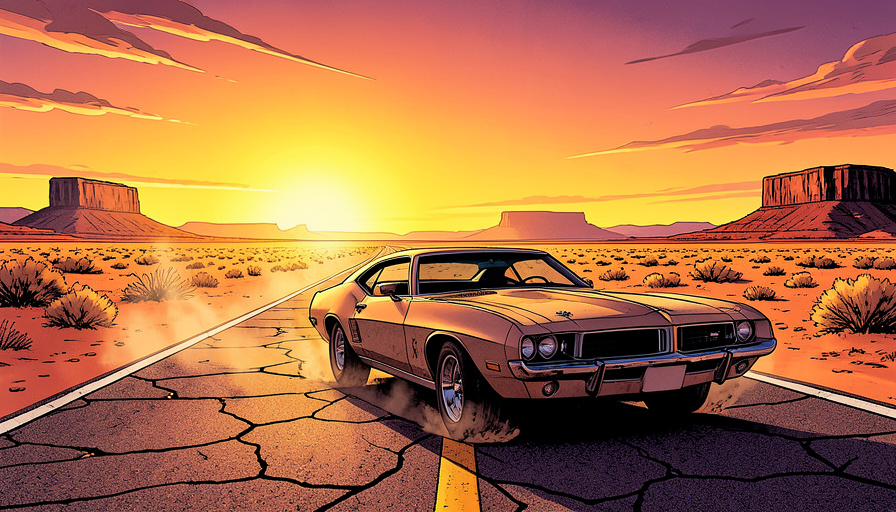
A cracked desert highway, four rebels in color-coded jackets, a ray-gun shootout, and yes, a karate kick. The “Na Na Na” video plays like a two-minute sugar rush, but underneath the chaos it is telling a very specific story, and it means something.
More than a decade after it dropped, My Chemical Romance’s “Na Na Na” video still pulls in new viewers who love the look and have no idea what is happening in it. That is fair, because it throws you straight into a fully built world with no explanation. So here is the actual story on screen, who those characters are, and what the band was really getting at, without needing to have followed the fandom for years.
The short version
“Na Na Na” is the lead single from My Chemical Romance’s 2010 album Danger Days: The True Lives of the Fabulous Killjoys, and its video introduces that album’s world. The band play a gang called the Killjoys, desert outlaws in a dystopian future fighting a controlling corporation, Better Living Industries. The clip is a fast, loud tour of that universe, and frontman Gerard Way has said the whole story is really an allegory about the music industry: the clean, controlled city versus the messy, free world outside.
Table of Contents
What the video actually is
Before the story, the basics. “Na Na Na (Na Na Na Na Na Na Na Na Na)” was released in 2010 as the first single from Danger Days, marking a hard turn from the gothic black-and-white of the band’s earlier era into loud color and comic-book energy. The video was co-directed by Roboshobo and Gerard Way, and it functions less like a standalone clip than the opening scene of a larger saga the album tells across its songs and artwork. If it feels like you have walked into the middle of a movie, that is by design.
The story on screen
Here is what is happening as the song blasts. In a sun-bleached future desert outside a sterile metropolis called Battery City, a crew of four outlaws known as the Killjoys tear around in a muscle car, rob, joyride, and battle the enforcers of Better Living Industries, the corporation that runs everything. Between fights, they hack a vending machine and generally cause mayhem, and one of them delivers the karate kick that fans still quote. They are protecting a young girl the corporation wants back. The video ends on a standoff the Killjoys are losing, a deliberately unresolved cliffhanger that the album’s later “Sing” video picks up.
Who the characters are
The four Killjoys are the band members in costume, each with a code name: Party Poison, Kobra Kid, Jet Star, and Fun Ghoul. The much-memed karate kick belongs to Kobra Kid, played by bassist Mikey Way. Around them sits a small cast of the album’s world: the radio-DJ narrator Dr. Death Defying, the roller-skating messenger Show Pony, and the Girl the crew is shielding. The villain is Korse, a coldly corporate agent played, in a fun bit of casting, by acclaimed comic-book writer Grant Morrison, backed by henchmen in vampire masks. Knowing the names turns the video from random noise into a readable scene.
What it is really about
The costumes and ray guns are fun, but Gerard Way has been clear that Danger Days carries a pointed message. He described the whole thing as an allegory for the state of the music industry around 2010. Battery City, clean and safe and controlled, stands in for a sanitized, corporate music world, while the dangerous open Zones outside represent freedom, mess, and real creativity. The Killjoys are not just cool desert punks; they are a stand-in for holding onto artistic independence against a system that wants everything tidy and controllable. That reading is why the goofy, joyful surface has real weight under it.
Why people still talk about it
The video endures for a simple reason: it committed completely to a world. Instead of a band miming in a warehouse, it built a color-saturated comic-book universe with its own characters, lore, and unfinished story, and invited fans to live in it. That is why the karate kick, the jackets, and the Killjoy names still circulate years later, and why new listeners keep discovering the clip and falling down the same rabbit hole. A great concept video does not just show a song; it opens a door to somewhere, and this one still does.
Frequently asked questions
What is the “Na Na Na” video about?
It introduces the world of My Chemical Romance’s 2010 album Danger Days, following a gang of desert outlaws called the Killjoys as they battle a controlling corporation, Better Living Industries, and protect a young girl. It ends on a cliffhanger the “Sing” video continues.
Who are the Killjoys in the video?
They are the four band members in costume: Party Poison, Kobra Kid, Jet Star, and Fun Ghoul. Kobra Kid, who does the famous karate kick, is played by bassist Mikey Way. Supporting characters include Dr. Death Defying, Show Pony, and the Girl.
Who plays the villain in “Na Na Na”?
The corporate villain Korse is played by the celebrated comic-book writer Grant Morrison. He leads the agents of Better Living Industries, the corporation the Killjoys are fighting throughout the Danger Days story.
What does “Na Na Na” actually mean?
Gerard Way described Danger Days as an allegory for the music industry around 2010. The controlled Battery City represents a sanitized corporate music world, while the free, dangerous Zones outside stand for real creative independence.
Does the “Na Na Na” story continue anywhere?
Yes. The video ends on an unresolved standoff, and the story picks up in the video for “Sing,” another single from the same album. The wider Danger Days narrative also expanded later into a comic-book series.
The bottom line
“Na Na Na” only looks like random desert chaos. It is really the opening chapter of the Killjoys story, a color-drenched comic-book world where four coded rebels fight a corporation for the freedom to be messy and alive, and Gerard Way built that world as a pointed metaphor for music itself. Once you know the characters and the meaning, the karate kick stops being a meme and becomes a scene. For more on music, film, and culture, browse The Other Stream’s Arts section.