
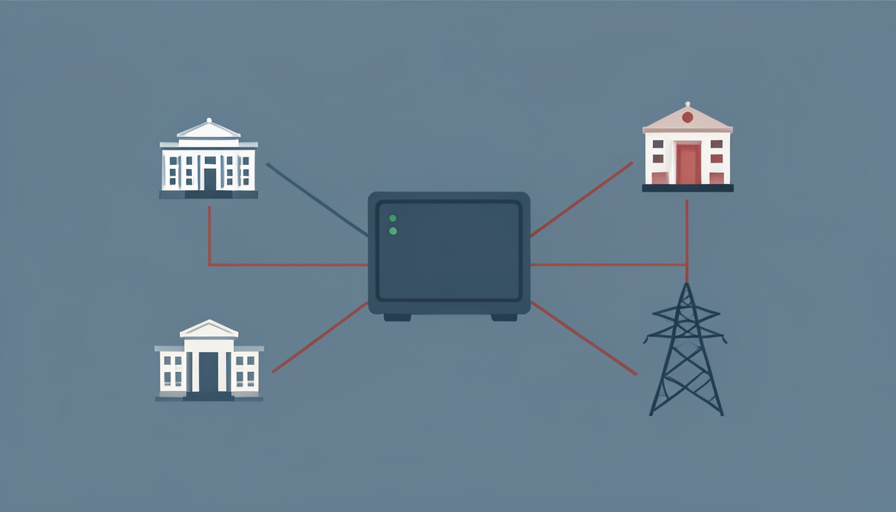
A £21 million grid contract is small change for a company Palantir’s size. What makes it notable is the pattern it belongs to: a steadily expanding presence inside Britain’s most sensitive systems, often won without a competitive contest. Zoom out, and one deal becomes a much bigger question.
Palantir landing another UK public contract is not, on its own, a story. Palantir landing another one without competition, on top of hundreds of millions already spread across health, defense, and policing, is. The grid deal with Britain’s National Energy System Operator is the newest entry in a footprint that has grown large enough for MPs to ask whether the country has become too reliant on a single American vendor. The competition question is where that concern lives.
The Short Version
Palantir’s Britain grid operator contract, worth about £21 million and awarded without competing bids, is the latest addition to a UK public-sector footprint now exceeding £670 million. That includes a £330 million NHS data platform and a £240 million Ministry of Defence deal, the latter also a direct award without competition. The recurring theme is not the individual contracts but the pattern: repeated direct awards that reduce competition and deepen the government’s dependence on one supplier for critical systems. The core concern is concentration risk, having a single foreign vendor embedded across health, defense, energy, and more, rather than any single deal being improper.
Table of Contents
The grid deal in context
Britain’s National Energy System Operator awarded Palantir a contract worth roughly £21 million with no competing bids, citing a technical exemption because its grid systems already run on Palantir’s Foundry software, as The Register reported. On its own, a direct award to an incumbent for a system it already runs is defensible. The reason it drew attention is that it rhymes with how many of Palantir’s other UK deals have been struck.
One direct award is a procurement decision. A series of them, across unrelated departments, starts to look like a trend, and trends in public spending are what oversight is supposed to catch.
How big is Palantir’s UK footprint?
The scale is the part most people underestimate.


An investigation put Palantir’s UK state contracts at more than £670 million, spread across the NHS, the Ministry of Defence, police forces, and other bodies. The anchor deals are large: a £330 million, seven-year NHS Federated Data Platform contract for handling patient data, and a £240 million Ministry of Defence deal signed in December 2025, which was itself a direct award without competition, according to TechRadar. The footprint even reaches a nuclear-security agency. The grid contract is small by comparison, which is exactly why it is a useful marker: it shows the pattern extending into yet another critical sector.
The competition question
Here is the thread that ties it together. A striking share of these deals were awarded without a competitive process, often justified by an existing technical dependency or an urgent operational need. Each justification can be reasonable in isolation. The cumulative effect is a public-sector market where, for whole categories of data software, there is effectively one supplier being asked to compete against itself. Competition is supposed to discipline price and quality and give the buyer negotiating power. When direct awards become the norm, that discipline weakens, and the buyer, in this case the British state, loses bargaining power it may not get back.
Why concentration is the real risk
Set aside opinions about Palantir specifically, because the structural point holds regardless. When one vendor’s software sits inside health records, defense analytics, police systems, and now grid operations, the government’s exposure is no longer about any single contract. It is about what happens if that relationship sours, if the vendor raises prices, changes terms, or faces its own problems. A dependency spread across many critical systems is hard to unwind precisely because it is everywhere at once. That concentration, not the merits of the software, is what makes oversight bodies nervous, and it is why the grid deal drew scrutiny out of proportion to its size.
What would change the pattern
The pattern is not inevitable, and a few things could break it:
- Genuine competitive tenders when contracts renew, rather than default extensions to the incumbent.
- Contract terms that require data portability and clean exit paths, so switching vendors is actually possible.
- A central view of how much of government runs on one supplier, so concentration is visible before it deepens.
- Investment in alternatives, including domestic and open options, so “no feasible alternative” stops being self-fulfilling.
What To Know
- The £21 million grid contract adds to a UK Palantir footprint exceeding £670 million.
- Major deals include a £330 million NHS data platform and a £240 million MoD contract, the latter a direct award.
- Many contracts were awarded without competition, which is the recurring concern.
- The core risk is concentration: one vendor embedded across health, defense, policing, and energy.
- Competitive tenders, exit terms, and a central view of dependence could break the pattern.
Frequently Asked Questions
How much is Palantir’s UK government footprint worth?
An investigation put Palantir’s UK public-sector contracts at more than £670 million, spread across the NHS, the Ministry of Defence, police forces, a nuclear-security agency, and now the energy grid. The grid deal is small relative to the anchor contracts.
Was the Palantir grid contract awarded competitively?
No. Britain’s National Energy System Operator awarded the roughly £21 million contract without competing bids, citing a technical exemption because its systems already run on Palantir’s Foundry software. Several of Palantir’s other UK deals were also direct awards.
Why do repeated direct awards matter?
Competition disciplines price and quality and gives the buyer negotiating power. When contracts are repeatedly awarded without a competitive process, that discipline weakens and the government loses bargaining power, effectively leaving one supplier competing against itself for whole categories of work.
What is the main risk of relying on Palantir?
Concentration. When one vendor’s software runs health, defense, policing, and grid systems, the exposure is systemic rather than tied to any single contract. A dependency spread across many critical services is hard to unwind if the relationship changes.
What could reduce the dependence?
Genuine competitive tenders at renewal, contract terms guaranteeing data portability and clean exits, a central view of how much government runs on one supplier, and investment in alternatives so that “no feasible alternative” is no longer self-fulfilling.
The Bottom Line
The grid contract is minor money and, taken alone, entirely defensible. Its importance is as a data point in a larger trend: a single vendor steadily embedding itself across Britain’s critical systems, frequently without a competitive contest. The question worth asking is not whether any one deal was wrong, but whether a country should let dependence on one supplier grow this quietly. That is a procurement and resilience issue, and it will outlast this particular contract. For more on business and public policy, browse The Other Stream’s Business section, or our Tech coverage.