
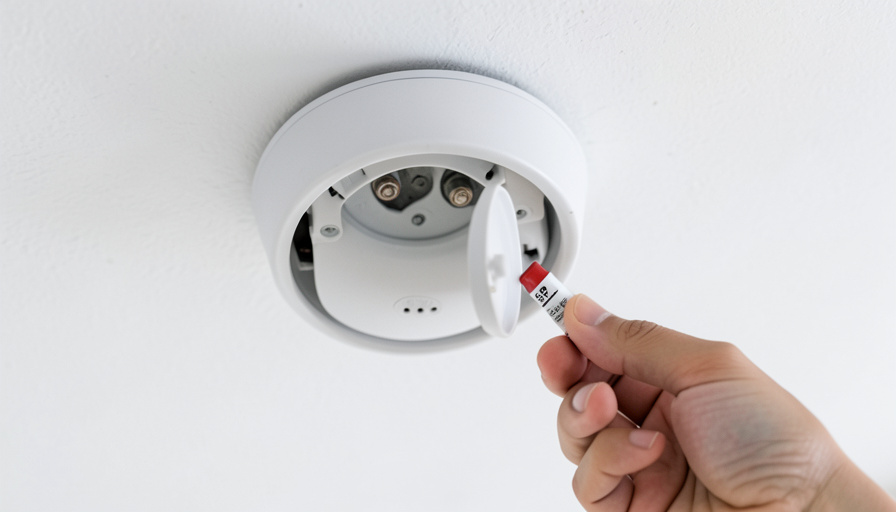
You climbed the ladder, popped in a fresh battery, and felt the small satisfaction of a job done. Then, an hour later, the smoke alarm chirps again. It is one of the most aggravating little failures in a house, partly because it always seems to happen at two in the morning, and partly because the obvious fix, a new battery, is the thing you already tried. Here is the reassuring part: a chirp that keeps going after a new battery usually is not about the battery at all, and once you know what it is really telling you, it is straightforward to stop.
Here are the reasons a smoke alarm keeps chirping after you replace the battery, and how to fix each one.
The short answer
If your smoke alarm chirps even with a fresh battery, the most common reason is that the alarm has reached the end of its life, because a chirp that continues after a new battery is the classic end-of-life signal, and smoke alarms are meant to be replaced ten years after their manufacture date. Beyond that, the battery may not be seated correctly, the unit may need a hard reset to clear a residual charge, dust in the sensing chamber can cause it, or the sound may actually be coming from a different alarm or a carbon monoxide detector nearby. The first thing to do is check the date printed on the back of the alarm: if it is close to ten years old, replace the whole unit rather than chasing the chirp. Never disable a smoke alarm to stop the noise.
Table of Contents
1. The alarm has reached the end of its life
This is the reason people miss, and it is the most likely one. Smoke alarms do not last forever, and a chirp that continues after you have put in a new battery is the specific signal that the unit itself is worn out and needs replacing. The National Fire Protection Association’s guidance on smoke alarms is direct about it: replace every alarm ten years after its manufacture date, and treat a chirp that survives a battery change as the end-of-life warning. Take the alarm down and read the date printed on the back. If it is around a decade old, no battery will fix it, and the right move is a new alarm.
2. The battery is not seated correctly
Sometimes the new battery is the problem. A pull tab left on the battery, a battery drawer that did not click fully shut, a battery put in the wrong way around, or contacts that are not making a firm connection will all leave the alarm reading a low battery even though a fresh one is installed. It is also worth checking that the “new” battery is actually good, since one that has sat in a drawer for a year can be half dead. Reopen the compartment, remove any tab, seat the battery firmly in the correct orientation, and close the drawer until it latches.
3. The unit needs a hard reset
Alarms can hold a small residual charge or a memory of the low-battery state that keeps them chirping after a swap, and a reset clears it. Take the battery out, then press and hold the test button for about fifteen seconds to drain any remaining power and reset the electronics. You may hear a brief chirp as it clears. Then put the fresh battery back in and close the compartment. This simple reset resolves a surprising number of stubborn chirps that a new battery alone did not, especially on units that are not yet at end of life.
4. Dust or debris in the sensor
A smoke alarm draws air through vents into a small sensing chamber, and over time dust, cobwebs, and even insects collect inside and can cause false low-battery or fault chirps. If the alarm is not old and a fresh battery plus a reset did not help, gently vacuum the outside vents with a soft brush attachment, or use a short burst of compressed air, to clear the buildup. Doing this a couple of times a year as part of testing keeps the sensor clean. A clogged chamber can mimic a battery fault, so clearing it sometimes silences a chirp that had nothing to do with power.
5. It is a different alarm or a carbon monoxide detector
A chirp can be hard to place, and people sometimes replace the battery in the wrong unit entirely. In a home with several alarms, or interconnected alarms, the sound can seem to come from one while another is the source, so walk the house and listen at each device. It is also easy to confuse a smoke alarm with a nearby carbon monoxide detector, which chirps for its own low battery or, importantly, for its own end of life, since CO alarms also expire. If a fresh battery in one unit did not help, confirm which device is actually chirping before doing anything else, because you may be fixing the wrong one.
6. It is a sealed ten-year alarm
Many newer alarms come with a sealed, non-replaceable battery designed to last the unit’s full ten-year life. If you have one of these, there is no battery to change, so a chirp is the alarm telling you its sealed battery, and therefore the whole unit, has reached the end of its life. Trying to pry it open or silence it is not the answer. The fix is simply to replace the entire alarm with a new one. Check whether your alarm is a sealed model before you go hunting for a battery door that does not exist.
How to fix it step by step
Work it in order. First, take the alarm down and check the manufacture date on the back; if it is around ten years old, or it is a sealed unit, replace the whole alarm and you are done. If it is newer, make sure the battery is fresh and seated correctly with no pull tab, then do a hard reset by removing the battery and holding the test button for about fifteen seconds before reinstalling. Next, vacuum the vents to clear dust. Then confirm the chirp is really coming from this unit and not another alarm or a carbon monoxide detector nearby. If it still chirps after all of that on a newer alarm, the unit is likely faulty and should be replaced. Whatever you do, do not remove the battery and leave the alarm dead, and if you want a dependable water-side companion to your safety devices, our guide to leak sensors that alert without WiFi covers the same keep-it-working mindset.
This article is general information, not professional safety advice. Smoke alarms save lives, so never disable a working alarm to stop a chirp, follow your alarm manufacturer’s instructions, and replace any alarm at or past its ten-year mark. If you are unsure whether an alarm is working, replace it.
Frequently asked questions
Why does my smoke alarm keep chirping after I put in a new battery?
Most often because the alarm has reached the end of its life, since a chirp that continues after a fresh battery is the standard end-of-life warning, and alarms should be replaced ten years after their manufacture date. Other causes are a battery that is not seated properly, a residual charge that needs a reset, dust in the sensor, or a different alarm chirping. Check the date on the back first, then reset and clean if it is newer.
How do I reset a smoke alarm that keeps chirping?
Remove the battery, then press and hold the test button for about fifteen seconds to drain any residual charge and clear the low-battery memory. You may hear a short chirp as it resets. Put a fresh, correctly seated battery back in and close the compartment. This hard reset clears many stubborn chirps on alarms that are not yet at end of life. If it still chirps and the unit is around ten years old, replace it.
How do I know if my smoke alarm needs replacing?
Check the manufacture date printed on the back of the unit. Smoke alarms should be replaced ten years from that date, and a chirp that continues after a new battery is a sign the alarm has reached the end of its life. Sealed ten-year alarms have no replaceable battery, so a chirp means the whole unit is done. When in doubt about an alarm’s age or function, replacing it is the safe choice.
Could the chirp be coming from a different device?
Yes, and it is a common mix-up. In homes with several alarms or interconnected units, the sound can seem to come from one while another is the source, so listen at each device to find the real one. A nearby carbon monoxide detector can also chirp for its own low battery or end of life. Confirm exactly which device is chirping before replacing a battery, so you do not fix the wrong unit.
Is it safe to remove the battery to stop the chirping?
No. Removing the battery and leaving the alarm dead defeats its purpose and puts your household at risk, and a chirping alarm is asking to be serviced, not silenced. Instead, identify the cause, reset or clean the unit if it is newer, and replace it if it is at end of life or sealed. Keep a working alarm in place at all times, and swap in a new one immediately if the old one cannot be fixed.
The bottom line
A smoke alarm that keeps chirping after a new battery is usually not asking for another battery; it is most often telling you the unit has reached its ten-year end of life and needs replacing, which is exactly what a persistent chirp after a fresh battery signals. Start by reading the manufacture date on the back, and if it is close to a decade old or a sealed model, put in a new alarm. If it is newer, reseat the battery, do a fifteen-second hard reset, clear dust from the vents, and make sure you are looking at the right device. Never leave an alarm disabled to stop the noise. For more on keeping your home’s safety devices dependable, browse The Other Stream’s Home Improve section.