
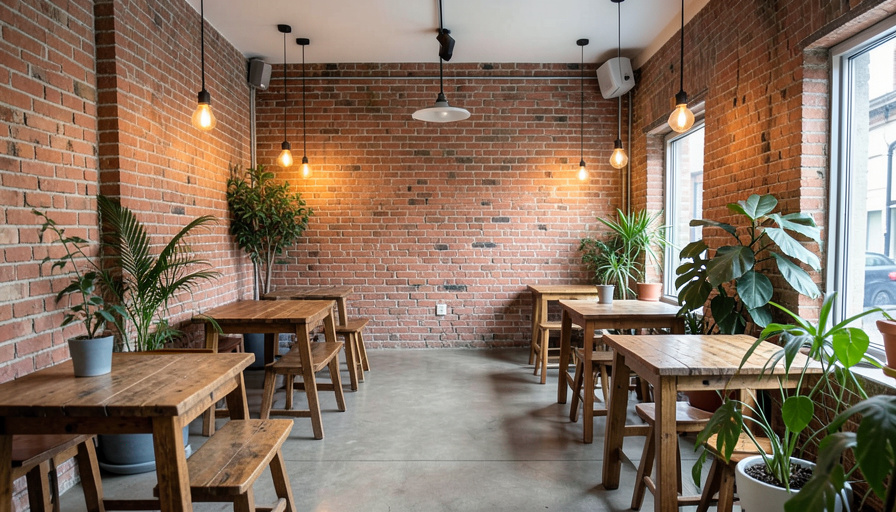
You fly halfway around the world, walk into a cafe, and could swear you left it back home: the same exposed brick, the same hanging bulbs, the same avocado toast. That deja vu is not in your head.
The feeling that everywhere is starting to blur into one interchangeable place, the same coffee shop, the same hotel lobby, the same renovated apartment, is common enough now that it has a name. It is not nostalgia or snobbery. It is a real, traceable shift in how places get designed and discovered, and understanding it is the first step to seeing something that actually feels like somewhere.
Here is why travel started looking identical, an honest word about the “authenticity” obsession, and practical ways to get past the algorithm’s version of a place.
The short version
Cafes, hotels, and rentals worldwide have converged on one look because their owners and their customers are all scrolling the same feeds, a phenomenon the writer Kyle Chayka named AirSpace. Review platforms and social apps funnel everyone to the same handful of spots, so the popular places become photogenic clones of each other. The fix is not to chase some pure “authentic” experience, which is largely a myth, but to step off the algorithm often enough to find what is specific to a place rather than optimized for a feed.
Table of Contents
There is a name for it: AirSpace
Back in 2016, writer Kyle Chayka coined the term AirSpace for the eerily consistent aesthetic showing up in cafes, coworking spaces, and hotels across the globe: reclaimed wood, industrial light fixtures, minimalist furniture, a wall of plants, flat whites, and the same handful of dishes. Whether you are in Lisbon, Bangkok, or Austin, the trendy spots increasingly share a single visual language. Once you notice it, you cannot stop seeing it.
Why it happened: the algorithm
The cause is not a conspiracy of interior designers. It is that everyone, the cafe owner and the traveler alike, is looking at the same screens. Chayka’s later book Filterworld argues that platforms like Instagram and TikTok now shape what we find and what we make, and the net result of all that supposed personalization is homogenization. A business owner studies what performs online and builds a space to match it. Review apps and map searches then push every visitor toward the same top-rated few places, which get busier, more photographed, and more copied. Short-term rentals sand off the last rough edges, styling apartments into the same neutral box worldwide. The machine rewards sameness, so sameness is what spreads.
The authenticity trap
Here is where I will push back on the usual conclusion. The instinct to fix this by hunting for “the authentic experience” or vowing to “travel like a local” is, honestly, a bit of a trap. There is often no single authentic version of a place, locals eat at chains and enjoy touristy things too, and performing local-ness for its own sake can be more precious than just admitting you are a visitor having a good time. Plenty of seasoned travelers will tell you the authenticity obsession is the most tiring part of modern travel, and they have a point. The goal is not to earn some badge of realness. It is narrower and more useful: to escape the algorithm’s tiny funnel so you actually encounter the specific character of where you are.
How to get past the sameness
You do not need to rough it or suffer to break the pattern. A few habits do most of the work:
- Ask a real person, a bartender, your host, a shopkeeper, where they go, instead of only trusting the top search result.
- Walk away from the central tourist core into ordinary residential neighborhoods, where places exist to serve locals, not feeds.
- Eat where there is a queue of locals or no English menu, rather than the spot with the most photos.
- Search in the local language or on local platforms, which surface different places than the global apps.
- Leave real gaps in your itinerary to wander without a destination, which is where the unplanned finds happen.
- Travel in the shoulder season, when a place behaves more like itself and less like a stage.
None of this requires you to be a purist. Do half of it and your trip already looks less like everyone else’s.
Look for specific, not “authentic”
The more useful filter than authenticity is specificity. Instead of asking whether something is authentic, ask whether it could only exist here. A regional dish that does not travel, a market selling things made down the road, a strange little local museum, a shop that has been in one family for generations: these are the opposite of AirSpace, not because they are performing realness, but because they are rooted in one particular place. Chase specific over authentic and you will naturally drift away from the interchangeable and toward the memorable.
Frequently asked questions
Why does everywhere look the same when I travel?
Because cafes, hotels, and rentals worldwide are designed by people watching the same social feeds, converging on one photogenic aesthetic. Review and map apps then push everyone to the same top-rated places, which get copied. Kyle Chayka named this sameness AirSpace.
What is AirSpace?
AirSpace is a term coined by writer Kyle Chayka in 2016 for the globally consistent look of trendy cafes, coworking spaces, and hotels: reclaimed wood, industrial lighting, minimalist decor, plants, and a familiar menu, repeated in cities around the world.
Is “traveling like a local” a real thing?
Not really, and chasing it can be counterproductive. Locals use chains and enjoy tourist attractions too, so there is rarely one authentic version of a place. A more useful aim is to get off the algorithm and find what is specific to where you are.
How do I find non-touristy places?
Ask real people who live there, wander residential neighborhoods away from the center, eat where locals queue, search in the local language, and leave unplanned time in your schedule. Traveling in the shoulder season helps too.
Does authentic travel actually matter?
The label matters less than the experience. Rather than seeking a badge of authenticity, look for things that could only exist in that specific place, like regional food or local makers. That naturally leads you away from the interchangeable version of a destination.
What to do next
The sameness of modern travel is real, and it comes from all of us looking at the same feeds, not from some loss of character in the world itself. You do not beat it by performing authenticity. You beat it by stepping off the algorithm now and then, following a specific curiosity, and letting a place be strange and particular. For more destinations and trip ideas, browse The Other Stream’s Travel section, including specific-place guides like our take on a rainy day in Edinburgh.