You plug the trip into a route planner, it promises two tidy charging stops of twenty minutes each, and you set off feeling smug. Then the first stop takes forty minutes, the second charger is broken, and you arrive two hours later than the app said. EV road trips are entirely doable, but the planning is where they go wrong, because a handful of optimistic assumptions quietly add up to a lot of extra time.
Most of these mistakes come from treating an EV’s range and charging speed as fixed numbers, when both swing hard with temperature, speed, terrain, and how full the battery already is. Here are nine planning errors that make charging take longer than expected, and how to build a schedule that survives contact with the real road.
The short version
EV planners underestimate charging time when you assume ideal conditions. Cold weather cuts range and slows charging, the charging speed drops sharply past about 80 percent, and climbing, high speeds, and a loaded roof all drain the battery faster than the rated figure. On top of that, chargers are sometimes broken or busy, and arriving with a cold battery charges slowly unless you precondition. Plan stops from roughly 10 to 80 percent rather than 0 to 100, pad an arrival buffer, precondition the battery before fast charging, and have backup chargers ready. Do that and the schedule holds; ignore it and every stop runs long.
Table of Contents
1. Ignoring cold-weather range and charging loss
Cold is an EV’s biggest range thief, and it hits charging too. In freezing weather, range can drop by a quarter or more, and a cold battery accepts a charge much more slowly, so a stop that takes twenty minutes in summer can take far longer in winter. Planners set to ideal conditions will badly underestimate a cold-weather trip. If you are driving in the cold, assume less range and longer stops, and lean on preconditioning to warm the battery before you plug in.
2. Assuming the charging speed stays constant
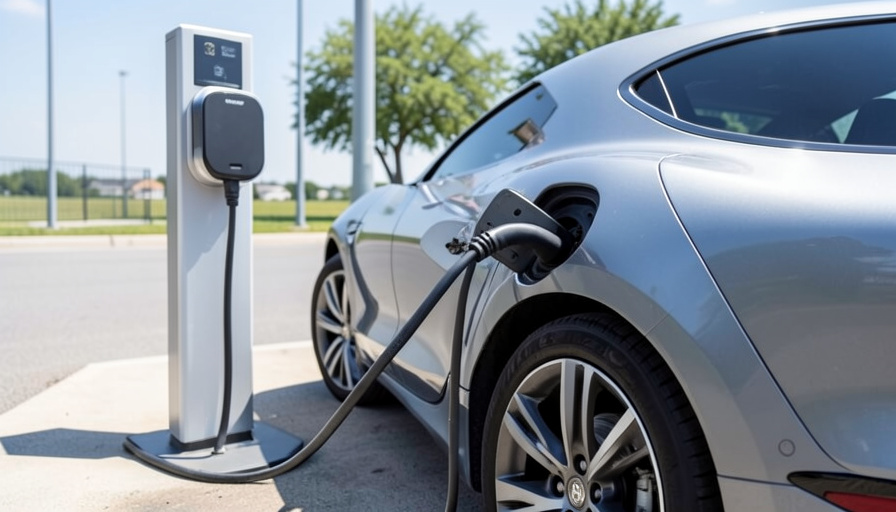
This is the big one. DC fast charging is fast only in the lower part of the battery; the speed tapers off sharply as you approach full, and the last stretch from around 80 to 100 percent can take as long as the whole first 80. A planner that assumes a steady charging rate will promise stops far shorter than reality. Think of fast charging as quick to 80 percent and slow after, and plan your stops to end there rather than waiting out the slow tail.
3. Planning stops from 0 to 100 percent
Related, but a planning habit worth calling out on its own. Charging from nearly empty to completely full is the slowest possible way to road trip, because you sit through both the risky low end and the crawling high end. The efficient pattern is to arrive with a comfortable buffer and charge from roughly 10 to 80 percent, which is the fast part of the curve, then move on. More short, fast stops beat fewer long ones, and it keeps you out of range anxiety at the bottom too.
4. Forgetting about elevation and climbing
Route planners that assume flat ground will mislead you in the mountains. Climbing a long grade drains the battery far faster than cruising on the level, so a mountain leg can eat range you were counting on, forcing an unplanned stop. Some of that energy comes back on the way down through regeneration, but not all of it. If your route crosses real elevation, expect the climbs to cost more than the flat-line estimate and pad the leg accordingly.
5. Underestimating speed, tires, and load
Rated range assumes gentle, unloaded driving, and a road trip is usually the opposite. Sustained high speed hurts EV range sharply because drag rises with speed, and a roof box or bike rack adds even more drag, while a fully loaded car and cargo add weight. All of it means you reach your next charger with less battery than the rated number suggested. Plan around your real highway speed and setup, not the sticker figure, especially if you are running a roof rack.
6. Trusting the peak charging speed on the spec sheet
A car rated for a high peak charging rate rarely holds it. The advertised number appears only briefly, at a low state of charge, at the right temperature, on a healthy charger that is not splitting power with the car in the next stall. In practice your average speed across a session is well below the peak. Planning around the headline kilowatt figure produces stops that are too short; plan around a realistic average and you will not be caught out waiting.
7. Assuming every charger will work
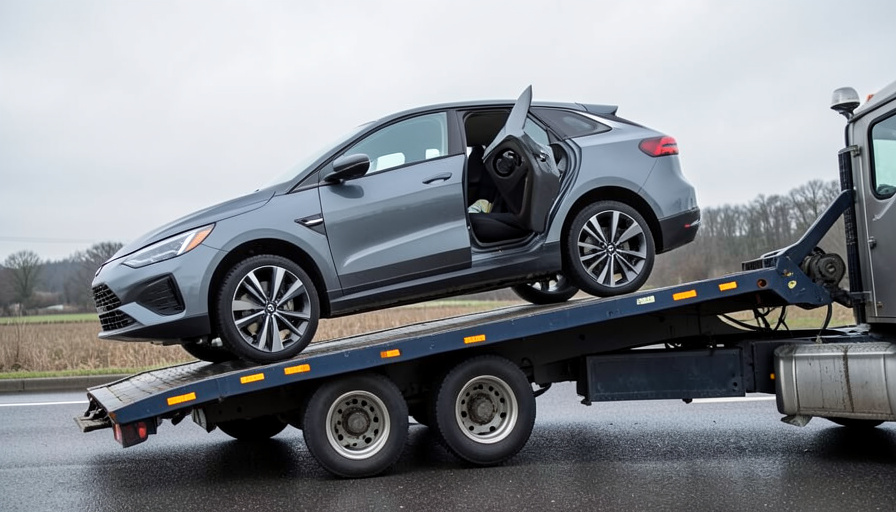
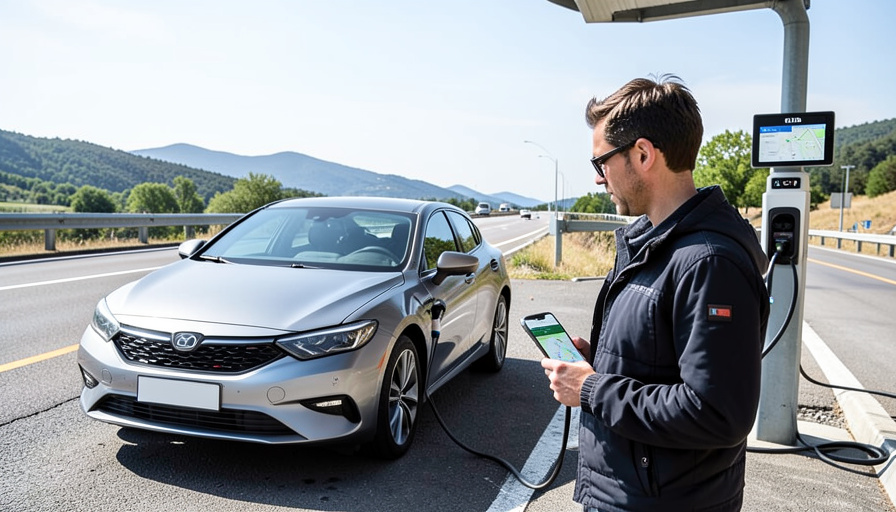
Planners route you to chargers as if they are all online and free, and on a real trip some are broken, occupied, or blocked. A dead stall or a queue at a busy location can add serious time, and a lone charger with no backup nearby turns a hiccup into a crisis. Check live status on a tool like PlugShare before you rely on a stop, and prefer larger sites with several stalls. Always know where the next charger is if your planned one is out, so a failure is a detour, not a tow.

8. Skipping battery preconditioning
Fast charging is only fast if the battery is warm, and a battery that has been cruising in cold weather is not. Preconditioning heats the battery to its ideal charging temperature before you arrive, and many cars do it automatically only if you set the charger as your destination in the car’s own system. Skip it, especially in winter, and your stop crawls while the pack warms up. Route to fast chargers through the built-in system so the car preconditions on the way.
9. Overlooking adapter and network gaps
Charging is not just about kilowatts; you have to actually connect and pay. As the industry shifts toward a common connector, some cars still need an adapter to use certain networks, and a stop can stall over a missing adapter, an app you have not set up, or a payment that will not go through. Plan for the networks and connectors your specific car uses, carry any adapter you need, and set up accounts before you leave. For more on getting the connection right, see our guide to handling NACS adapter charging errors.
How to plan stops that actually hold
A realistic plan beats an optimistic one every time. Use a proper EV route planner like A Better Route Planner that accounts for your car, speed, and weather rather than a simple range calculator, and treat its times as a floor, not a promise. Plan stops from about 10 to 80 percent, keep an arrival buffer of 10 to 15 percent so a broken charger is not an emergency, and precondition by routing through your car’s own system. Check live charger status before you commit to a stop, favor sites with multiple stalls, and carry the adapters your car needs. For another piece of EV trip prep worth sorting in advance, see our guide to EV-friendly roadside cover.
This article is general information, not vehicle-specific advice. Range, charging behavior, and network compatibility vary by model, battery, and location, so check your car’s own guidance and live charger data when planning a trip.
Frequently asked questions
Why does my EV charge so much slower near 100 percent?
Because the charging speed tapers as the battery fills to protect it. Fast charging is quick in the lower range and slows sharply past about 80 percent, so the last stretch to full can take as long as the entire first 80. On road trips, charging to around 80 percent and moving on is far faster.
How much range does cold weather cost an EV?
Often a quarter or more in freezing conditions, and a cold battery also charges more slowly. That means both shorter legs between stops and longer stops than a warm-weather estimate. Preconditioning the battery before you fast charge, and planning for reduced range, keeps a winter trip on schedule.
What is battery preconditioning and do I need it?
Preconditioning warms the battery to its ideal charging temperature so it can accept a fast charge quickly. Many cars only do it when you set the charger as your destination in the built-in system. In cold weather especially, skipping it makes stops much slower, so route to fast chargers through the car’s own system.
Should I charge to 100 percent on a road trip?
Usually not at fast chargers, because the last 20 percent is the slowest part of the charge. It is faster to charge from roughly 10 to 80 percent and make an extra short stop than to wait out a full charge. Charging to 100 makes sense mainly overnight or before a long leg with no chargers.
Why does my car never hit its advertised charging speed?
The peak rate appears only briefly, at a low state of charge, at the right battery temperature, on a charger not sharing power with another car. Your average speed across a session is lower. Plan around a realistic average rather than the headline number so your stops are not underestimated.
The bottom line
EV road trips run long when the plan assumes perfect conditions the road never delivers. Cold, speed, elevation, load, the charging curve, and the occasional dead charger all stretch your stops beyond the app’s estimate. Plan from 10 to 80 percent, keep a buffer, precondition the battery, and line up backup chargers, and the real trip will match the plan far more closely. For more on EVs and driving, browse The Other Stream’s Autos section.
Related Posts