
Why an insulation calculator is a good start but a poor rebate guide, the attic insulation R-value rules programs check, and what to document before and after the job in 2026.
In July 2026, a homeowner on Reddit shared two quotes for air sealing and more insulation in an attic whose existing insulation was “estimated to be around R19.” The $9,000 quote promised to blow in cellulose to R49. The other came in at $5,000. Before comparing them, the real question is the attic insulation R value you start from. That word “estimated” matters more than it looks. In some rebate programs, R19 is the cutoff between qualifying and not. An online insulation calculator can tell you how many bags to buy. It cannot tell you if your attic meets a program’s starting and finishing R-value rules, or if your paperwork will prove it.
Bottom Line First
Insulation calculators estimate R-value from depth, but rebate programs check specific numbers: how much insulation you start with, what R-value you finish at and who installed it. Measure your existing depth, read your program’s rules before buying, and get a receipt that lists R-value, installed thickness and settled thickness. The 30% federal tax credit for insulation ended with improvements made through December 31, 2025.
Table of Contents
What attic insulation R-value you need
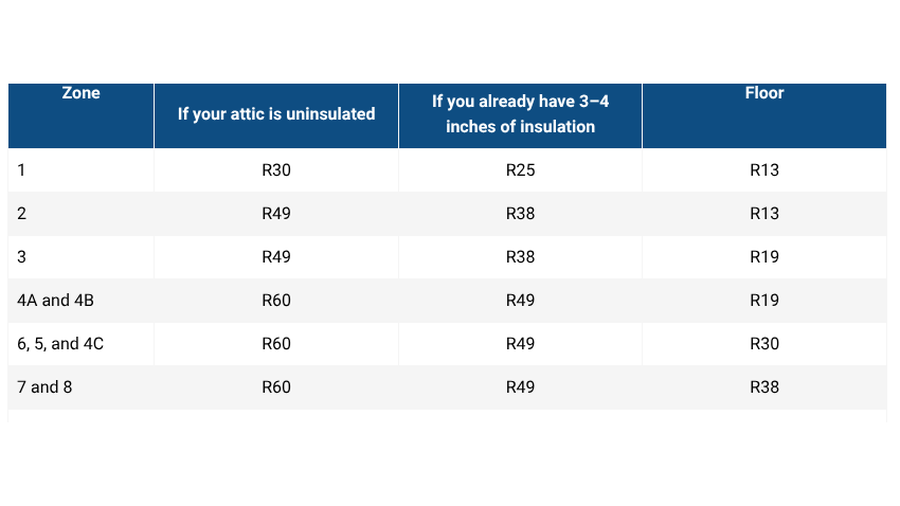
R-value measures how well insulation resists heat flow, and higher is better. ENERGY STAR’s table of recommended home insulation R-values is based on the 2021 International Energy Conservation Code. For an uninsulated attic, it recommends R30 in zone 1, R49 in zones 2 and 3, and R60 in zones 4 through 8. If you already have 3 to 4 inches, it suggests adding R25, R38 or R49, depending on your zone.

ENERGY STAR’s attic guide offers a quick way to estimate what you have now. Common fiberglass, cellulose and mineral wool insulation runs about R-3 to R-3.5 per inch, so multiplying depth in inches by 3 gives a rough number. Many online calculators work the same way. It is fine for planning, but a rebate program may need a better answer.
6 ways an insulation calculator can mislead you on a rebate
1. It ignores the starting R-value cap
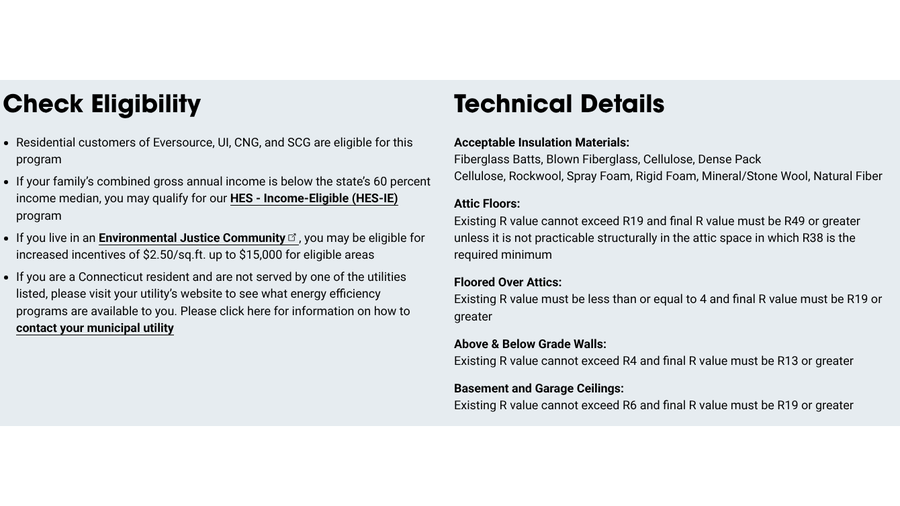
Some utility programs only pay to insulate attics that are under-insulated to begin with. Energize Connecticut’s insulation rebate, for example, says existing attic floor insulation “cannot exceed R19” and the final R-value must be R49 or greater, or R38 where R49 is not structurally practical. A calculator that rounds your 6.5 inches up to R20 or down to R19 can decide your eligibility, so measure in several spots rather than one.
2. It uses installed depth, not settled depth
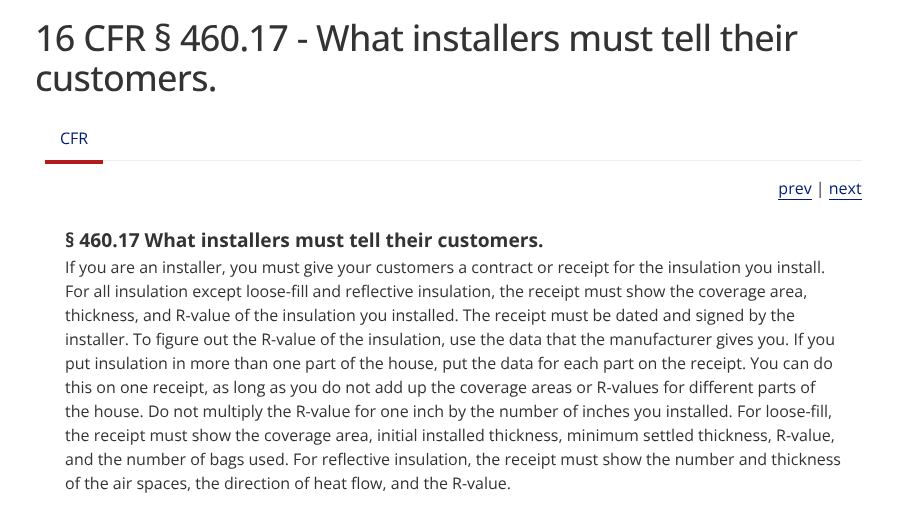
Loose-fill insulation settles after installation, so the depth on day one is not the depth that counts. The FTC’s R-value rule for installers requires a loose-fill receipt to show both the initial installed thickness and the minimum settled thickness, along with the R-value and the number of bags used. A calculator built on the first number can overstate what you will have a year later.
3. It multiplies a per-inch rating
The same FTC rule tells installers not to work out R-value by multiplying the R-value for one inch by the number of inches installed. Instead, they must use the manufacturer’s data. Bag coverage charts are the real source, and they differ by product.
4. It blends different parts of the house
Programs set separate rules for attic floors, floored attics, walls and basement ceilings. Energize Connecticut, for instance, requires floored-over attics to start at R4 or less and finish at R19 or more. The FTC rule says receipts must list each area separately and must not add up R-values for different parts of the house. A single whole-house number from a calculator won’t match that paperwork.
5. It assumes you can do it yourself
Some programs pay only for contractor installs, or pay much less for DIY. Energize Connecticut offers up to $2.00 per square foot through approved contractors, but $0.25 per square foot for approved self-installed projects. It says all self-installed insulation needs an inspection before the rebate is paid and that projects must be approved before installation.
6. It skips air sealing
Calculators count inches of insulation, not air leaks. ENERGY STAR’s attic guidance pairs sealing with insulating, and some rebate programs do the same. If your contractor quotes air sealing separately, ask if your program requires it to qualify.
Check which incentives still exist in 2026
Much insulation advice online still mentions a 30% federal tax credit. According to the IRS, the Energy Efficient Home Improvement Credit covers improvements made through December 31, 2025. It paid up to $1,200 a year for items that included insulation and air sealing. Work done in 2026 does not qualify.
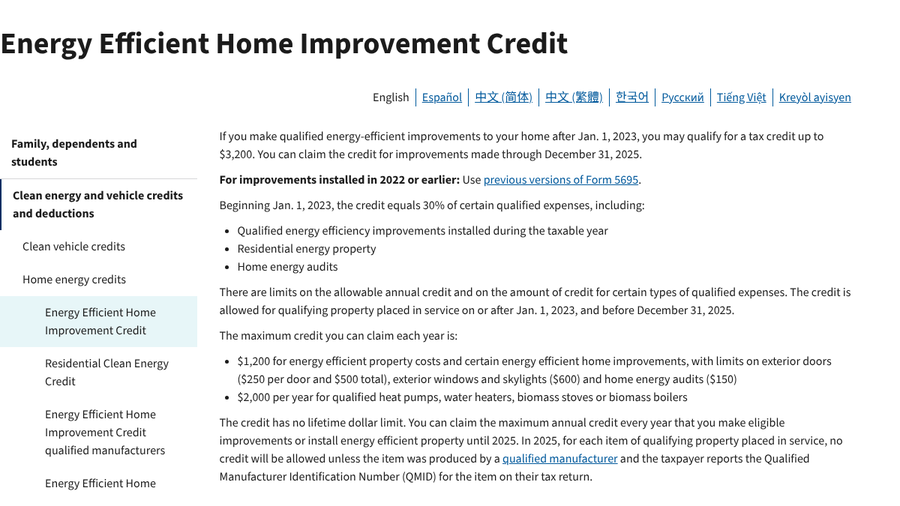
State programs funded by federal home energy rebates are also changing quickly. The California Energy Commission says its HEEHRA single-family rebates were fully reserved statewide as of February 24, 2026, and Colorado’s energy office says its HEAR single-family program is closed. Utility rebates like Connecticut’s are often the most dependable option, so check your utility’s current rules before you buy materials.
What to document for a rebate
- Before photos with a ruler. ENERGY STAR suggests bringing a flashlight, a ruler and your phone into the attic. Photograph the ruler standing in the insulation in several spots.
- Written program rules. Save the rebate page or application showing the existing and final R-value requirements.
- Pre-approval, if required. Some programs need approval or an energy assessment before work starts.
- A compliant receipt. It should be dated and signed and list the coverage area, R-value, installed and settled thickness and number of bags.
- After photos. Take the same ruler shots after the job so you can compare depth.
If your attic project is part of a bigger electrification plan, our look at heat pump vs gas furnace statistics explains why insulation often comes first, and our comparison of heat pump water heaters and tankless models covers another common upgrade.
This article is general information and is not tax or financial advice. Rebate rules, amounts and deadlines vary by utility and state and change often, so confirm details with your program administrator or a tax professional before starting work.
At a Glance
- ENERGY STAR recommends R49 to R60 for most U.S. attics, depending on climate zone.
- Rebates often cap your starting R-value and set a minimum finish, such as R19 or less to R49 or more.
- Loose-fill receipts must show settled thickness, which can fall below a calculator’s installed depth.
- The federal insulation tax credit covered improvements made through December 31, 2025.
Frequently Asked Questions
What is the recommended attic insulation R-value?
ENERGY STAR recommends R30 for an uninsulated attic in zone 1, R49 in zones 2 and 3, and R60 in zones 4 through 8. If you already have 3 to 4 inches, it recommends adding R25 to R49, depending on your zone.
How do I figure out my attic’s current R-value?
Measure the depth of your insulation in several spots and multiply the average by about 3, since common fiberglass, cellulose and mineral wool are about R-3 to R-3.5 per inch. For a rebate, a contractor or energy assessor may need to confirm it.
Are insulation calculators accurate?
Insulation calculators are accurate enough for estimating bags and cost, but they use typical per-inch values and installed depth. Rebate programs rely on manufacturer data, settled thickness and program-specific starting and final R-values.
Is there still a tax credit for insulation?
No, the federal Energy Efficient Home Improvement Credit applies to improvements made through December 31, 2025. For work done in 2026, look for utility, state or local rebates instead.
Can I get a rebate for installing insulation myself?
Some programs offer smaller rebates for do-it-yourself insulation. Energize Connecticut, for example, pays $0.25 per square foot for approved self-installed projects and requires an inspection before paying.
Final Word
Use a calculator to plan, not to prove. Before you blow in a single bag, measure what you have, read your program’s starting and finishing R-value rules and find out whether a contractor or inspection is required. Then collect the receipt and photos that show you met them. That hour of homework is what turns an attic upgrade into a rebate check.