Heat pumps have quietly become the most popular way Americans buy new heating, outselling gas furnaces for several years running. But a sales chart does not tell you whether your rooms will feel warm enough in January, how often the system will need a technician, or what it will cost to run where you live. Those are the questions that actually decide the purchase, and the honest answer to each is a mix of hard numbers and real trade-offs. Here is what the statistics say about heat pumps versus gas furnaces, laid out so you can weigh them for your own home.
This is a decision aid, not a verdict. The right choice depends on your climate, your existing setup, and your priorities, so treat these figures as inputs, and get a local professional’s assessment before you buy.
The numbers at a glance
Heat pumps have outsold gas furnaces in US shipments for four consecutive years, surpassing them in 2022, with industry data showing heat pumps ahead by roughly 30% in 2024 and about 12% in 2025. On comfort, the key figure is supply-air temperature: heat pumps typically deliver air around 90 to 110°F, while a gas furnace pushes out 120 to 140°F, which is why heat-pump air can feel cooler even when the room reaches the set temperature. In the cold, older or standard heat pumps lose capacity and lean on electric backup heat below their balance point, but modern cold-climate models now run at full rated output down to roughly -5°F to -15°F. On efficiency, gas furnaces run about 80 to 95% efficient while heat pumps move two to three times more heat than the energy they use. And on longevity, gas furnaces often last 15 to 20 years or more, versus roughly 10 to 15 for a heat pump that works year-round.
Table of Contents
Adoption: heat pumps now outsell gas furnaces
The headline statistic is real and sustained. According to industry shipment data, heat pumps overtook gas furnaces in US sales in 2022 and have stayed ahead every year since. The lead has been sizable: heat pumps shipped roughly 30% more units than gas furnaces in 2024, and about 12% more in 2025, even though the overall heating and cooling market cooled that year. Over a longer horizon, heat pump sales have grown strongly while gas furnace sales have slowly declined. This does not prove a heat pump is right for your house, but it does mean the technology is mainstream, well supported by manufacturers and installers, and no longer a niche experiment.
Comfort: the supply-air temperature gap
The most common comfort complaint about heat pumps comes down to one number. A heat pump usually delivers warm air at around 90 to 110°F, while a gas furnace blows air at roughly 120 to 140°F. Both can bring a room to the same thermostat setting, but because a heat pump’s air is closer to body temperature, it can feel cool coming out of the vent, and the system runs longer, steadier cycles rather than short blasts of hot air. Some people prefer that even, gentle warmth, and heat pumps tend to dry the air less than a furnace’s hotter output. Others miss the immediate heat. It is a genuine difference in feel, not a defect, and it is worth experiencing before you decide.
Cold weather: capacity, the balance point, and backup heat
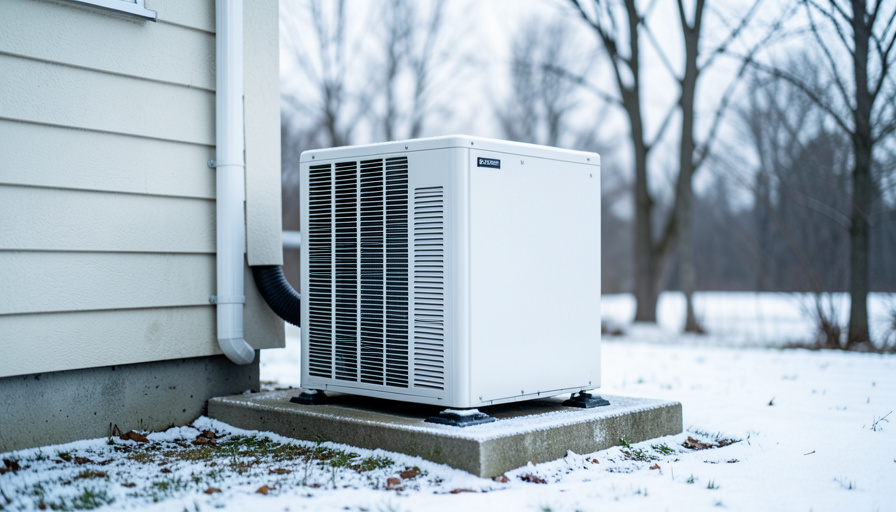
This is where the statistics get the most nuance. A heat pump’s heating capacity falls as the outdoor temperature drops, and every system has a balance point, the temperature below which it can no longer meet the home’s heat demand on its own and calls on backup, usually electric resistance heat. That auxiliary heat is far less efficient than the heat pump itself, so leaning on it heavily in a cold snap can noticeably raise your electricity bill. The important update is that cold-climate heat pumps have improved dramatically: leading models now maintain full rated capacity down to roughly -5°F to -15°F, temperatures that would have forced older units onto backup heat. In a mild or moderate climate, backup heat is rare; in a very cold one, the type of heat pump, and whether you pair it with a furnace, matters a lot.
Efficiency: moving heat versus burning fuel
Efficiency is the heat pump’s structural advantage, and the numbers are not close. A gas furnace converts fuel to heat at about 80 to 95% efficiency, meaning most, but never more than all, of the fuel’s energy becomes heat. A heat pump does not create heat; it moves it, which lets it deliver two to three times more heat energy than the electricity it consumes. The US Department of Energy notes that a modern heat pump can cut the electricity used for heating by around 65% compared with electric resistance heating like baseboards and electric furnaces. You can read the DOE’s overview on its Energy Saver heat pumps page. Efficiency does dip in extreme cold, but even then a good heat pump remains far more efficient than resistance heat.
Service life and maintenance
Longevity favors the furnace, largely because of how each system works through the year. A gas furnace typically lasts 15 to 20 years or more, while a heat pump often runs about 10 to 15 years. The reason is straightforward: a heat pump handles both heating and cooling, so it runs year-round and simply accumulates more operating hours than a furnace that rests all summer. A heat pump also has an outdoor unit and additional components, like a reversing valve, exposed to the elements. That extra runtime and complexity can mean more wear over time, though regular maintenance extends life on either system. Factor a heat pump’s shorter expected lifespan into any long-run cost comparison.
Operating cost: it depends on where you live
Running cost is the figure with no single answer, because it hinges on local energy prices and climate. A heat pump’s efficiency usually makes it cheaper to run per unit of heat than a gas furnace, especially in mild and moderate climates. But the math tightens where electricity is expensive relative to natural gas, or where deep cold forces frequent use of costly backup heat. In some regions a heat pump clearly wins on running cost; in others with cheap gas and harsh winters, a furnace can be competitive or cheaper to operate. This is exactly why a blanket “cheaper” claim is unreliable, and why comparing your own utility rates and heating climate matters more than any national average.

What the statistics mean for your choice
Put together, the numbers sketch a clear picture without dictating an answer. Heat pumps win decisively on efficiency and now on popularity, deliver steady, less-drying warmth, and, in cold-climate versions, handle real winters that used to defeat them. Gas furnaces win on peak air temperature, tend to last longer, and can be cheaper to run where gas is cheap and winters are severe. Many households in cold regions split the difference with a dual-fuel setup, letting an efficient heat pump handle most of the season and a furnace take over in the deepest cold. Your climate, your current fuel and ductwork, and how much you value efficiency versus that blast of hot air will point you to the right side, so use these figures to frame a conversation with a qualified installer who can run the load calculation for your home.
This article is general information, not financial, energy, or professional advice. Performance, efficiency, lifespan, and operating costs vary widely by model, climate, home, and local energy prices, and the statistics here are drawn from industry and government sources that change over time, so confirm current figures and get a professional assessment for your specific situation before making a purchase.
Frequently asked questions
Do heat pumps really outsell gas furnaces now?
Yes. Industry shipment data shows heat pumps overtook gas furnaces in US sales in 2022 and have led every year since, by roughly 30% in 2024 and about 12% in 2025. Long-term, heat pump sales have grown while furnace sales have slowly declined. That popularity means strong manufacturer and installer support, though it does not by itself mean a heat pump is the best fit for every home.
Why does heat pump air feel colder than furnace air?
Because it is cooler at the vent. A heat pump typically supplies air around 90 to 110°F, while a gas furnace delivers 120 to 140°F. Both reach the same room temperature, but the heat pump’s air, being closer to body temperature, can feel cool, and it runs longer, steadier cycles instead of short bursts. Many people adjust and prefer the even warmth, but it is a real difference worth feeling firsthand.
Can a heat pump handle a cold winter?
Increasingly, yes. A heat pump loses capacity as it gets colder and, below its balance point, relies on less-efficient backup heat. But modern cold-climate models now hold full rated capacity down to roughly -5°F to -15°F, handling winters that defeated older units. In very cold regions, choosing a cold-climate model, or a dual-fuel system with a furnace, makes a big difference to comfort and cost.
Which lasts longer, a heat pump or a gas furnace?
A gas furnace usually lasts longer, often 15 to 20 years or more, versus about 10 to 15 for a heat pump. The main reason is runtime: a heat pump provides both heating and cooling, so it operates year-round and racks up more hours than a furnace that sits idle in summer. Regular maintenance extends the life of either, but the difference is worth including in a long-term cost comparison.
Is a heat pump cheaper to run than a gas furnace?
Often, but not always. A heat pump’s high efficiency usually makes it cheaper per unit of heat, particularly in mild to moderate climates. The advantage narrows where electricity is costly relative to gas or where deep cold forces heavy backup-heat use. Because it depends on your local utility rates and climate, compare your own numbers rather than relying on a national average or a blanket claim.
The bottom line
The statistics tell a consistent story: heat pumps have won on efficiency and adoption and, with cold-climate technology, now hold up in real winters, delivering steady, less-drying heat. Gas furnaces still lead on peak warmth and typical lifespan and can be cheaper to run where gas is cheap and cold is severe. Neither is universally better, which is why the sales lead should not settle it for you. Weigh the comfort feel, your climate and the balance-point question, efficiency, lifespan, and your local energy prices, and let a professional size the system for your home. For more on upgrading a home wisely, browse The Other Stream’s Home Improve section, and for smarter control of whatever system you choose, see our guide to thermostat alternatives with local control.
Related Posts