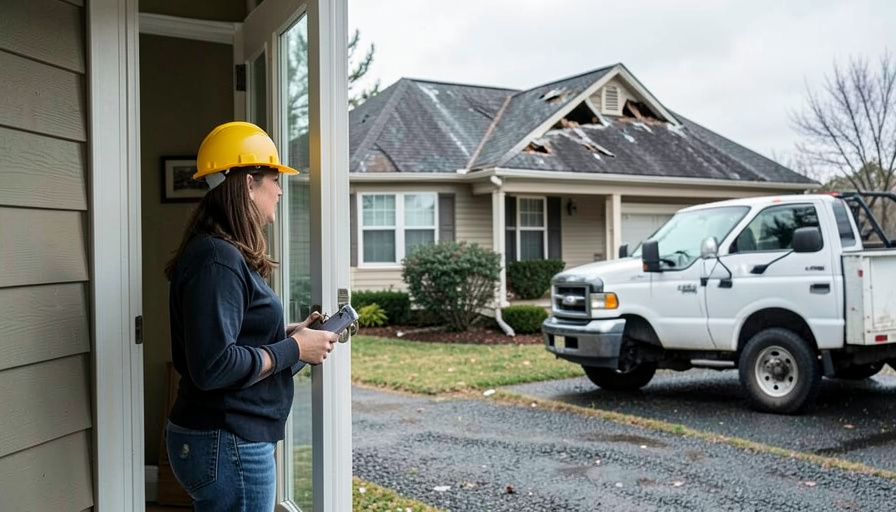
The morning after a hailstorm, a truck rolls down your street and someone knocks with a clipboard, a hard hat, and an offer: a free roof inspection, and they can start right away and handle your insurance for you. Some roofers who canvass after a storm are legitimate and busy. But storm-chasers, crews that follow bad weather from town to town, use the same script to pressure homeowners into bad contracts and vanish, and their paperwork gives them away.
You do not need to distrust every roofer, just to recognize the contract signals that separate a storm-chaser scam from an honest repair. Here are eight red flags, and how to hire a roofer you can actually count on.
What to know
A storm-chaser roofing scam usually starts with an unsolicited post-storm door knock from an out-of-town crew with no local address. The dangerous paperwork is an Assignment of Benefits that signs your insurance claim over to them, or a “contingency” agreement disguised as an inspection form that locks you in. Watch for offers to waive your insurance deductible, which is often illegal, demands for a large upfront deposit, and no proof of license, insurance, or a detailed written contract. The safe path is a local, licensed, insured roofer, your own inspection, your insurer involved directly, and a clear written contract, with no large deposit and nothing signed under pressure.
Table of Contents
1. The unsolicited door knock right after a storm
The timing is the tell. A crew going door to door within a day or two of a storm, offering a free inspection and an immediate fix, is following the weather, not building a local business. Established local roofers are usually booked and rarely canvass neighborhoods this way. A door knock is not proof of a scam by itself, but it should switch on your caution, because it is the opening move of nearly every storm-chaser operation. Slow down before you agree to anything.
2. Out of town, with no local address
Ask where they are based, and listen for a real answer. Storm-chasers work far from home and often cannot give a local office address, a long local track record, or references from your area. That distance is the point: once the check clears and they move to the next storm, there is no local business to hold accountable if the work fails. A roofer with deep local roots, a real address, and a reputation you can check is the opposite of this, and far safer.
3. Pressure to sign an Assignment of Benefits
This is the most dangerous piece of paper. An Assignment of Benefits, or AOB, signs your insurance claim rights over to the contractor, letting them deal with your insurer, control the claim, and get paid directly, sometimes for inflated or unnecessary work you never approved. Legitimate repairs rarely require you to hand over your claim. Be very wary of any push to sign an AOB, read anything you are asked to sign carefully, and keep control of your own insurance claim.
4. An offer to waive or cover your deductible
“We’ll cover your deductible” sounds like a favor and is a bright red flag. Your insurance deductible is your legal share of the claim, and a contractor absorbing or waiving it is often committing insurance fraud, frequently by inflating the claim to make up the difference, which can leave you exposed too. An honest roofer expects you to pay your deductible. Any promise to make it disappear is a sign of a scam, not a discount.
5. A large upfront deposit
Watch the money. A demand for a large upfront deposit, or a big chunk of the cost before any materials arrive or work begins, is a classic way for a storm-chaser to take payment and disappear. Reasonable jobs are paid in stages tied to progress, with only a modest deposit if any. If a roofer wants a large sum up front, especially in cash, treat it as a serious warning and do not pay it before you have verified everything else.
6. No license, insurance, or references
A real roofer can prove they are real. Ask for their license where your area requires one, proof of liability and workers’ compensation insurance, and local references, and expect them to provide all of it without fuss. A storm-chaser will dodge, delay, or offer excuses, because the paperwork does not exist or would tie them to a place. Uninsured work also puts you at risk if someone is hurt on your roof. No verifiable credentials, no contract.
7. No detailed written contract
Vague is dangerous. A trustworthy roofing job comes with a written contract that spells out the scope of work, the specific materials and quantities, the timeline, the total price, and the warranty. A storm-chaser prefers a thin document or verbal promises, because vagueness lets them cut corners, substitute cheaper materials, or claim you agreed to less than you thought. Insist on a detailed written contract, and do not accept “we’ll sort out the details later” on a job this size.

8. The “just sign so we can inspect” contingency trap
Sometimes the scam hides inside the inspection itself. You are handed a form framed as permission to inspect your roof or file your claim, but the fine print is a contingency contract that binds you to use that contractor once the claim is approved. Signing it can lock you in before you have a price, a scope, or any idea whether the company is any good. Never sign anything to get an inspection. An inspection and a contract are two separate decisions, and a legitimate roofer keeps them separate.
How to hire a roofer you can trust
Doing it safely is straightforward. Choose a local, established roofer with a real address, a license where required, and proof of insurance you verify yourself, and check reviews and references from your own area. Get your own inspection rather than relying on the door-knocker’s, and deal with your insurer directly, never signing your claim rights away through an AOB. Require a detailed written contract covering scope, materials, timeline, price, and warranty, refuse large upfront deposits and any offer to waive your deductible, and take your time, since a real roof problem can wait a few days for a proper decision. Organizations like the National Insurance Crime Bureau regularly warn about storm-chaser fraud and are worth a look after a big weather event. For a related home-services scam worth spotting, see our guide to mold remediation red flags.
This article is general information, not legal or insurance advice. Contractor licensing, insurance requirements, and the legality of practices like deductible waivers vary by state, so verify a contractor and consult your insurer and local authorities before signing anything or filing a claim.
Frequently asked questions
Are roofers who knock on doors after a storm always scams?
No, but caution is warranted. Some legitimate roofers canvass after storms, yet storm-chasers, crews following bad weather from town to town, use the same approach to pressure homeowners. The door knock is a reason to slow down and verify credentials, not to sign anything on the spot.
What is an Assignment of Benefits and why is it risky?
An Assignment of Benefits, or AOB, signs your insurance claim rights over to the contractor, letting them control the claim and get paid directly, sometimes for inflated work you never approved. Legitimate repairs rarely require it, so treat pressure to sign an AOB as a serious warning and keep control of your own claim.
Why is “we’ll cover your deductible” a red flag?
Because your deductible is your legal share of the claim, and a contractor waiving or absorbing it is often committing insurance fraud, frequently by inflating the claim to make up the difference. An honest roofer expects you to pay your deductible, so an offer to make it disappear signals a scam, not a deal.
How much deposit should a roofer ask for?
Only a modest amount, if any, with the rest tied to progress. A demand for a large upfront deposit or a big share of the cost before materials or work is a classic way for a storm-chaser to take the money and vanish. Never pay a large sum, especially cash, before verifying license, insurance, and the contract.
How do I hire a trustworthy roofer after a storm?
Use a local, established roofer with a verifiable address, license, and insurance, get your own inspection, and deal with your insurer directly without signing away your claim. Require a detailed written contract covering scope, materials, timeline, price, and warranty, and refuse large deposits and deductible-waiver offers.
The bottom line
Not every roofer at your door after a storm is a scammer, but the ones running a storm-chaser scam leave the same fingerprints: an out-of-town crew, an AOB or contingency form to sign, a deductible they promise to cover, a big deposit, and no license, insurance, or real contract. Slow down, verify everything, keep control of your insurance claim, and hire local with a written contract. A real roof problem can wait for a good decision. For more on protecting and maintaining your home, browse The Other Stream’s Home Improve section.
Related Posts