
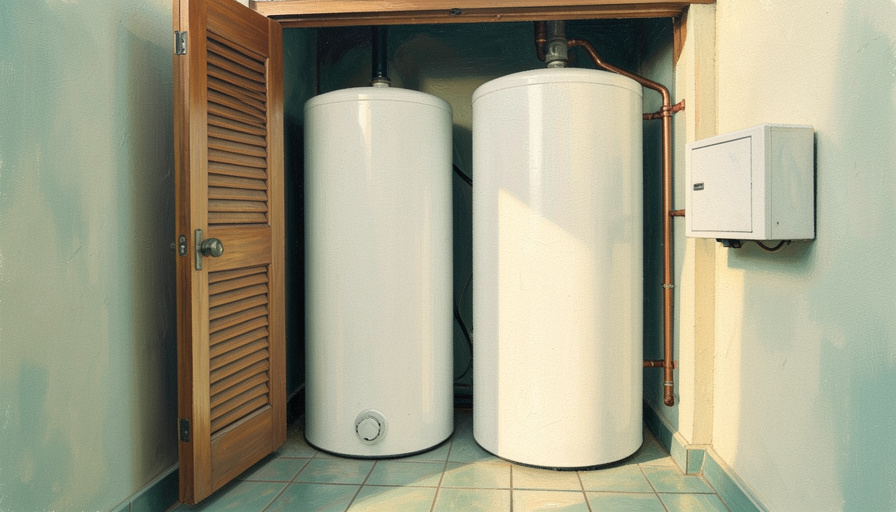
Heat pump water heater vs tankless for a tight utility closet: how much air a heat pump needs, how many amps a tankless draws, and which option fits the space you have.
In February 2026, a homeowner on Reddit asked about replacing a 14-year-old, 50-gallon gas water heater that sat in a closet in the loft above the main bedroom. The problem: bringing more than a 120-volt, 15-amp circuit to that spot would be expensive, which ruled out an electric tankless. One reply came from someone who had done almost the same thing, with a 65-gallon, 120-volt heat pump water heater in a 3-by-3-foot closet about 3 or 4 feet from their bed. Their verdict on the noise was “not a problem, period.” That thread sums up the heat pump water heater vs tankless decision for small spaces. A heat pump needs air, an electric tankless needs amps, and your closet decides which one you can give it.
In Brief
A heat pump water heater is far more efficient than an electric tankless. The catch is air: Rheem and ENERGY STAR call for roughly 700 to 1,000 cubic feet, or a louvered door or ducting. An electric tankless fits almost any closet, yet a whole-house model can draw more than 100 amps. In a small closet with limited power, a 120V plug-in heat pump with a louvered door or ducting is usually the practical choice.
Table of Contents
Heat pump water heater vs tankless at a glance
Here is how a 120V plug-in heat pump compares with a whole-house electric tankless, using published specs from one popular model of each.
| 120V plug-in heat pump | Whole-house electric tankless | |
|---|---|---|
| Example model | Rheem ProTerra Plug-in with HydroBoost | EcoSmart ECOS 27 |
| Size | 40 to 80 gallon tank | 19 x 9.25 x 4.25 inches, wall-mounted |
| Power | Standard wall outlet, 15-amp minimum breaker | 112.5 amps on three 40-amp double-pole breakers |
| Efficiency (UEF) | Up to 3.46 | 0.94 |
| Air needs | Room over 700 cubic feet, or louvers or ducting | None |
| Noise | Fan and compressor hum while running | No compressor or fan |
Both efficiency figures use the Uniform Energy Factor, the Department of Energy’s rating for water heaters. A heat pump scores above 1 because it moves heat from the air into the tank instead of making it from electricity.
Why a small closet is hard for a heat pump
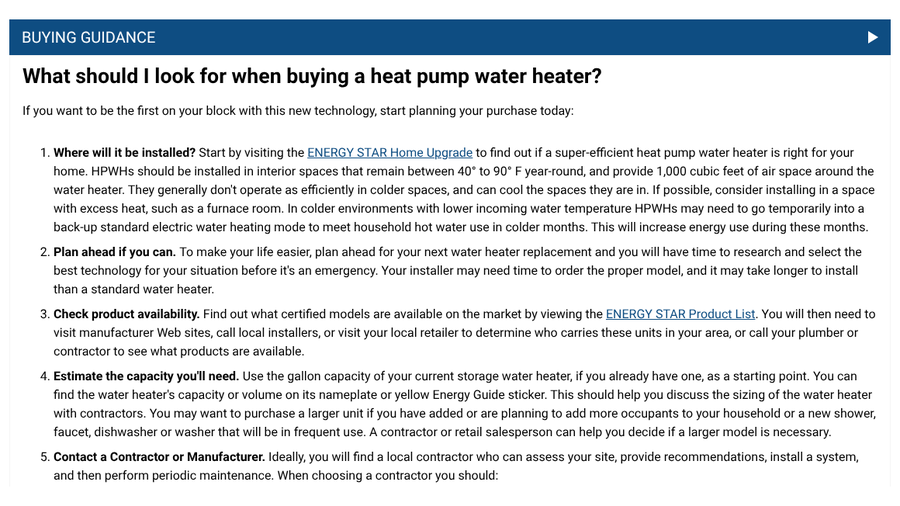
A heat pump water heater pulls warmth out of the surrounding air, so the room is part of the machine. ENERGY STAR’s buying guidance for heat pump water heaters says they should go in interior spaces that stay between 40° and 90°F year-round, with 1,000 cubic feet of air space around the unit. It also warns they can cool the spaces they are in.

Now do the math on a typical closet. A 3-by-3-foot closet with an 8-foot ceiling holds 72 cubic feet of air, about a tenth of the 700 cubic feet Rheem lists below. The January 2026 Reddit post that asked about an 8-by-4-foot utility room had 256 cubic feet, and a commenter’s reply was blunt: the room should be at least 700 cubic feet “or it will get too cold in there.”
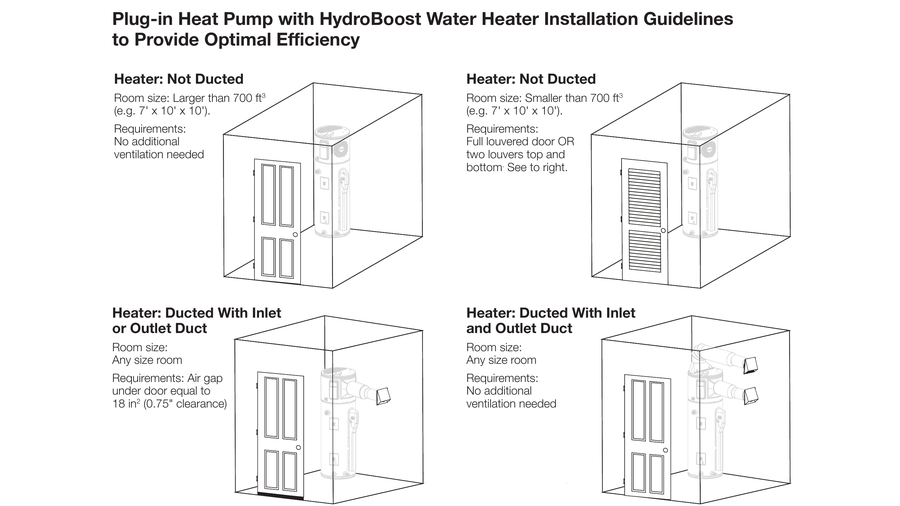
Manufacturers get around this with ventilation. Rheem’s spec sheet for its plug-in heat pump lays out four setups:
- Room larger than 700 cubic feet, no ducts: no extra ventilation needed.
- Room smaller than 700 cubic feet, no ducts: a full louvered door or two louvers, one top and one bottom.
- One duct, inlet or outlet: any size room, with an 18-square-inch air gap under the door.
- Both inlet and outlet ducts: any size room, no extra ventilation.
For a small closet without ducts, the sheet adds that the louver must sit at the same height as the heater’s air exhaust, with the exhaust pointed toward the louver within one foot of the door. It lists zero inches of clearance at the rear and sides and 6 inches on top. It also gives a simple test: if the air cools more than 15°F while the unit heats, circulation is too weak and the exhaust should be ducted elsewhere.
Ducting has its own trap. A commenter in the January thread warned against pulling intake air from the house and dumping exhaust outside or into an attic. That creates a vacuum that pulls cold outdoor air in through gaps, which your furnace then has to reheat.
Where a 120V heat pump water heater fits
The 120V models make heat pumps realistic for closets that once held a gas tank. Rheem’s plug-in version uses a factory cord that goes into a standard wall outlet on a circuit with at least a 15-amp breaker. It comes in 40, 50, 65 and 80-gallon sizes with a first-hour rating of up to 84 gallons, and it runs in air from 37° to 145°F.
Owners in these threads split on the details. One recommended the largest tank that fits because recovery is slow when the room and incoming water are cold. Another said to “get the 240V. Do not get the 120V,” describing the compressor as a “drone” like a window air conditioner. A GE owner with an inverter compressor called theirs “dead quiet” apart from the fan. Sound varies by brand, so check the decibel rating before you commit to a closet next to a bedroom.
Climate matters too. For optimal operation, the Rheem sheet recommends the zone on its map where average January air stays above 37°F, mostly southern states. ENERGY STAR adds that in colder areas with colder incoming water, a heat pump may switch to backup electric heating for a while, which raises energy use in those months. On the upside, it notes these units can help cool and dehumidify their space in hot, humid weather. Our look at heat pump vs gas furnace statistics covers how heat pumps handle cold more broadly.
Where a tankless water heater fits, and the electrical catch
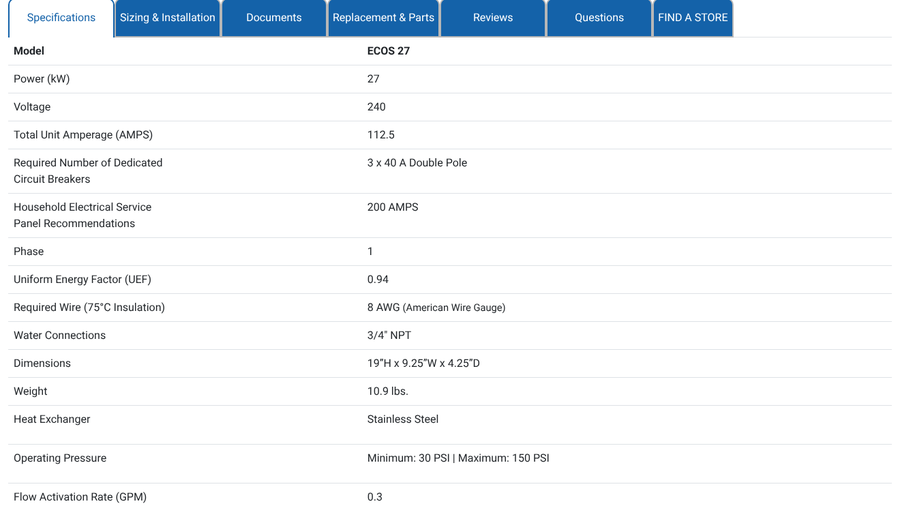
On space alone, tankless wins easily. EcoSmart’s ECOS 27 whole-house model measures 19 by 9.25 by 4.25 inches and weighs 10.9 pounds, and it needs no air volume at all. The catch is the wiring. It draws 112.5 amps at 240 volts, needs three dedicated 40-amp double-pole breakers with 8-gauge wire, and EcoSmart recommends a 200-amp electrical panel.
That is why the February poster crossed electric tankless off the list. That much load can mean a service upgrade, so run the numbers with our guide to electrical load checks before upgrading to 200 amps. Output also depends on climate: EcoSmart notes the ECOS 27 can run multiple fixtures at once in warmer climates, a hint that colder incoming water cuts how much hot water it can deliver.
Gas tankless units are compact too, but they need a vent to the outdoors and a gas line sized for the burner, so confirm your existing setup can support one.
Two closet options people forget
A split heat pump water heater
A split system separates the heat pump from the storage tank. The heat pump can go outside or in a garage, and only the tank stays in the closet, so the closet no longer has to supply air. According to the SANCO2 FAQ, its heat pump is certified to operate from -26° to 114°F, and a typical single-family home needs one heat pump and a 43 or 83-gallon tank. The tradeoffs came up in the February thread: split systems are quieter indoors, but in many places installers are hard to find or charge a premium, and the equipment costs more upfront. The original poster said a split system would not be easy in a townhouse with an HOA.
A standard electric tank
A plain electric storage heater has no air requirement and is lighter and quieter than a heat pump, as one commenter pointed out. It uses far more electricity, so treat it as the fallback when the closet cannot be ventilated and the panel cannot support a tankless unit.
How to choose for your closet
- Measure the space. Multiply length by width by height. Over 700 cubic feet, most heat pumps work without changes.
- Plan the airflow. Under 700 cubic feet, budget for a louvered door, a door gap or ducting that follows the manual.
- Check the circuit and panel. A 120V plug-in heat pump can often use an existing outlet. A whole-house electric tankless may need a panel upgrade.
- Think about who sleeps nearby. A heat pump hums while it runs, and many models can be programmed to heat mostly during the day.
- Look for rebates. The January poster’s utility offered about $1,200 toward a heat pump water heater. ENERGY STAR’s rebate finder lists offers by ZIP code.
- Protect the floor. Closet heaters sit near finished rooms, so add a drain pan and a leak alarm. Our roundup of leak sensors that work without Wi-Fi has options.
Water heater work involves electrical, plumbing and sometimes gas connections, so use a licensed installer and pull any permits your area requires.
What Matters Most
- A heat pump water heater needs air, roughly 700 to 1,000 cubic feet, or a louvered door or ducting in a small closet.
- A whole-house electric tankless needs almost no space but can draw more than 100 amps.
- A 120V plug-in heat pump is the most practical efficient upgrade when power to the closet is limited.
- Split heat pumps free the closet of air limits but cost more and need an outdoor spot.
Frequently Asked Questions
Can a heat pump water heater go in a closet?
A heat pump water heater can go in a closet if it gets enough air. For rooms under about 700 cubic feet, Rheem calls for a full louvered door, top and bottom louvers or ducting.
Is a heat pump water heater better than tankless?
A heat pump water heater is more efficient than an electric tankless. The Rheem plug-in model is rated up to 3.46, compared with 0.94 for the EcoSmart ECOS 27. A tankless unit takes far less space, but whole-house electric models need heavy wiring.
Do 120V heat pump water heaters work well?
120V heat pump water heaters work well for many homes and plug into a standard outlet, which makes them easier to swap in for a gas tank. Recovery can be slow when the room and incoming water are cold, so owners often suggest a larger tank.
How much space does a heat pump water heater need?
ENERGY STAR recommends 1,000 cubic feet of air space in an area that stays between 40° and 90°F. Some manufacturers allow 700 cubic feet, or smaller rooms with louvered doors or ducting.
What size breaker does an electric tankless water heater need?
A whole-house electric tankless water heater often needs several large breakers. The EcoSmart ECOS 27, for example, draws 112.5 amps and requires three 40-amp double-pole breakers, with a 200-amp panel recommended.
The Bottom Line
Start with the closet, not the brochure. Measure its volume, check what power reaches it and decide how much noise you can live with next door. If you can add a louvered door or ducts, a 120V heat pump gives you the lowest running costs. If the closet cannot breathe and the panel has room to spare, tankless is the space saver.