
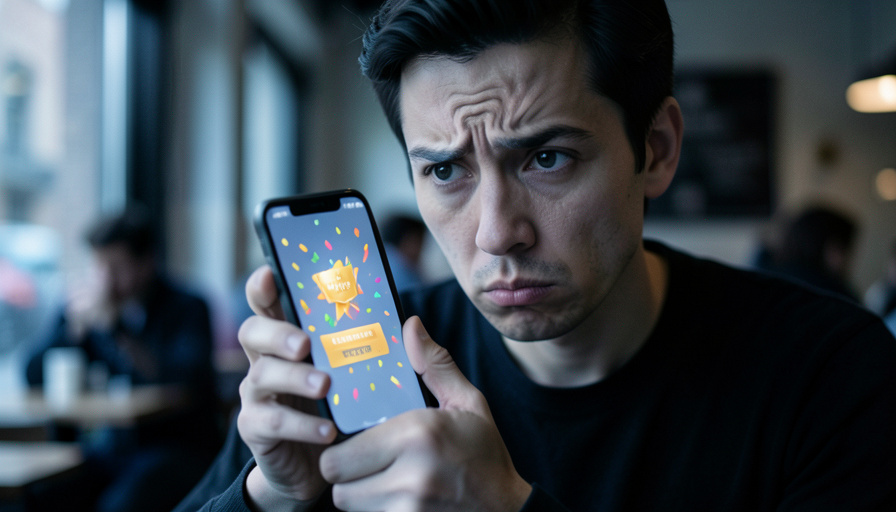
The message arrives with confetti emojis and great news: you have won. The only problem is you never entered anything.
Fake giveaways are one of the most common scams on social media because they run on something real, the genuine excitement of maybe winning. Scammers copy the look of a legitimate brand promotion, sprinkle in urgency, and wait for people to hand over money or personal details to claim a prize that was never real. The good news is that these scams almost all fail the same handful of tests, and once you know them, they are easy to spot.
Here is how to tell a real online giveaway from a scam, and what to do if you have already clicked or replied.
Bottom line first
A legitimate giveaway never asks you to pay a fee or hand over sensitive information to claim a prize. If a message wants money for shipping or taxes, or asks for your card number, bank details, passwords, or Social Security number, it is a scam, no matter how official it looks. Add the other classic tells, a prize you never entered for, a lookalike account, a rushed deadline, and you have your answer without needing to think hard.
Table of Contents
The one rule that catches most scams
If you remember nothing else, remember this: real giveaways are free to claim. According to the Federal Trade Commission, a legitimate prize never requires you to pay anything, and being asked to send money to receive winnings is one of the surest signs of a scam. The same goes for sensitive information. No real giveaway needs your Social Security number, your bank login, or your password to send you a hoodie. The moment either payment or credentials come up, you can stop reading and walk away.
The red flags, at a glance
Most scam giveaways carry several of these at once:
- You won something you never entered for.
- A direct message, rather than a public announcement, tells you that you won.
- There is a fee to “release” the prize, for shipping, taxes, or processing.
- It asks for card numbers, bank details, passwords, or your Social Security number.
- The account is a lookalike, like a brand name with extra dots, numbers, or a year tacked on.
- You are rushed to “claim within 24 hours” before you can think.
- The prize is wildly generous, especially gift cards or cryptocurrency.
- The link is off, full of typos or symbols, or is just a string of numbers.
- There are no official rules, terms, or fine print anywhere.
That last one is quietly the most reliable. Real promotions come with rules and terms because they legally have to. A giveaway with no fine print anywhere is usually not a real giveaway.
How to check the account
Impersonation is the engine of these scams, so look hard at who is actually contacting you. Scammers spin up lookalike accounts with names like a brand followed by “Official” and a year, then reply to comments or slide into DMs claiming you won. Check for a real verified badge, scroll the account’s post history to see whether it has any real presence or was created last week, and look at the follower and following counts, since a “major brand” with 200 followers is not the major brand. Real companies announce winners from their genuine, established account, not from a brand-new profile that messaged you privately.
What real brand giveaways actually do
It helps to know the legitimate pattern so the fake one stands out. A real giveaway posts clear rules and an end date, runs from the company’s verified account, announces winners publicly or contacts them through the same official channel, and ships the prize without ever asking for a payment. If what is in front of you does the opposite on any of those points, trust the pattern over the excitement. The instinct that helps here is the same one that protects you from fake product news and rumors, which we covered in how to tell a real rumor from a viral hoax: check the source before you believe the claim.
What to do if you already engaged
If you replied, clicked, or worse, here is how to limit the damage. Stop all contact and send no money or further information. If you handed over a card number or a password, treat it as compromised: change that password immediately, turn on two-factor authentication, and call your bank or card issuer to flag the card and watch for charges. Report and block the account on the platform, and file a report with the FTC at ReportFraud.ftc.gov, which helps investigators track these operations. Falling for a slick scam does not make you foolish, but acting fast afterward makes a real difference.
Frequently asked questions
How do I know if an online giveaway is real?
A real giveaway is free to claim, runs from a verified official account, posts clear rules, and never asks for payment or sensitive information. If it fails any of those, especially by asking for money or logins, treat it as a scam.
Do legitimate giveaways ever ask for payment?
No. A real prize never requires a fee for shipping, taxes, or processing. Any request to pay money to receive winnings is one of the clearest signs of a scam, per the FTC.
Someone DMed me that I won. Is it real?
Be very skeptical, especially if you never entered. Scammers rely on direct messages from lookalike accounts. Check the account for a verified badge and a real history, and remember that legitimate brands usually announce winners publicly rather than only in a private message.
Are Instagram giveaways scams?
Many are, but not all. Legitimate brands and creators do run real giveaways. The difference is in the details: real ones are free, have rules, and come from established verified accounts, while scams push payment, urgency, and lookalike profiles.
What should I do if I already gave my information?
Change any shared password and enable two-factor authentication, contact your bank or card issuer if you shared financial details, and report and block the account. File a report at ReportFraud.ftc.gov to help track the scam.
Practical takeaway
Scam giveaways are engineered to bypass your judgment with a jolt of excitement, so the fix is to slow down and run the checks. If it asks for money or personal details, if you never entered, if the account is a lookalike, it is a scam, and no prize is worth your card number. Verify the account, look for the rules, and when in doubt, assume the confetti is bait. For more on staying safe online, browse The Other Stream’s Tech section.