Every Apple cycle now comes with a second, fake Apple cycle running alongside it. Telling the two apart takes about thirty seconds once you know where to look.
A slick iPhone render lands in your feed. Maybe it is a “leaked” video ad with confident narration and a feature you have never heard of. It looks real enough that you almost share it. Earlier this year a fully AI-generated iPhone 18 ad went viral and got mistaken for a genuine leak by thousands of people before anyone flagged it. That is the new normal, and it is only getting harder to eyeball.
The good news is that separating a real Apple rumor from a hoax does not require insider knowledge. It requires a habit. Here is the one I use before believing, or resharing, anything about an unreleased Apple product.
Bottom line first
Judge the source before the image. A handful of leakers have public, scored track records, and a claim from one of them is worth more than the most convincing render from an anonymous account. Then check what kind of claim it is, because hardware specs leak reliably while prices, dates, and flashy design renders often do not. If a single viral post is the only source and no established outlet has picked it up, treat it as fake until proven otherwise.
Table of Contents
Start with the source, not the screenshot
The single most useful move is to ask who is actually making the claim. Apple leaks are not all equal, and the reliable end of the spectrum is small and well known. Bloomberg’s Mark Gurman has one of the highest accuracy records in the field, sitting in the high 80s on AppleTrack, a site that literally scores leakers on how often their claims pan out. Analyst Ming-Chi Kuo, who works from Asian supply-chain contacts, is the other name worth trusting on hardware. Others, like Jon Prosser, have slid down the accuracy rankings over time, which is exactly why a public scorecard is handy.
If a rumor traces back to a named person or outlet with a track record you can look up, it deserves attention. If it traces back to a fresh account with a number in its handle and no history, that is your answer. A convincing picture from an unknown source is still an unknown source.
Check what kind of claim it is
Not every type of Apple rumor is equally trustworthy, even from good sources. Some information leaks naturally through the manufacturing process months ahead; other details live only inside Apple’s marketing team until the last minute. A rough hierarchy helps:
| Claim type | How reliable | Why |
|---|---|---|
| Hardware specs (chip, screen size, ports) | Usually solid | Anchored in real factory orders and component supply chains |
| New features and software | Mixed | Real ones leak, but “concept” wishlists get passed off as fact |
| Launch dates and prices | Shaky | Strategic and often changed by Apple at the last minute |
| Design renders and “leaked ads” | Treat as fiction by default | Easiest thing to fake, and now trivial to generate with AI |
So a supply-chain report that the next iPhone moves to a bigger sensor is plausible. A viral video showing a radical redesign with a brand-new feature, months before launch, almost never is.
Learn the AI-render tells
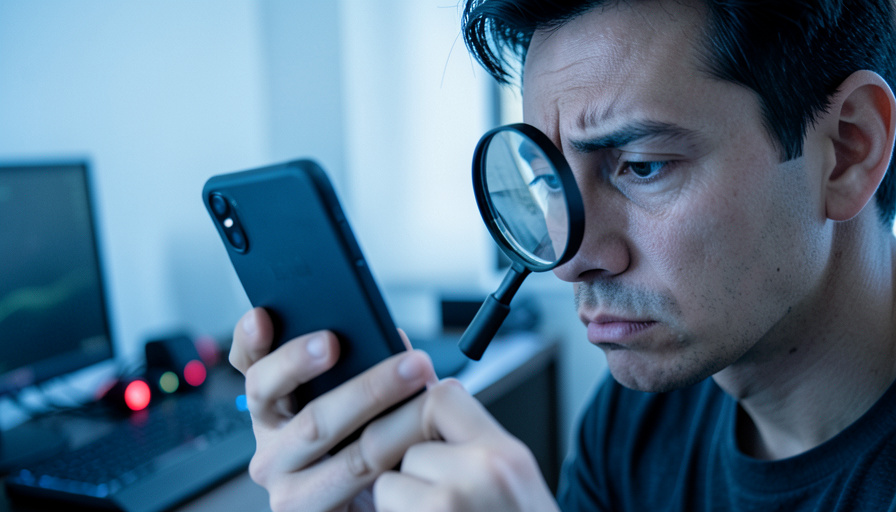
Fake renders used to be clumsy Photoshop jobs. Now they are AI-generated and slick, but they still leave fingerprints if you zoom in. Communities that debunk these have flagged the same giveaways again and again: reflections that repeat identically across different photos, screws that look fused or melted into the case, and SIM-tray or camera details that are cloned pixel-for-pixel between supposed color variants. AI is good at the overall vibe and bad at consistent small hardware details.
The viral fake iPhone 18 ad is a useful case study. It looked broadcast-ready, which is precisely the tell, because real early leaks are grainy supply-chain photos, not finished commercials with polished voiceover. When something months from launch looks too finished, that polish is the red flag, not the reassurance.
Run the plausibility test
Before any of the technical checks, ask whether the claim even makes engineering sense. A lot of hoaxes fall apart on basic physics. The rumor that set off one recent cleanup claimed a future iPhone had a “built-in charge port” that did away with the battery entirely, which is not a thing a phone can do, because a port is not a power source. When a claim promises something that would rewrite how the device fundamentally works, that is not a breakthrough leak. That is bait.

Real Apple changes are usually incremental: a better camera, a faster chip, a thinner body, a new button. Revolutionary-sounding claims with no credible source attached are the ones to distrust first.
The 30-second verification routine
When you are genuinely unsure, this quick pass settles it almost every time:
- Search the claim and see whether an established outlet like Bloomberg, Reuters, The Verge, 9to5Mac, or MacRumors has reported it. Silence from all of them is telling.
- Reverse-image search any render or screenshot to find where it actually originated.
- Trace it to the original poster and check whether they have a real track record or just went viral once.
- For anything about a launch, wait for Apple’s own newsroom or a keynote, which is the only fully reliable source.
If a claim cannot survive that, it does not belong in your group chat as fact.
Why this keeps happening
There is a structural reason the fakes surge. In the roughly hundred days before an Apple launch, genuine supply-chain photos are scarce, and that vacuum gets filled by whatever spreads fastest. AI-generated renders and edited clips are cheap to make and built for engagement, so they travel further than the boring, accurate reporting and much further than the eventual correction. The incentives reward the fake.
My rule is simple and a little strict: any single-source viral render is fake until a track-record leaker or a real outlet confirms it. I have yet to regret being slow to believe an Apple rumor, and I have occasionally regretted the opposite.
Frequently asked questions
Who are the most reliable Apple leakers?
Bloomberg’s Mark Gurman and analyst Ming-Chi Kuo have the strongest track records, especially on hardware. Sites like AppleTrack publish accuracy scores for individual leakers, which is a quick way to weigh a claim before you trust it.
How can I tell if an iPhone render is AI-generated?
Zoom in on small hardware details. AI fakes often show reflections that repeat across photos, screws or seams that look fused, and cloned camera or SIM-tray details between color options. A months-early leak that looks like a finished ad is also suspect, since real early leaks are usually rough photos.
Are leaked prices and release dates trustworthy?
Less so than specs. Pricing and timing stay inside Apple’s marketing team until late and change at the last minute, so even good sources get them wrong. Hardware specifications leak more reliably because they are tied to factory orders.
Why do fake Apple leaks spread so fast?
In the months before a launch, real information is scarce, so AI-generated renders and edited clips fill the gap. They are cheap to make and designed for engagement, which means they travel faster than accurate reporting and far faster than corrections.
What is the safest way to confirm an Apple rumor?
Wait for Apple’s official newsroom or a keynote for anything final. Before that, corroboration from multiple established outlets and a high-accuracy leaker is the closest you get to confidence.
The bottom line
You do not need to be a tech reporter to avoid getting fooled. Check the source and its track record, weigh the claim by type, zoom in for AI tells, and run a plausibility check before anything else. Most hoaxes fail at least one of those tests within seconds. When in doubt, wait for Apple to say it. For more on gadgets and consumer tech, browse The Other Stream’s Tech section.
Related Posts