

Where everyday AI study habits cross campus honor codes, why your syllabus matters more than the university policy, and how to protect yourself if a detector flags your work.
You wrote the essay yourself. You let Grammarly smooth out two clunky paragraphs, asked ChatGPT to explain a reading that made no sense, and pulled three sources from a citation tool. Two weeks later, an email from your professor mentions an academic integrity concern. Most students who end up in that meeting never set out to cheat. So is using ChatGPT cheating? The answer depends on one document most people skim in the first week of class, and on a handful of habits that feel harmless while you study.
Quick Answer
Using ChatGPT is cheating when your course policy says it is. When the syllabus is silent, some schools fall back on a default: at Stanford, AI use without an instructor’s statement counts the same as help from another person. Most accidental violations come from rewrites, missing disclosures, pasted assignment prompts and unchecked AI citations, not from whole essays.
Table of Contents
Is using ChatGPT cheating? Start with your syllabus
Colleges rarely have one rule for AI. A common setup is a campus-wide default plus course rules set by each instructor. Stanford’s Board on Conduct Affairs spelled out that default in its generative AI policy guidance: “Absent a clear statement from a course instructor, use of or consultation with generative AI shall be treated analogously to assistance from another person.” The same guidance lets instructors allow or ban “some or all uses” of AI in their syllabi.

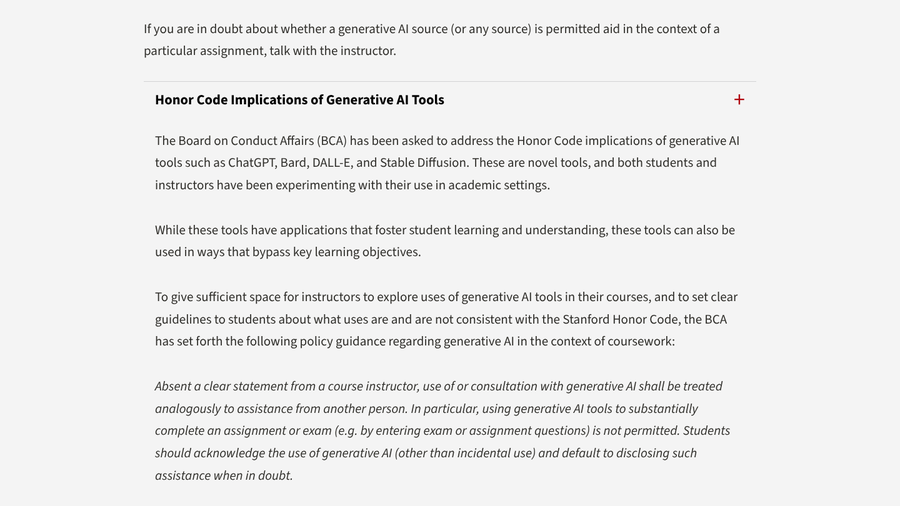
That structure explains why the same habit can be fine in one class and a violation in the next. A biology instructor may welcome AI study guides while a writing seminar bans any AI contact with drafts. Stanford is only one example, and your own school’s policy plus each syllabus decide what applies to you. Confusion is common even where written rules exist: in September 2026, the student newspaper at SUNY Old Westbury covered students and faculty still working out what their campus AI policy means in class.
7 AI policy violations students commit by accident
1. Letting a writing assistant rewrite instead of correct
Spelling and punctuation fixes rarely raise concerns. Rewrites are a different story. Grammarly offers generative AI for brainstorming and outlining, and its education product includes Authorship, a report that shows instructors which sections of a document were typed by the student and which were generated by AI. So when students ask whether Grammarly is considered AI, the practical answer is that its generative features are. Under a Stanford-style default, a paragraph a tool rewrote for you is assistance you would need to disclose. If your syllabus bans AI, accept small corrections and write any rewrites yourself.
2. Treating the university policy as the final word
A school-wide policy sets the floor, and the syllabus sets the rules for each class. A student who sits on a school integrity board posted advice on Reddit in May 2026: read your school’s academic integrity policy every semester, because many schools have updated theirs as AI has become more common. Read each syllabus as well, including any notes on individual assignments, since an instructor can allow AI on one task and ban it on another.
3. “Only consulting” AI in a course that bans it
Many students assume a ban covers AI-written text only, so asking ChatGPT to explain a concept, summarize a reading or organize an outline feels safe. Stanford’s wording closes that gap by covering “use of or consultation with” generative AI. In January 2026, a U.S. sophomore wrote that they had used AI briefly at the start of a paper to organize ideas, rewrote the final draft in their own words, and still got an email from their professor about AI use. When a course bans AI, get the same kind of help from a tutor, the writing center or office hours.
4. Using AI where it is allowed but not saying so
Permission to use AI rarely means permission to use it silently. Stanford asks students to acknowledge AI use “(other than incidental use)” and to default to disclosing it when in doubt. For the common question of how to cite ChatGPT, APA Style’s updated guidance on citing generative AI, published in September 2025, separates a few situations:
| How you used AI | What APA suggests |
|---|---|
| Quoting or relying on a specific chat | Reference that chat: OpenAI. (Year, Month Day). Title of chat [Generative AI chat]. ChatGPT. Shared chat URL |
| Editing or organizing your own writing | Mention the use in your paper and add a general reference: OpenAI. (Year). ChatGPT [Large language model]. https://chatgpt.com/ |
| Translating your own writing | State that you used AI to translate and add a general reference |
| Translating a source to understand it | Cite the original source, not the AI tool |
If your syllabus asks for a specific disclosure format, such as a short statement at the end of the paper, use that instead.
5. Pasting assignments, exams or other people’s work into a chatbot
Stanford’s guidance gives “entering exam or assignment questions” as an example of using AI to substantially complete work, which is not permitted unless the instructor says otherwise. Uploads create a second problem. Stanford’s IT office tells people to avoid entering sensitive data into AI prompts, including personal details and intellectual property, because inputs can be used to train models. The University of Portland library also warns students to be cautious about uploading copyrighted material, such as course readings, into a prompt. A classmate’s draft from peer review belongs in the same category.
6. Running your writing through AI translation or paraphrasing tools
Students who write in a second language often draft in their first language and translate, or run a rough paragraph through a paraphrasing tool to sound more academic. Both put AI-generated wording into your submission. APA’s guidance says that when you use AI to translate your own writing, you should state that you did so and include a general reference to the AI you used. Language courses may ban translation tools outright, so check before you use one for any assignment in that class.
7. Trusting citations that AI or a citation tool produced
AI chatbots can produce references that look real and are not. In its original 2023 post on citing ChatGPT, APA Style described asking ChatGPT for five sources and finding that one did not seem to exist, with a DOI that belonged to a different article. Broken citations draw attention. In a May 2026 Reddit thread, a student said a citation generator had dropped a link and the paper was flagged for possible AI use. In June 2026, a UC Irvine student described being reported after using AI like a search engine to find sources and copying the links it gave. Open every source, confirm it says what you cite it for, and build the reference from the source itself.
What to do if your work gets flagged
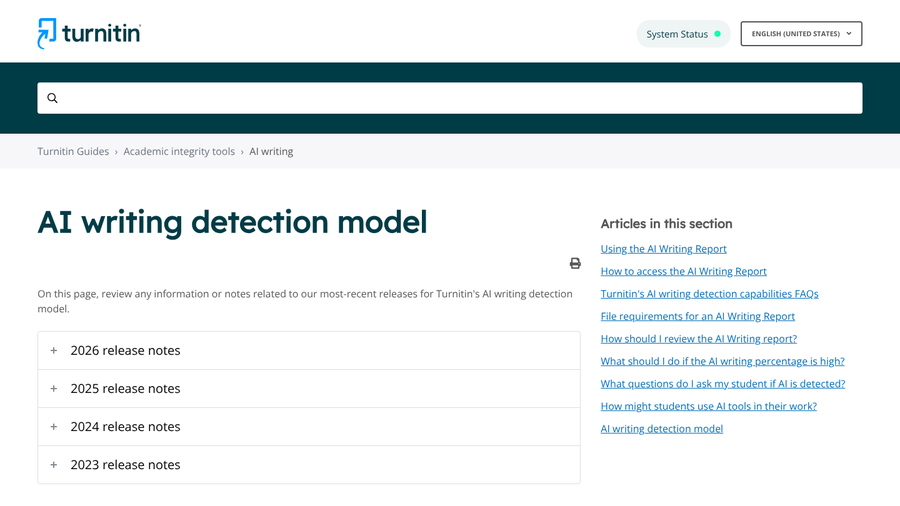
Detector scores are weaker evidence than most students fear. Turnitin says its AI writing indicator should not be the sole basis for action, and it aims to keep false positives under 1% for documents with over 20% AI writing. In Turnitin’s own words, it “might flag a human-written document as AI-written for one out of every 100 fully-human written documents.” Scores from 1% to 19% show only an asterisk, with no percentage.
If you get that email, work through these steps in order:
- Reply in writing and ask for specifics. Ask what the concern is based on and which policy the instructor is applying.
- Collect your process evidence. Version history, notes, outlines, earlier drafts and the sources you read all help. In July 2026, one accused student found that the Word desktop app’s history showed only two timestamps a couple of minutes apart, and commenters pointed them to Google Docs or Word for the web for future papers.
- Offer to talk through the work. Commenters on that post suggested offering to walk through the paper line by line, explaining your argument, sources and drafting choices.
- Follow your school’s process in order. Others advised reading the appeal rules first and going to the department chair before the dean.
What to watch out for
- AI built into everyday apps. Word processors, note apps and browsers now ship with AI writing buttons. Under a policy like Stanford’s, using one counts as AI use, even if you never opened ChatGPT.
- Reusing your own old work. The integrity board member on Reddit noted that submitting the same work in two classes without permission is a violation at their school, and other commenters said the same rule applied at theirs.
- Proctored exams. Remote exams add their own rules. Our guides to a failing proctoring environment scan and proctoring app permissions worth questioning cover the setup side.
Main Takeaways
- Whether using ChatGPT is cheating depends on your syllabus first and your school’s default policy second.
- Some schools, including Stanford, count even “consultation” with AI as outside help unless the instructor allows it.
- Disclose any AI use that goes beyond incidental help, and cite it in the format your instructor or APA asks for.
- Keep drafts in a tool with version history, and never cite a source you have not opened.
Frequently Asked Questions
Is using ChatGPT cheating in college?
Using ChatGPT is cheating in college when your course policy bans it or when you use it without the disclosure your instructor requires. At schools with a default like Stanford’s, AI help counts as assistance from another person unless the syllabus says otherwise.
Is Grammarly considered AI?
Grammarly’s generative features, such as AI rewrites, brainstorming and outlining, are generative AI. Basic spelling and punctuation fixes are usually treated differently, but check your syllabus, because some instructors ban all AI writing tools.
How do you cite ChatGPT in APA style?
To cite ChatGPT as a tool in APA style, use: OpenAI. (Year). ChatGPT [Large language model]. https://chatgpt.com/. To cite a specific conversation, APA’s 2025 guidance uses the chat title in italics, the description [Generative AI chat], the model name and the shared chat URL.
Can Turnitin detect ChatGPT?
Turnitin’s AI writing indicator flags text it predicts was written by AI, including ChatGPT. Turnitin says the score should not be the sole basis for action and shows only an asterisk for scores from 1% to 19%.
What should I do if I am falsely accused of using AI?
Ask for the specific concern in writing, gather your version history, notes and drafts, and offer to explain your work in person. Then follow your school’s appeal process in order, usually starting with the instructor and department chair.
Closing Thoughts
Before your next assignment, open the syllabus and find the AI section. If it allows AI, keep a note of what you used and disclose it in the format your instructor asks for, or in APA style if nothing is specified. If it bans AI or says nothing, treat AI like help from another person and ask your instructor before using it. Either way, write in a tool with version history, because the easiest integrity meeting is the one where you can show your work.