
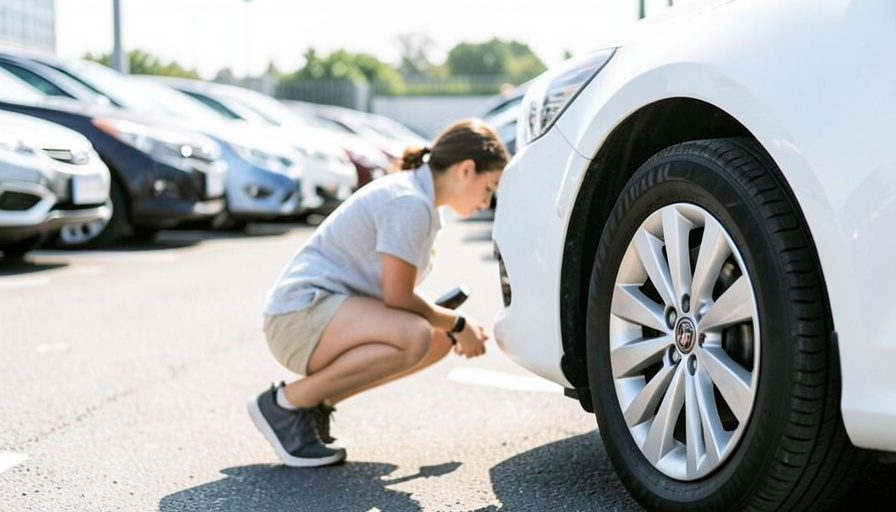
You sign the paperwork, grab the keys, and drive off, glad to be moving after a long flight. Weeks later a charge lands for a dent you are sure was already there. This used to be a he-said-she-said hassle. Now, with rental companies running cars through AI camera scanners, it has become a common and expensive surprise, and the only thing that reliably protects you is proof you took at the lot.
Several large rental firms now photograph vehicles with automated scanners at pickup and return, then compare the two. When the system misses pre-existing damage on the way out but catches it on the way back, the charge lands on you. Reported cases of surprise AI-scanner bills have drawn enough complaints that Congress has asked questions about the practice. Your defense is simple and free: a few minutes of clear, timestamped photos before you leave. Here are the nine to take.
In brief
Before you drive a rental off the lot, photograph the whole car and every existing mark, with a timestamp. Shoot all four sides from a step back, then close-ups of any scratches, dents, and scuffs on each panel, the wheels and tires, the windshield and glass, the roof and hood, and the interior. Capture the fuel gauge and odometer, and photograph the rental agreement’s damage diagram. Make sure your phone’s date and location are on so the images are stamped, and keep everything until the final charge clears. This record is what lets you dispute a false damage claim later.
Table of Contents
1. All four sides, from a few steps back
Start wide. Take one clear photo of each side of the car, front, back, and both flanks, from far enough away that the whole vehicle is in frame. These establish the overall condition and the car’s identity, ideally with the license plate visible in at least one shot. Wide photos are what prove, at a glance, that a panel was intact when you drove off. Do them first, before you get close, so you have the big picture on record.
2. Close-ups of every existing scratch, dent, and scuff
Now walk the car slowly and shoot a close-up of every mark you find: scratches on the doors, scuffs on the bumpers, dings on the fenders, chips in the paint. Do not skip small ones, because those are exactly what a scanner flags. Get close enough that the damage is unmistakable, and try to include a nearby feature like a door handle so the location is clear. If you can, point each one out to the agent and note it on the agreement too.
3. The wheels and tires
Wheels take a beating and are easy to blame on the last driver. Photograph each wheel, capturing curb rash, scrapes on the rims, and hubcap condition, plus the general state of the tires. Rim damage is a frequent add-on charge, and a clear before shot of each corner makes it very hard to pin fresh curb damage on you. Four quick photos, one per wheel, covers it.
4. The windshield and all the glass
Chips and cracks in the windshield are a classic dispute, since a tiny star can spread into a “you cracked it” charge. Photograph the windshield straight on, then the side and rear windows, looking for existing chips, cracks, or pitting. Glass damage is expensive, so this is not a corner to cut. If there is any existing chip, get a tight shot of it and make sure it is noted before you leave.
5. The roof and the hood
These are the panels almost everyone forgets, and the ones overhead scanners are very good at seeing. Roofs collect hail dents, scratches from car washes, and marks you would never notice at eye level. If you can safely see the roof, photograph it, along with the hood and the top of the trunk. Since you rarely look up there during a rental, a pickup photo is your only evidence that a roof ding was already present.
6. The full interior
Damage charges are not only about the outside. Photograph the seats and upholstery for stains, tears, or burns, the dashboard and console, the carpets, and the headliner. Note any existing smell or mess, since cleaning and smoke fees can be steep. A quick sweep of the cabin, front and back, protects you from being billed for a stain or a tear that was there when you sat down.
7. The fuel gauge and the odometer
With the car on, photograph the dashboard showing the fuel level and the odometer reading. The fuel shot protects you from a refueling charge by proving what you started with, especially on full-to-full rentals, and the odometer reading documents the starting mileage. These two numbers are easy to capture in one clear photo and settle two of the most common billing disputes on their own.
8. The rental agreement’s damage diagram
Most agreements include a car diagram where existing damage is supposed to be marked. Photograph that page, whether it shows marks or is blank, because it is the company’s own record of the car’s condition at handover. If you spotted damage that is not on the diagram, ask to have it added and photograph the result. Matching your own photos to the company’s paperwork is a strong combination if you ever have to argue a charge.
9. A timestamped video walk-around
Finish with a slow video lap of the whole car, narrating the date and location out loud, then a close pass over any damage you found. Video captures continuity that separate photos can miss, and the spoken date adds a timestamp. Make sure your phone’s date, time, and location services are switched on so both the photos and the clip carry that data automatically. It is the belt-and-suspenders step that ties the whole record together.
What to do with the photos
Taking them is only useful if you keep them. Save the set somewhere you will not lose it, and hold onto everything until the final charge has cleared and any deposit is returned, which can be weeks after you drop the car off. If a damage claim does appear, respond promptly in writing with your timestamped pickup photos, ask the company for its own pickup scan for comparison, and escalate to your credit card issuer or a dispute if needed. The whole point of the five minutes at the lot is to make a false claim easy to refute. For another travel-logistics headache worth planning around, see our guide to the new airline power bank rules.
This article is general consumer information, not legal advice. Rental terms and dispute processes vary by company and location, so read your agreement and follow the provider’s stated process, and seek professional advice for a significant disputed charge.
Frequently asked questions
Why should I photograph a rental car before driving off?
Because many companies now scan cars with AI cameras at pickup and return and bill for any new damage. If the scanner misses a pre-existing mark on the way out but flags it on return, you get charged. Timestamped pickup photos are your proof the damage was already there.
What is the most important rental car photo to take?
Clear close-ups of every existing scratch, dent, and scuff, plus wide shots of all four sides. Those cover the disputes that come up most. Add the wheels, glass, roof, interior, and the fuel and odometer readings, and photograph the agreement’s damage diagram.
How do I make sure my rental photos are timestamped?
Turn on your phone’s date, time, and location services so photos and video carry that data in their file details. A short video where you say the date and place out loud adds another timestamp. Keep the originals rather than screenshots, since screenshots can strip the underlying data.
What do I do if I get a false rental car damage charge?
Respond in writing quickly with your timestamped pickup photos, and ask the company for its own pickup scan to compare. If it will not drop the charge, dispute it with your credit card issuer. Keeping your photos until the final charge clears is what makes this possible.
How long should I keep the pickup photos?
Until the final charge has settled and any hold or deposit is released, which can take several weeks after you return the car. Damage claims sometimes arrive after drop-off, so do not delete the photos the moment you hand back the keys.
The bottom line
Rental damage disputes used to be your word against theirs, and now a camera arch is part of the argument. You do not need special gear to stay protected, just a few minutes before you leave the lot: wide shots of all four sides, close-ups of every existing mark, the wheels, glass, roof, and interior, the fuel and odometer, and the paperwork, all timestamped. Keep them until the charge clears. For more on traveling smarter, browse The Other Stream’s Travel section.