The power bank that quietly powered you through last year’s trip could get pulled aside at the gate this year. In 2026 the rules tightened, and a device that was fine before might now be over the limit, in the wrong bag, or banned from charging mid-flight. It is worth a two-minute check before you fly.
Airlines and regulators cracked down on lithium batteries after several onboard fires, adding new caps on how many power banks you can carry and where you can keep them. The good news is that staying compliant is simple once you know the numbers. Here are the current rules in plain terms, followed by the charging options that keep you powered without breaking them.
Quick answer
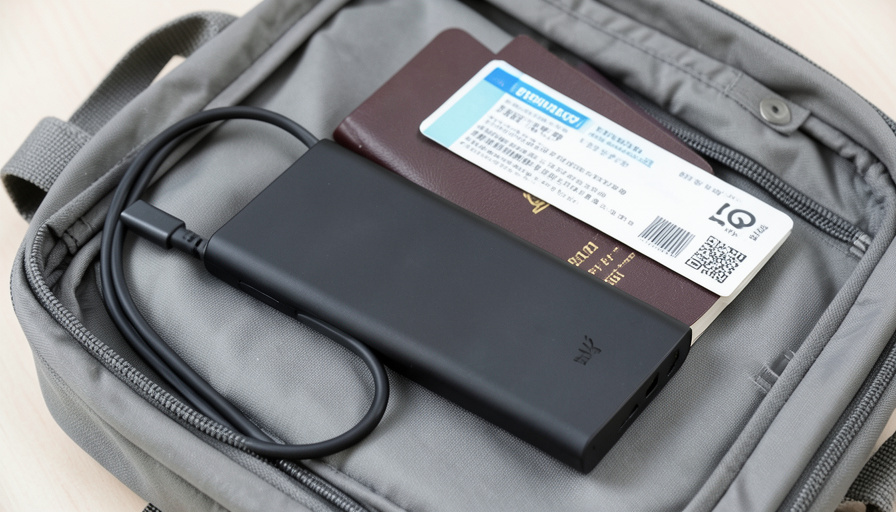
A power bank under 100 watt-hours, roughly 27,000mAh, is allowed in carry-on with no special approval, and that covers almost every consumer power bank. It must go in your carry-on or personal item, never a checked bag. As of 2026, a new global standard limits you to two power banks, bans recharging them during the flight, and keeps them out of overhead bins, so they stay visible and within reach. Banks from 100 to 160Wh need airline approval, and anything over 160Wh is not allowed at all.
Table of Contents
The rules, in one place
Here is the whole picture, drawn from FAA and international guidance that airlines follow:
- Under 100Wh: allowed in carry-on, no approval needed. This is nearly every phone and tablet power bank.
- 100 to 160Wh: allowed only with airline approval, and a maximum of two spares per passenger.
- Over 160Wh: forbidden on passenger flights entirely; these must ship as cargo.
- Carry-on only: power banks and spare lithium batteries are never permitted in checked luggage.
- New for 2026: a two-power-bank limit per passenger, no recharging them in flight, and no storing them in overhead bins.
- Terminals protected: loose batteries count as spares and must have their terminals taped or be kept in original packaging.
The FAA’s battery guidance is the reference to check, and individual airlines can be stricter, so confirm your carrier’s policy before you pack.
How to read the watt-hours
The limit is in watt-hours, but most banks advertise milliamp-hours, which causes confusion. The conversion is simple: multiply the mAh by the voltage, usually 3.7, and divide by 1,000. So a 20,000mAh bank is about 74Wh, comfortably under the limit, and a 27,000mAh bank is right around 100Wh. Many banks now print the Wh figure directly on the casing, which is worth choosing, since a clearly marked rating lets security verify it in seconds instead of turning it into a debate at the checkpoint.
1. A standard power bank under 100Wh
For almost everyone, the simplest compliant choice is any normal power bank rated under 100Wh, which includes the vast majority sold for phones and tablets. A 10,000 to 20,000mAh bank sits well under the limit, needs no approval, and can charge a phone several times. This is the default answer: you probably do not need anything special, just a bank with its capacity clearly marked and the sense to keep it in your carry-on.
2. A slim 5,000 to 10,000mAh bank
If you want zero hassle, a small 5,000 to 10,000mAh bank is the most travel-friendly option. It is tiny, cheap, and so far under the limit that it never raises an eyebrow, while still giving a phone one or two full charges, which is plenty for a travel day. For carry-on minimalists or anyone nervous about the rules, this is the safe, forgettable choice.
3. A 20,000mAh bank for multiple devices
The sweet spot for longer days or several devices is around 20,000mAh, which comes to roughly 74Wh, still clearly legal. It will top up a phone several times and handle a tablet, and with USB-C it can trickle-charge many laptops. This is the most power you can reasonably carry while staying comfortably within the under-100Wh rule, which makes it the popular all-day pick.
4. A 100 to 160Wh bank, with approval
Heavy users, particularly those charging laptops all day, sometimes need a bank in the 100 to 160Wh range. These are allowed, but only with your airline’s approval and capped at two spares, so this is not a grab-and-go option. If you genuinely need that capacity, contact the airline ahead of time and be ready to show the rating. For most travelers, staying under 100Wh avoids the paperwork entirely.

5. Skip the battery: wall charger plus in-seat power
The cleanest way to dodge every battery rule is to not rely on a big one. A compact wall charger with a couple of USB-C ports lets you top up at the gate, in the lounge, and in airport outlets, and many planes now have in-seat USB or power. Pairing a small wall charger with the outlets already around you covers a lot of trips without a single watt-hour to declare.
6. Let your laptop or a battery case do the work
Two smaller options round things out. A modern laptop with USB-C can charge your phone from its own battery, which counts as a device rather than a spare and sidesteps the power-bank limits. And a battery phone case carries a small integrated cell that is easily within the rules. Neither replaces a proper power bank for a long day, but both are handy, compliant top-ups that add no separate battery to your bag.
Packing them the right way
Owning a compliant bank is only half of it; how you pack matters just as much:
- Always carry power banks in your carry-on or personal item, never in checked luggage.
- Keep them accessible, not buried or in an overhead bin, so you can reach them and staff can see them.
- Do not recharge a power bank during the flight, which is now widely prohibited.
- Protect the terminals of any loose battery with tape or original packaging.
- Check your specific airline’s policy, since several are stricter than the baseline.
This article is general information, not official guidance, and battery rules changed in 2026 and vary by airline and country. Confirm the current requirements with the FAA or your national authority and your specific airline before you fly.
Frequently asked questions
Can you bring a power bank on a plane in 2026?
Yes, in carry-on only. A power bank under 100Wh, about 27,000mAh, needs no approval, but new 2026 rules limit you to two banks, ban recharging them in flight, and keep them out of overhead bins. Never pack a power bank in checked luggage.
What is the 100Wh power bank limit?
Watt-hours measure a battery’s energy. Under 100Wh is freely allowed in carry-on, 100 to 160Wh needs airline approval and is capped at two, and over 160Wh is banned from passenger flights. To convert, multiply mAh by 3.7 and divide by 1,000.
How many mAh is 100Wh?
Roughly 27,000mAh at the typical 3.7 volts. That means common 10,000 and 20,000mAh banks are well under the limit, and only very large banks approach or exceed it. Check the Wh rating printed on the device to be sure.
Can you charge a power bank on a plane?
No, not under the 2026 rules. Recharging power banks during the flight is now widely banned after onboard fire incidents. Charge them before you fly and use them only to power your devices, keeping them visible and within reach.
Can power banks go in checked luggage?
No. Power banks and spare lithium batteries must travel in your carry-on or personal item and are prohibited in checked bags, because a fire in the hold is far harder to detect and control. This rule has no exceptions for consumer power banks.
The bottom line
Flying with a power bank in 2026 is easy once you know the numbers: stay under 100Wh, keep it in your carry-on and within reach, do not charge it in flight, and bring no more than two. For most people a marked 10,000 to 20,000mAh bank covers everything, and a small wall charger plus in-seat power is a battery-free backup. Check your airline, since some go further. For more on flying smart, see our guide to the travel budget mistakes that cost you more, and browse The Other Stream’s Travel section.
Related Posts