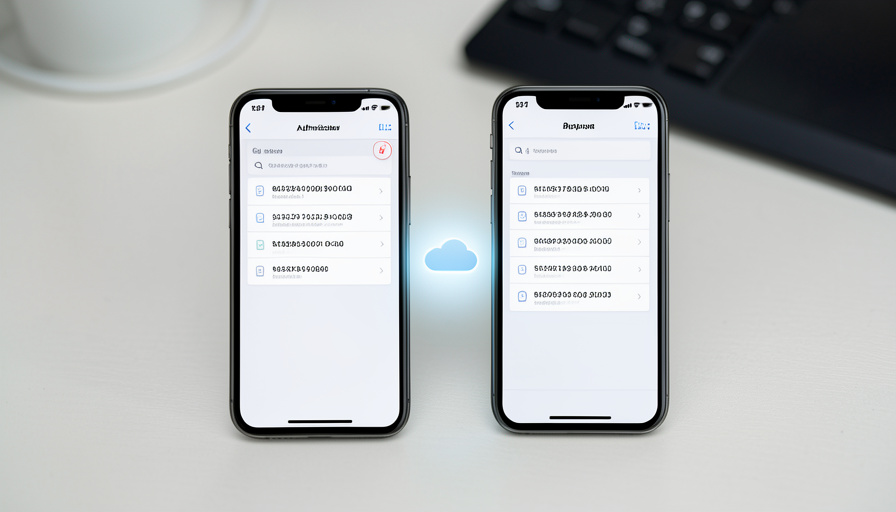
Apple Notes is genuinely good at capturing a thought fast. It is genuinely bad at giving that thought back. Try to move a semester of notes into another app and you hit a wall: there is no clean way to export them as portable Markdown, so your work is quietly trapped.
For a student, that matters. Markdown keeps your notes as plain, future-proof text you can open anywhere, move between apps, and still read in ten years. Apple Notes will not hand you that, so if portability is the point, you need a tool that stores or exports real Markdown. Here are six alternatives that do, compared honestly for study use, with the trade-offs each one asks in return.
What to know
Apple Notes has no clean bulk Markdown export, which is the whole reason to switch if you want portable notes. Obsidian is the strongest pick for ownership, since every note is a plain-text Markdown file on your own device. Bear is the closest Apple-feel upgrade with proper export on its paid tier, Notion suits structured study, Joplin is the free open-source option, Craft is the polished one, and Standard Notes leads on privacy. The trade-offs are mostly about price, polish, and whether your notes live as local files or in a company’s cloud.
Table of Contents
First, what Apple Notes actually lacks
To be fair to it, Apple Notes lets you export a single note to PDF or Markdown on a Mac through the export menu. What it does not do is bulk export, and dragging notes out as files produces messy HTML with the formatting mangled. For a handful of notes that is survivable; for a full course load it is not. The apps below solve this by treating Markdown as a first-class format, either storing your notes as Markdown to begin with or letting you export the whole library cleanly.
1. Obsidian
If you have hit the ownership wall, Obsidian is the answer. Every note is a plain-text Markdown file stored on your own device, with no company in the middle, which means your notes are portable and readable forever regardless of what happens to any app. It is free for personal use, works on iPad, and adds linking between notes that is genuinely useful for study. The trade-offs: there is a learning curve, and reliable syncing across devices is a paid add-on unless you set up your own. For students who want to own their notes outright, nothing beats it.
2. Bear
Bear is for the person who loves how Apple Notes feels and just wants it to stop being limited. It keeps the fast, clean, elegant experience but is built around Markdown, with tags, themes, and the export Apple Notes withholds, including to Markdown, PDF, and DOCX. The honest catch is that it is Apple-only, so it will not follow you to a Windows or Android device, and its export and cross-device sync live behind the paid Bear Pro tier. If you are all-in on Apple and want a beautiful writing app, it is the natural upgrade.
3. Notion
Notion suits students who want structure more than plain text: databases, toggles, and organized pages for classes and projects, plus a direct Apple Notes importer to get started. It can export your content to Markdown, so your work is not locked in. The caveats are that it is online-first rather than local files, its Markdown export happens per page rather than as one tidy library, and it can feel heavy if all you want is quick notes. For organizing a semester rather than jotting, it shines.
4. Joplin
Joplin is the free, open-source workhorse. It is Markdown-native, imports and exports Markdown cleanly, syncs with end-to-end encryption, and runs across every major platform including iPad. Because it is open source and free, there is no company steering your data or paywalling the basics. The trade-off is polish: the interface is more functional than beautiful, and it asks a little setup for sync. For a student who values free, private, and portable over pretty, it is a strong, no-cost choice.
5. Craft
Craft is the polished middle ground, with a genuinely lovely design, block-based editing, and Markdown export, plus a strong iPad experience. It feels modern and fast, and it exports your work to Markdown so you are not trapped. As with Bear, the fuller feature set and sync sit behind a subscription, and it leans toward the Apple world. If you want something that looks and feels premium while still handing back Markdown, Craft is worth a look.

6. Standard Notes
For privacy-first students, Standard Notes encrypts every note end-to-end by default, so not even the company can read your work. It supports a Markdown editor and clean export, making it both private and portable. The trade-off is that the nicer editors, including full Markdown and themes, and some conveniences sit behind a paid plan, and the free tier is deliberately spare. If keeping your notes truly private matters as much as owning them, this is the pick.
A note for iPad handwriting
One clarification, since this trips students up: if what you actually want is handwriting with an Apple Pencil, Markdown is not your format, and apps like GoodNotes, Notability, or OneNote are the better tools. They excel at handwritten and free-form pages but do not produce Markdown. The apps above are for typed notes you want as portable text. Plenty of students use one of each, handwriting for lectures and a Markdown app for typed study notes, which is a perfectly good setup.
Frequently asked questions
Can you export Apple Notes to Markdown?
Only one note at a time on a Mac, through the export menu, not in bulk. Dragging notes out as files produces messy HTML with broken formatting. For portable Markdown across a whole library, you need an app built around Markdown, like Obsidian or Joplin.
Which note app is best for students who want Markdown?
Obsidian for owning plain-text files, Bear for a polished Apple-feel upgrade, and Joplin for a free, private, cross-platform option. The best choice depends on whether you prioritize ownership, design, cost, or privacy.
Is Obsidian free for students?
Yes, Obsidian is free for personal use, including on iPad, and stores your notes as Markdown files you own. Optional paid add-ons like official sync exist, but you can use it fully free, including with your own syncing setup.
Do these apps work on iPad?
Yes. Obsidian, Bear, Notion, Joplin, Craft, and Standard Notes all run on iPad. Bear and Craft lean toward the Apple ecosystem, while Notion, Joplin, and Standard Notes are cross-platform if you also use Windows or Android.
What about handwriting notes on an iPad?
Handwriting apps like GoodNotes, Notability, and OneNote are better for Apple Pencil use, but they do not produce Markdown. If you want portable typed notes, use a Markdown app; many students pair a handwriting app for lectures with a Markdown app for typed notes.
The bottom line
Apple Notes is a fine place to capture ideas and a frustrating place to keep them, because it will not hand you clean, portable Markdown. If that portability matters, Obsidian gives you plain-text files you own forever, Bear and Craft offer polish with export, Notion brings structure, Joplin is free and private, and Standard Notes locks everything down. Pick by what you value most, ownership, looks, cost, or privacy, and your notes stop being trapped. For more study-tech guidance, browse The Other Stream’s Tech section, and see our guide to sending transcripts for college applications.
Related Posts