Is That Pharmacy Text Real? How to Spot a CVS Text Scam
What real pharmacy texts from CVS and Walgreens look like, eight signs of a CVS text scam or fake refill alert, and how to check a message without tapping the link.
In May 2026, a Reddit user in Texas got a text and an email from CVS Specialty pharmacy about a prescription. They had not filled anything at CVS in more than five years and had no specialty medication, so they assumed it was a scam and did not click. The replies were a surprise. Commenters said the sender and the link both pointed to CVS, and that the real risk might be someone using their insurance, or a prescription moved from another pharmacy. Pharmacy texts are hard to judge because real ones can look strange and fake ones can look real. Here is how to tell the difference.
In Brief
Real pharmacy texts tell you a prescription is ready, delayed or due for a refill, and they come from the short codes the pharmacy publishes. CVS says it texts from short codes, not 10-digit numbers. A CVS text scam or fake refill alert usually asks for payment, personal details or a login through a link. Do not tap the link. Open the pharmacy’s app or call the number on your prescription label.
Table of Contents
What real pharmacy texts look like
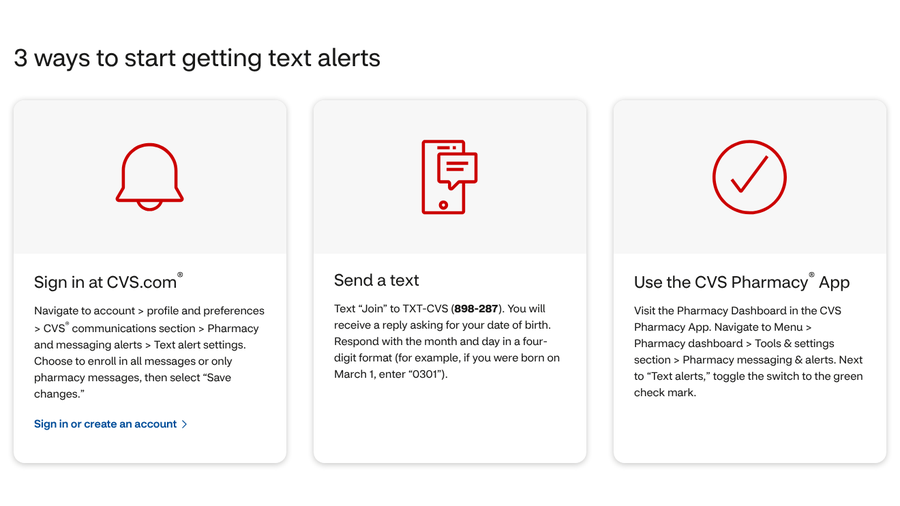
According to CVS’s text alert page, enrolled customers can get texts when a prescription is ready for pickup, when there is an insurance or inventory problem, when a refill is due and when flu shots are available. CVS lists its short codes as TXT-CVS (898-287), CVS-CVS (287-287) and 63641. You can opt out by texting STOP to 898287.
One detail catches people off guard. If you sign up by texting “Join” to 898-287, CVS replies asking for the month and day of your birth. So a date-of-birth question is not automatically a scam, as long as you started the conversation with the pharmacy’s own short code.
Walgreens works differently. Its fraud information page says most of its messages come by email, though customers can opt in to texts about prescription or order status. It is blunt about the rest. Walgreens says it “will never request personal, financial, or account information” by text. Order confirmations and receipts arrive by email, never by text.
8 signs of a CVS text scam or fake pharmacy text
1. It comes from a regular 10-digit number
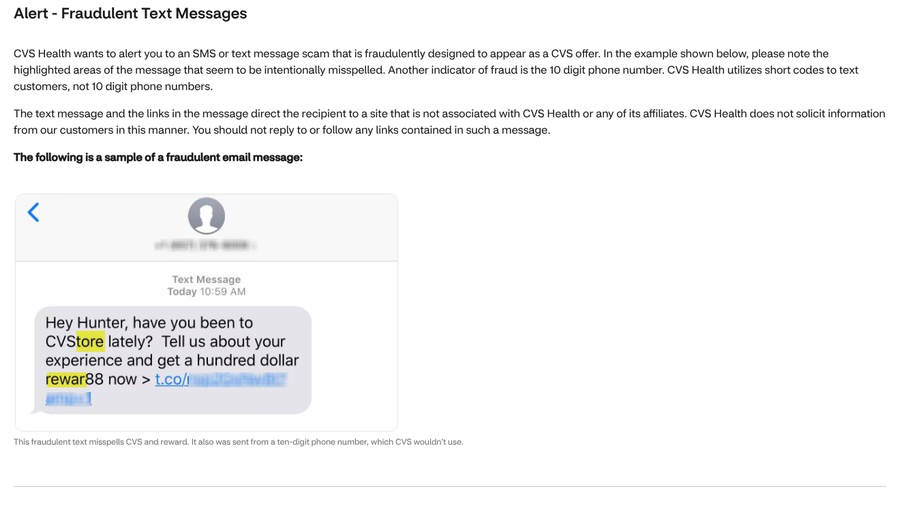
CVS’s security alerts page says it uses short codes to text customers, not 10-digit phone numbers, and calls a 10-digit sender a sign of fraud. Some small independent pharmacies do text from regular numbers, so if you use one, check with the store.
2. The name is misspelled or oddly formatted
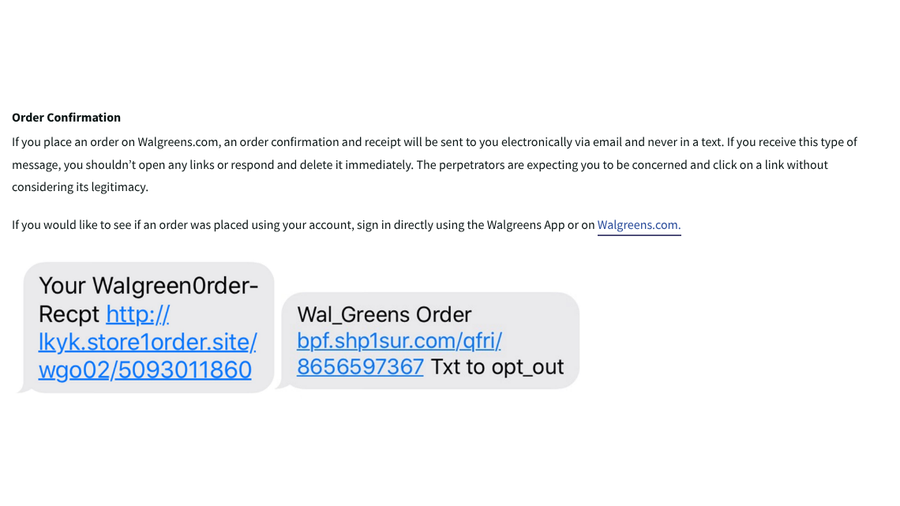
The fake CVS text on that page reads “CVStore” and offers a “rewar88.” Walgreens shows fake order texts from “Walgreen0rder-Recpt” and “Wal_Greens Order.” Real pharmacy texts spell their own name correctly.
3. The link goes somewhere other than the pharmacy
The fake Walgreens texts link to domains like “store1order.site.” A genuine CVS link should point to cvs.com. If the web address does not match the pharmacy you use, do not tap it.
4. It asks for card details or payment to release a prescription
Pharmacies collect payment at the counter, at checkout in their app or on delivery orders you placed yourself. A text that asks you to pay through a link to release or ship a prescription you did not order is a red flag.
5. It asks for your Social Security number or insurance details
CVS warns about criminals posing as pharmacy staff who ask for a driver’s license number, Social Security number or insurance information “to verify a prescription.” Those calls use spoofed CVS phone numbers, and the same script works by text.
6. It offers a prize, survey reward or gift card
Both chains flag these. Walgreens says it does not run text giveaways and offers real surveys only on receipts or by email after a Walgreens.com order.
7. It offers to sell you medication
CVS says scammers have spoofed pharmacy numbers to ask people whether they need refills or want to order drugs like Cialis or Viagra. CVS says it will never call to take that kind of order.

8. It pushes you to act immediately
“Your prescription will be canceled today” or “verify now to avoid delays” is pressure, not information. Real refill alerts give you time.
When a strange pharmacy text is real
Not every surprising text is fake. When Rite Aid closed its stores in 2025, USA Today reported that its prescription files were moving to CVS, Walgreens and other pharmacies. In the May 2026 thread, one commenter said that was how their random CVS texts and emails began.
A wrong phone number on file causes confusion too. In September 2026, a Reddit user said a family member kept getting text updates about the user’s CVS prescriptions, even after a technician was asked to remove the number. CVS’s text terms warn that alerts can include limited personal information about your prescriptions, visible to anyone with access to the phone. If texts about you reach someone else, ask the pharmacist to check every number on your profile.
How to check a pharmacy text safely
- Do not tap the link or reply. Replying to a fake number, even with STOP, can tell a scammer your number is active.
- Open the pharmacy’s app or website yourself. Sign in and look at your prescriptions and orders.
- Call the number on your prescription label. Ask the pharmacy whether it sent the message.
- Check the sender. A published short code is a good sign, but the app is still the final check.
- Ask about unfamiliar prescriptions. A real alert for medication you never received can mean someone is using your insurance.
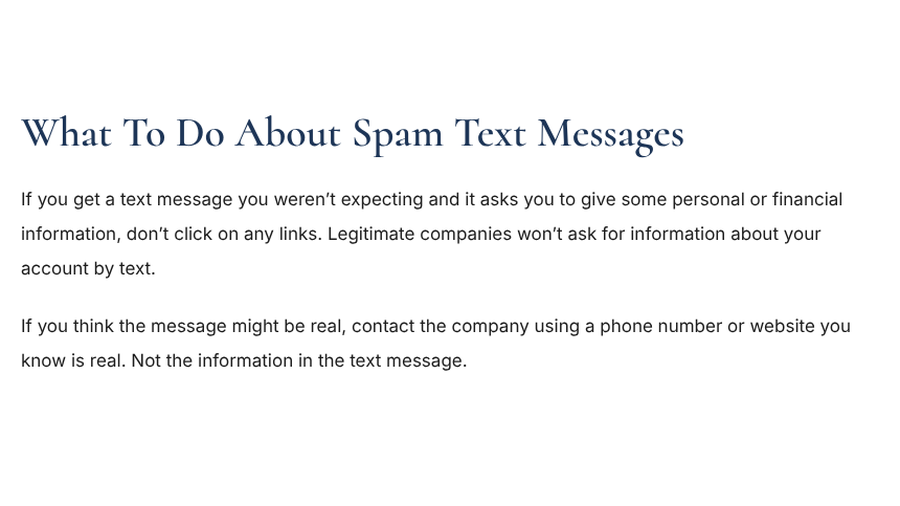
The FTC’s advice on spam texts backs this up: legitimate companies won’t ask for information about your account by text, and you should contact the business using a phone number or website you know is real. To report a fake, forward it to 7726 (SPAM) and use your messaging app’s report junk option.
If you already clicked or shared information
Call your pharmacy and your bank or card issuer, change the password on your pharmacy account and watch for new charges. If you shared your Social Security or insurance number, check your insurer’s statements for medications or visits you never had. Our guide to medical identity theft warning signs explains what to look for. Fake toll texts follow the same playbook, as our breakdown of the unpaid toll text scam shows.
This article is for general information only and is not medical, legal or financial advice. Contact your pharmacist, insurer or bank directly about your prescriptions, coverage or accounts.
What Matters Most
- CVS texts from short codes such as 898-287, 287-287 and 63641, not 10-digit numbers.
- Walgreens says it never asks for personal, financial or account information by text, and order confirmations come by email.
- Texts asking for payment, Social Security or insurance numbers, or a login through a link are red flags.
- Check any pharmacy text in the official app or by calling the number on your prescription label.
Frequently Asked Questions
Is 898287 a real CVS number?
Yes, 898287 is a real CVS short code. CVS lists TXT-CVS (898-287), CVS-CVS (287-287) and 63641 as the short codes it uses for pharmacy text alerts, and you can text STOP to 898287 to opt out.
How do I know if a CVS text is a scam?
A CVS text is likely a scam if it comes from a 10-digit number, misspells CVS, links to a non-CVS website or asks for payment or personal details. Check your prescriptions in the CVS app or call your pharmacy to confirm.
Does Walgreens send text messages about prescriptions?
Walgreens sends prescription and order status texts to customers who opt in. It says it never asks for personal, financial or account information by text, and order confirmations are sent by email, not text.
Why am I getting pharmacy texts for a pharmacy I don’t use?
Your prescription records may have moved there, as happened when Rite Aid closed, or your phone number may be on someone else’s profile. It can also be a scam, so check with the pharmacy using a number you trust.
What should I do with a fake pharmacy text?
Do not tap the link or reply. Forward the message to 7726 (SPAM), report it as junk in your messaging app and delete it. If you entered any details, contact your pharmacy and bank right away.
Final Takeaway
Your pharmacy already has your prescription, your payment method and your phone number, so it rarely needs you to confirm anything by text. When a message asks you to pay, log in or share personal details, close it and open the pharmacy’s app instead. Save your pharmacy’s short code and phone number in your contacts today, so a real alert is easy to recognize and a fake one stands out.