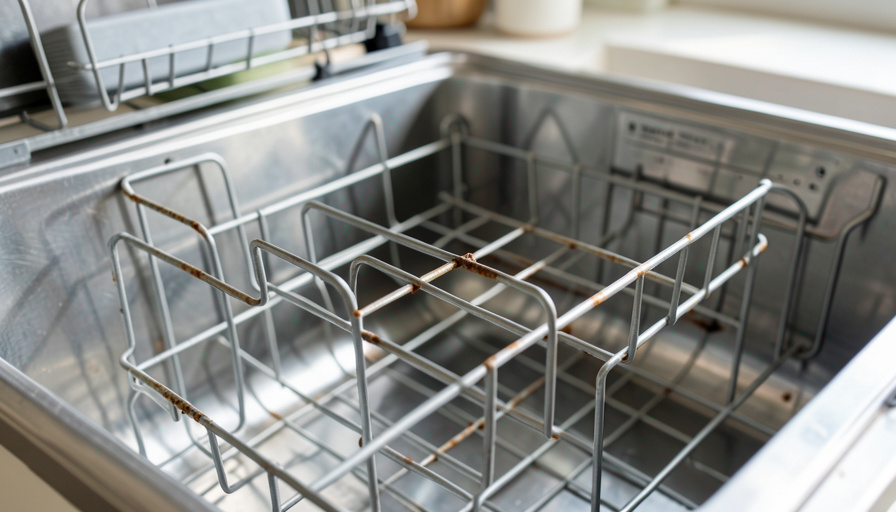
You open the dishwasher expecting clean dishes and find orange streaks on the rack instead. It is one of the most common appliance complaints out there, and the fix depends entirely on where the rust is coming from.
Rust inside a dishwasher sets off three quick worries: what caused it, whether it is ruining your dishes, and whether anyone else is going to pay to fix it. The reassuring news is that the most common form of dishwasher rust is cosmetic and cheap to manage. The frustrating news is that it is also the form your warranty is least likely to cover. Sorting out which kind you have is the whole game.
Here is how to figure out why your dishwasher is rusting, whether it is covered, and what to actually do about it.
The short version
Most dishwasher rust starts on the racks, where the vinyl coating on the metal tines cracks and exposes bare steel that then rusts and stains dishes. That kind is usually treated as normal wear and often falls outside warranty coverage after the first year. Rust from a genuinely corroding tub is rarer and more likely to be covered, sometimes under a longer separate tub warranty. Rust caused by hard water or a rusty item you loaded is on you, not the manufacturer. Diagnose the source first, then fix or claim accordingly.
Table of Contents
Where the rust is actually coming from
Before you blame the machine, find the source, because there are a few and they point to very different fixes:
- Rack tine coating. The most common culprit by far. The plastic coating on the wire tines cracks, usually at the tips or the welds, exposing steel that rusts within days and leaves orange marks on dishes.
- A rusty item you loaded. Chipped enamel pans, cast iron, or a can lid can shed rust that stains the tub and looks like the dishwasher is failing when it is not.
- Iron in your water. Hard or iron-rich water does not rust the machine directly, but it leaves mineral deposits and iron staining that read as rust and give real rust a place to take hold.
- The tub itself. Stainless tubs rarely rust, but they can develop surface spots, and older or budget units with steel components can genuinely corrode. This is the least common and the most serious.
Run a quick test: if the rust is only on the racks, it is almost certainly the coating. If it is on the tub floor near where a specific pan sits, suspect the item. If everything has an orange tint, look at your water.
Is it going to ruin your dishes?
Rust flaking off a rack can leave stains on dishes, which is unpleasant but not a poisoning risk in the amounts involved. Still, you do not want rust particles baking onto your plates, so stop using the affected rack spots, and pull anything that is actively shedding rust. The bigger issue is that rust spreads, so a small chipped tine left alone becomes a whole rusted section over a year.
Is dishwasher rust covered by warranty?
This is where people get frustrated, so here is the honest picture. Most manufacturers cover defects in materials and workmanship for one year, parts and labor. The catch is that racks are frequently treated as a wear item, so chipped-coating rust often falls outside coverage once that first year passes, and coverage varies a lot by brand. Some manufacturers warrant the tub separately and for longer, occasionally against rust-through for several years, which means a tub that actually corrodes through may be covered when a rusty rack is not.
Two things almost never get covered: rust from hard water and rust from a rusty item you loaded, because a warranty covers manufacturing defects, not your water supply or your cookware. Before you call, register the appliance if you have not, dig out your receipt, and read your specific model’s warranty document for the exact terms. If a claim you believe is legitimate gets denied, consumer warranty protections may still apply, and our Law section covers the general shape of those rights.
How to fix a rusted rack
For the common rack-coating rust, a repair is cheap and doable in an afternoon:

- Remove the rack and scrub the rusted spots with a stiff brush or fine sandpaper until you reach clean metal.
- Dry it completely, then coat the bare steel with dishwasher-safe vinyl rack repair paint.
- Cap exposed tine tips with replacement vinyl tine tips or covers, which stop the most common re-rust point.
- Let it cure fully per the product instructions before running a cycle.
Be realistic about this: if iron-rich water is the underlying cause, patches tend to fail within weeks because the corrosion keeps working from underneath. In that case the repair buys time, and replacing the whole rack, or fixing the water, is the durable answer.
Stop it coming back
Prevention is mostly about removing the cause you identified. Cap or touch up tine tips at the first sign of a chip, before bare steel sits in hot water for months. Keep rusty or chipped-enamel items out of the dishwasher entirely. If your water is hard or iron-heavy, a water softener or an iron filter does more than any rack coating will, and it helps the rest of your plumbing too. Running the machine regularly, oddly enough, also helps, since a dishwasher that sits damp and unused corrodes faster.
When to stop patching and replace
Replacement racks are sold for most models and are the right call once a rack is rusting in several places at once. The machine itself is a different decision. If the stainless tub is genuinely rusting through, or the unit is well out of warranty and needing repairs, the math often favors a new dishwasher over chasing rust around an aging one. A rusted rack is a cheap fix. A rusted tub is usually a sign the appliance is near the end.
Frequently asked questions
Why is my dishwasher rack rusting?
Almost always because the vinyl coating on the wire tines has cracked and exposed bare steel, which rusts in hot, mineral-laden water. It starts at the tips and welds and spreads if left alone. Hard water and rusty loaded items can accelerate or mimic it.
Is dishwasher rust covered by warranty?
Sometimes, but rack rust is often treated as wear and excluded after the first year, while a corroding tub may be covered under a longer separate warranty. Rust from hard water or a rusty item you loaded is generally not covered. Check your specific model’s warranty terms.
Is rust on my dishes from the dishwasher dangerous?
The trace amounts involved are not a serious health hazard, but you should not let rust bake onto dishes. Stop using the rusted rack areas and remove anything actively shedding rust until you repair or replace the rack.
How do I fix a rusted dishwasher rack?
Scrub the rust down to clean metal, coat it with dishwasher-safe vinyl rack repair paint, and cap exposed tine tips with replacement covers. If iron-rich water is the cause, the repair is temporary, and a new rack or a water fix lasts longer.
Does hard water cause dishwasher rust?
Not directly, but it deposits minerals and iron that stain surfaces and give real rust a foothold. If everything in the machine has an orange tint, your water is the likely source, and a softener or iron filter is the real solution.
What to do next
Start by diagnosing where the rust actually is: racks, a specific item, the water, or the tub. That single step tells you whether you are looking at a fifteen-dollar repair, a plumbing fix, or a warranty claim. Patch a chipped rack early, keep rusty items out, and treat tub rust-through as the serious warning it is. For more appliance and home-repair guidance, browse The Other Stream’s Home Improve section.
Related Posts