When all your prescriptions run through one pharmacy, a computer quietly checks every new one against the rest and flags dangerous overlaps. The moment you switch pharmacies, or see a new doctor, that watchdog goes blind. The fix is a list only you can keep complete.
Duplicate prescriptions, the same medicine prescribed twice under different names, are a real and common risk, especially after a pharmacy switch or a visit to a new specialist. The single best defense is an accurate, up-to-date medication list that you carry to every appointment and pharmacy. Here is why switching pharmacies invites duplicates, exactly what to put on your list so it catches them, and how to use it.
What to know
Duplicates happen because no one but you sees every medicine you take once your prescriptions are spread across pharmacies and doctors. A good medication list closes that gap, and the detail that matters most is listing both the brand and generic name of each drug, since the same medicine under two names is how double-dosing sneaks in. Include the strength, how often you take it, why, who prescribed it, and which pharmacy fills it, plus every over-the-counter product and supplement. Then bring it everywhere and ask providers to check it for duplicates.
Table of Contents
Why switching pharmacies invites duplicates
A single pharmacy is a safety system. Its software sees all of your prescriptions and warns the pharmacist when a new one duplicates or dangerously interacts with something you already take, and community pharmacists catch these overlaps often. When you split prescriptions across pharmacies or move to a new one, no single system has the full picture anymore. Add several prescribers who cannot see each other’s orders, and it becomes easy for two of them to prescribe the same drug, sometimes one as a brand name and the other as its generic, which reads like two different medicines but doubles the dose. Your list is what restores the complete view.
What your medication list must include
A list only prevents duplicates if it carries the right details. For every medicine, include:
- Both the brand and generic name, since this is the single most important field for catching duplicates.
- The strength or dose, such as 20 mg.
- How much and how often you take it, and how, for example one tablet twice daily.
- What it is for, the condition or reason.
- Who prescribed it, and the date it started.
- Which pharmacy fills it.
- Everything, not just prescriptions: over-the-counter medicines, vitamins, supplements, herbals, eye drops, inhalers, creams, and as-needed medicines.
- Your allergies and the specific reaction each one causes.
Guidance from sources like the FDA stresses this completeness, because a list missing your supplements or an old prescription is exactly where a dangerous overlap hides.
A simple template you can copy
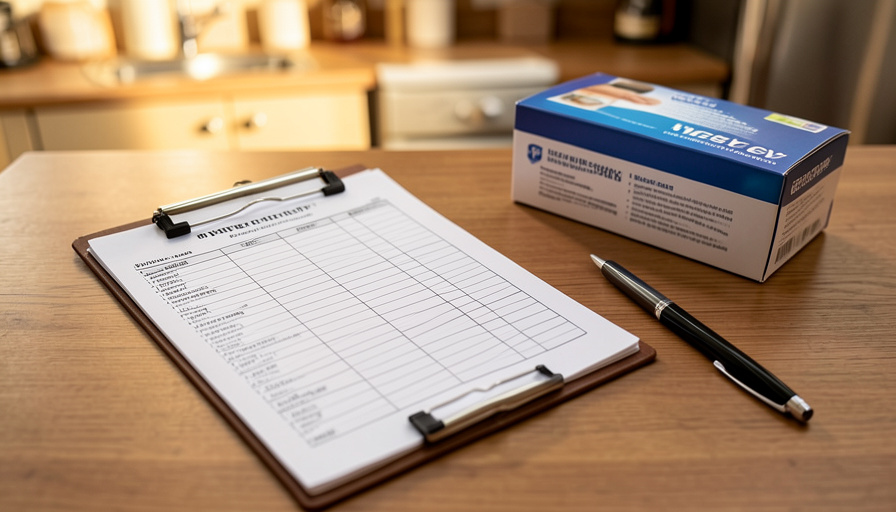
You do not need special software. Make a table, on paper, in a phone note, or in a spreadsheet, with one row per medicine and a column for each field above: name (brand and generic), strength, how often, reason, prescriber, start date, and pharmacy. Keep one master copy, date it, and update it the moment anything changes. A phone note you can pull up at a counter and a printed copy in your wallet cover most situations. The format matters far less than keeping it current and complete.
The brand-and-generic rule that stops most duplicates
If you do only one thing, do this: always write both names. A huge share of accidental double-dosing comes from a patient taking a brand-name drug and its generic at the same time, believing they are two different medicines, because the names look nothing alike. A list that shows both names side by side lets you, a pharmacist, or a doctor instantly see that two prescriptions are the same drug. This one habit prevents the most common and most avoidable duplication there is.
How to use the list to actually prevent duplicates
A list in a drawer helps no one. Bring it to every appointment, even a quick visit for a cold, and to any new pharmacy, and hand it over. A useful line to say is simply, “Here is everything I take. Is anything on here a duplicate or a problem together?” Providers who check a medication list against your conditions catch overlaps that would otherwise slip through, and one study found this kind of check cut duplicate-ingredient errors substantially. Update the list after every appointment, hospital stay, or change, because an outdated list is almost as risky as none.

Extra safeguards worth adding
A few habits make the list even stronger. Use one pharmacy whenever you can, so its software backs up your list with an automatic check. Ask your pharmacist for a medication review, sometimes a free service, where they go through everything you take for duplicates and interactions. Share a copy with a family member or caregiver in case of an emergency. And when you switch pharmacies, give the new one your full list, not just the prescriptions you are transferring, so they start with the whole picture rather than half of it.
This article is general information, not medical advice. Do not start, stop, or change any medication based on it. Always confirm your medications and any concerns about duplicates or interactions with your doctor or pharmacist, who can review your full history.
Frequently asked questions
How does a medication list prevent duplicate prescriptions?
It gives every doctor and pharmacist the complete picture of what you take, which no single pharmacy has once your prescriptions are split up. Listing both brand and generic names lets them spot when two prescriptions are actually the same drug, preventing accidental double-dosing.
What should a medication list include?
Every medicine with both its brand and generic name, the strength, how often you take it, the reason, the prescriber, the start date, and the filling pharmacy, plus all over-the-counter products, vitamins, and supplements, and your allergies with their specific reactions.
Why is listing both brand and generic names important?
Because a common cause of double-dosing is taking a brand-name drug and its generic at once, thinking they are different medicines when the names look unrelated. Showing both names together makes an accidental duplicate obvious at a glance.
What happens to duplicate checks when I switch pharmacies?
They weaken. A single pharmacy’s software checks every new prescription against your others, but that only works when all your prescriptions run through it. After a switch or across multiple pharmacies, your own up-to-date list becomes the main safeguard.
Should I bring my medication list to every appointment?
Yes, to every appointment and any new pharmacy, even for minor visits. Hand it over and ask whether anything is a duplicate or interacts. Providers checking the list against your conditions catch overlaps that would otherwise be missed, and keep it updated after each visit.
The bottom line
Switching pharmacies quietly removes the automatic check that guards against duplicate prescriptions, and only a complete, current medication list puts that protection back. List both the brand and generic name of everything you take, include the strength, schedule, reason, prescriber, and pharmacy, add your supplements and allergies, and carry it to every appointment. Then ask the simple question: is anything here a duplicate? For more on managing ongoing conditions, see our guide to what treatable but not curable really means, and browse The Other Stream’s Health section.
Related Posts