How to tell a normal renter ID check from a rental application scam, the eight red flags that give fake landlords away, and what to do if you already sent a photo of your license.
The listing looks right. The rent is a little low, the photos are bright, and the “owner” answers texts within minutes. Then comes the ask: before the showing, please send a photo of your driver’s license and a selfie holding it, “for security.” It sounds responsible, which is the point. A rental application scam often starts with a request that real landlords also make, so the question is not whether anyone should ever see your ID. It is who is asking, where you are sending it, and what happens next.
The Short Version
Real landlords and property managers do verify ID, but they do it through their own application or screening portal, usually after you have seen the place. A request for an ID photo or selfie by text, email or social media, before a tour and from someone who cannot meet you, is a strong sign of a scam. So are payment by wire or Zelle, below-market rent and pressure to decide fast.
Table of Contents
When a landlord asking for a picture of your ID is normal
Identity checks are a normal part of renting, and many landlords now confirm that the applicant matches the ID. In April 2026, a Florida renter on Reddit asked why several apartments wanted a live photo on top of a license image, and learned the properties used a third-party ID service that runs a facial scan. Self-tour services work the same way, asking for ID and a selfie inside their own app before they release a door code.
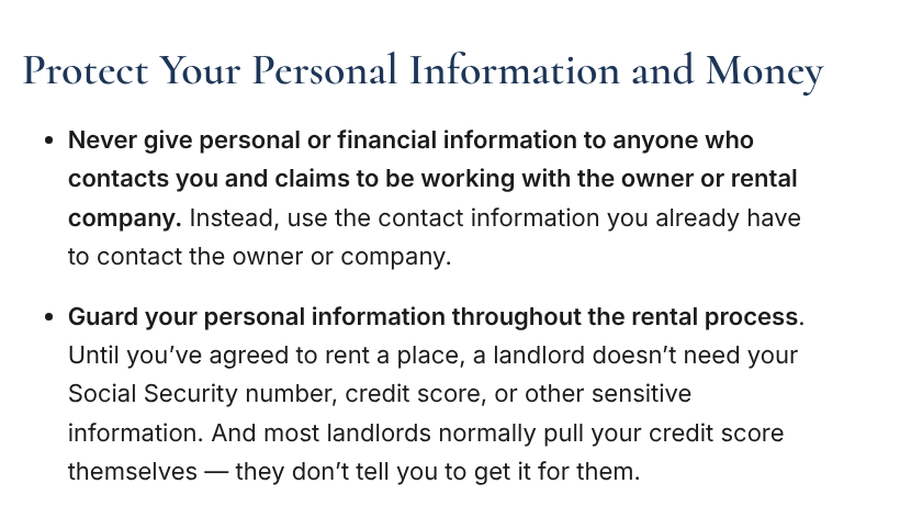
The FTC’s rental listing scams guide draws the line on timing. Until you have agreed to rent a place, a landlord does not need your Social Security number, credit score or other sensitive information, and most landlords pull credit themselves rather than asking you to send it.
How the same request compares:
| Request | Usually normal when | Red flag when |
|---|---|---|
| Photo of your ID | Uploaded to the company’s own application or screening portal | Sent by text, email or a social media DM before any tour |
| Selfie with your ID | Captured live inside a verification or self-tour app | A photo of you holding your ID, sent to a person |
| Social Security number | Entered in a screening form after you choose to apply | Asked for in a message before you have seen the home |
| Credit score | The landlord pulls it through a screening service | You are told to buy a report or send screenshots |
8 signs a rental application scam is after your ID
1. The ID request arrives by text or DM before you have seen the place
The FTC tells renters never to give personal or financial information to anyone who contacts them claiming to work with the owner or rental company, and to use contact details they already have instead. In April 2026, a Phoenix renter who had met a Facebook Marketplace room owner in person still asked Reddit whether to text over a license photo. Commenters said text is not a safe channel and a live tour matters more.
2. They want a selfie of you holding your ID
A photo of your face next to your license is what a scammer needs to pass for you, or to pose as a trustworthy “landlord” with the next victim. In September 2026, a Reddit user who sent an ID photo and a selfie to a stranger online said the person sent the pictures back after they deleted them, to show they had already been saved. One commenter warned that scammers reuse ID photos as proof they are “legitimate” when they target other people.
3. You are asked for your SSN or credit score up front
According to the FTC, some rental scammers ask for a Social Security number, a driver’s license photo and paystubs on a fake application, then use that information to steal identities. Others say you must prove creditworthiness with screenshots of your credit scores, when the real goal is to sign you up for a paid credit monitoring service with recurring fees.
4. The “owner” is away and sends you a self-tour code
The FTC warns that fake landlords copy listings from owners who use self-tour services to look legitimate. In September 2026, a renter on Reddit described booking through a fake landlord who passed along a temporary door code from Invitation Homes’ own tour system, then collected payment by app. Rental software company RentEngine reported in February 2026 that scammers now send victims the real property manager’s scheduling link, so the victim passes every ID and selfie check with their own documents. Passing an ID check proves who you are. It says nothing about who is texting you.
5. The application lives somewhere other than the landlord’s own website
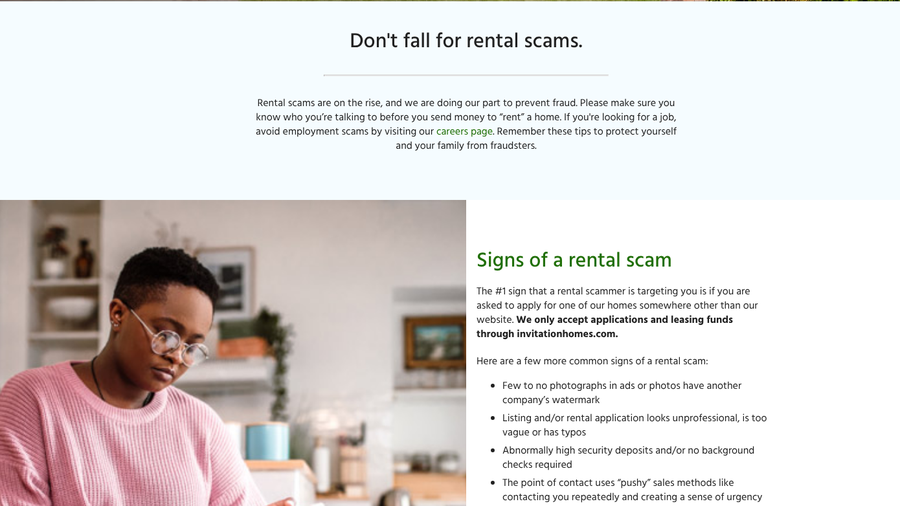
Invitation Homes’ fraud prevention page says the number one sign of a rental scam is being asked to apply for one of its homes anywhere other than its website, and that it does not lease through Craigslist, Facebook, TikTok or other social media sites. A Google Form, a PDF sent by email or a “quick application” link from a stranger should make you stop.
6. Payment has to go by wire, Zelle or gift card
Invitation Homes treats requests to pay by wire, gift card or apps such as Zelle and Venmo as scam signs, and the FTC compares money sent that way to cash. In August 2026, a San Francisco renter wired $18,600 for first month’s rent, last month’s rent and a deposit after touring a real open house. The owner had shown the unit, but a Craigslist copy of the Zillow listing had routed every email, the lease and the money to someone else.

7. The rent is low and the timeline is short
The FTC flags rent that is far below comparable listings and any push to decide quickly. The September 2026 Reddit victim assumed the price was low because the “landlord” lived in another state and did not know local rents.
8. The names, listings and records do not match
Search the address with the owner’s or company’s name. The FTC says other ads for the same address under a different name are a sign of a scam, and suggests checking county tax assessment records to see who owns the property. Matching records still do not prove who you are paying. A July 2026 post on X described a Lake Tahoe house whose owner bolted a permanent sign to it for scam victims who keep arriving. In that scam, the address and county records check out. Only the person collecting the money is fake.
How to share your ID safely when the rental is real
- Confirm the landlord first. Match the owner name to county records, or find the management company’s website yourself and call the number listed there.
- Apply only through the official portal. Upload your ID where the landlord’s own site sends you, not to an email address or phone number from the listing.
- Hold back the extras until you choose to apply. Your SSN and income documents belong in a screening form after you have seen the home and decided to go ahead.
- Mark any image you do have to send. A note across the photo such as “For rental application at [address], [date]” makes it harder to reuse.
- Keep proof of address separate. If a landlord also wants proof of address, our guide to proof of residence documents covers which ones are widely accepted.
Already sent a photo of your ID? Do this today
Speed matters more than embarrassment. IdentityTheft.gov’s steps for exposed information say to report driver’s license exposure to your nearest DMV branch, which may flag the license number or suggest a duplicate. Then:
- Freeze your credit with Equifax, Experian and TransUnion, and check your credit reports for accounts you do not recognize.
- If you paid by wire, Zelle or another app, call your bank or the app’s support line right away and ask about a recall or fraud claim.
- Report the scam to local police, the site where the ad appeared and the FTC at ReportFraud.ftc.gov.
- Save every message, listing screenshot and payment receipt, in case your ID later turns up in someone else’s scam.
Once you do find a real place, read the fine print before you sign. Our list of lease addendum clauses that are red flags is a useful check at renewal time too.
This article is general information, not legal or financial advice. Scam tactics change and your situation may differ, so verify any landlord through official records and, if you have lost money or exposed sensitive information, contact your bank and the appropriate authorities.
At a Glance
- Real landlords verify ID through their own portal or screening service, usually after a tour.
- An ID photo or ID selfie requested by text or DM before a showing is a major warning sign.
- Passing a self-tour ID check does not prove the person texting you is the landlord.
- Never pay a deposit by wire, Zelle, gift card or crypto to someone you have not verified.
Frequently Asked Questions
Is it safe to send a picture of my ID to a landlord?
It is safe to share a picture of your ID with a landlord only after you have verified who they are and only through their official application or screening portal. Avoid sending ID photos by text, email or social media, especially before you have seen the property.
Why do some rentals ask for a selfie with my ID?
Some property managers and self-tour services use ID verification tools that capture a live selfie inside their own app and match it to your license. A request to photograph yourself holding your ID and send it to a person is different, and it is a common scam tactic.
How do I know if a rental application is fake?
A fake rental application usually comes as a link, form or PDF from a stranger rather than through the management firm’s website. Other signs include requests for your SSN before a tour, payment by wire or cash app, and a landlord who cannot meet you.
What should I do if I sent my ID to a rental scammer?
Report the exposure to your DMV, freeze your credit with all three bureaus and watch your credit reports. Report the scam to the FTC at ReportFraud.ftc.gov, local police and the listing site, and contact your bank if you sent money.
Are Zillow rental listings ever scams?
Scammers copy real listings from Zillow and other sites, then repost them elsewhere with their own contact details. Contact the owner through the original listing or the management company’s website, and never pay anyone you have not verified.
The Bottom Line
Treat your ID like a key to your finances, because to a scammer it is one. Before you send it anywhere, confirm the landlord through public records or the management firm’s own website, see the home in person or through its official tour system, and apply only through the official portal. If any step in that chain happens by text, DM or wire transfer instead, stop and walk away, even if the apartment is perfect.
Related Posts