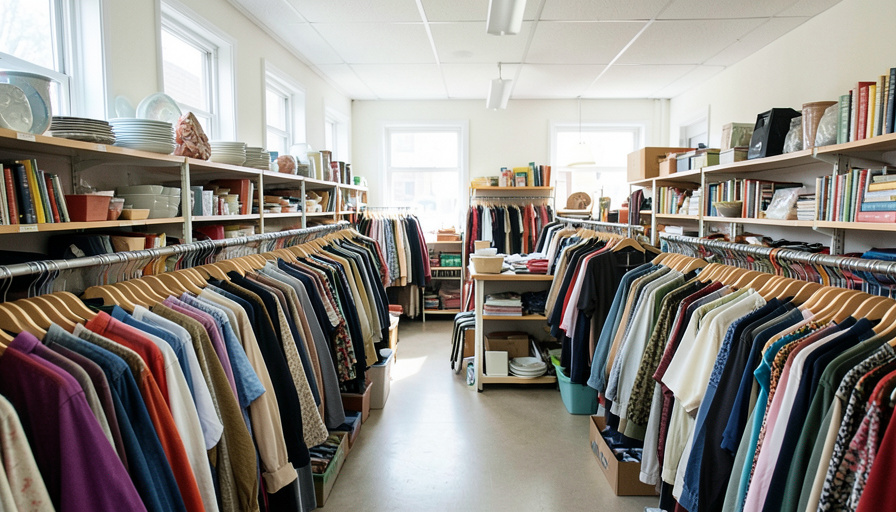
Every few weeks a video goes viral: someone pulls a designer jacket or a rare vinyl out of a Goodwill bin and the comments fill with people vowing to start flipping. Then they hit the store and learn the rules are not what the videos suggest.
Thrift reselling is a real and legal way to make money, and the “surprise find” clips are not fake. But the day-to-day mechanics, whether you can hold an item, whether you can return a mistake, how many of something you can buy, trip up new resellers constantly. A lot of that confusion comes from one fact people miss: there is no single Goodwill. So before you build a side hustle on thrift flips, here is what the rules actually allow, and where they bite.
In brief
Yes, you can legally resell what you buy at Goodwill or any thrift store, and Goodwill itself resells donations online. The catches are practical: most stores give store credit only on returns within about 7 days, not cash refunds; holds are usually reserved for large furniture, not the good small finds; and policies vary widely because each Goodwill region is its own independent organization. Know your local store’s rules, because the one across town may run completely differently.
Table of Contents
Yes, reselling thrift finds is allowed
Start with the question that worries new flippers most, because the answer is reassuring. Buying an item at a thrift store and reselling it for a profit is completely legal, and no store rule prohibits it. Once you pay for something, it is yours to do with as you like. Goodwill is not being cheated by this either. It is a nonprofit that funds job programs by selling donated goods, and it runs its own resale operation online through sites like ShopGoodwill, so the organization is a reseller too. The idea that flipping thrift finds is against the rules is a myth. The real limits are about how you shop, not whether you can sell.
The return policy is stricter than shoppers expect
This is where most people get caught, especially resellers who buy fast and check items later. Goodwill does not give cash refunds. Most locations offer store credit only, and only within a short window, commonly around 7 days, with the receipt and any original tags still attached. Some regions are more generous, stretching to 30 days of store credit and even capping total returns at a set dollar amount per year, while others take no returns at all on certain categories. Because you cannot try before you buy and electronics are sold as-is, the smart move is to inspect carefully on the floor. Plug in the lamp, check the zipper, look for the crack. Assume every purchase is close to final and you will not be surprised at the counter.
Holds usually apply to big items, not the good finds
New resellers often ask whether they can have a clerk hold a rack of finds while they keep shopping or run to get cash. Generally, no. Most Goodwill stores operate first-come, first-served on small goods, and the treasure you set down is fair game for the next shopper. Where holds do exist, they tend to cover large items like furniture, and even then only for a short, agreed pickup window before the item goes back out for sale with no refund. The practical takeaway is blunt: if you want it, put it in your cart and keep it there. Do not stash items around the store expecting them to wait for you.
Quantity limits and the crowd problem
As thrift reselling has grown, some stores have added friction around it, and this is where the viral-crowd stories come from. During color-tag sales and half-price days, individual locations sometimes cap how many of a category you can buy, or limit cart sizes, to keep one reseller from clearing a rack before regular shoppers get a look. None of this is a national policy, because there is no national counter to set one. It is a store-by-store, manager-by-manager response to demand. If you shop the same locations often, the fastest way to learn the limits is to ask an employee directly rather than discovering them at checkout with a full cart.
The ethics question, answered honestly
There is a real debate about whether flipping thrift finds takes deals away from people who shop secondhand out of need, and it deserves a straight answer rather than a dodge. Reselling is legal and Goodwill benefits from the sale either way, but the criticism is not baseless. Clearing an entire rack of a size or category, camping the door on sale days, or buying out affordable basics to mark them up does make the store worse for people relying on it. The reasonable middle is easy to live by: buy the genuinely undervalued and overlooked items, the mispriced designer piece or the collectible nobody recognized, and leave the everyday essentials for everyday shoppers. You can run a thrift side hustle without being the reason a store adds limits.
How to thrift smart without getting burned
Put the rules together and a simple playbook falls out:

- Learn each store’s return window and whether it is store credit or nothing, and keep your receipts.
- Inspect everything on the floor, since most sales are effectively final and electronics are as-is.
- Cart anything you might want, because holds on small items rarely exist.
- Ask about quantity limits before big sale days instead of at the register.
- Buy the overlooked treasures, not the affordable basics other shoppers depend on.
Do that and the gap between the viral videos and the reality mostly closes. The finds are real; the discipline is what turns them into a business.
This article is general information, not legal or financial advice. Thrift store policies vary by location and change often, so confirm the current rules with your specific store, and check local regulations before running any resale business.
Frequently asked questions
Is it legal to resell items bought at Goodwill?
Yes. Once you buy an item it is yours, and reselling it for a profit is legal with no store rule against it. Goodwill itself resells donated goods online, so the practice is not something the organization opposes.
Can you return items to Goodwill?
Usually for store credit only, not a cash refund, and within a short window that is often around 7 days with a receipt. Policies vary by region since each Goodwill is independent, and some categories or stores accept no returns at all.
Does Goodwill hold items for you?
Rarely for small goods, which are first-come, first-served. Holds are more common for large items like furniture, and only for a short agreed period before the item goes back on sale. If you want a small find, keep it in your cart.
Does Goodwill limit how much you can buy?
Sometimes, at individual stores during sales, to stop one reseller from clearing a rack. There is no national limit because each region operates independently. Ask the store directly if you plan to buy in volume on a sale day.
Is reselling thrift store finds unethical?
It is legal, and opinions differ. The fair approach is to buy genuinely undervalued or overlooked items rather than clearing out affordable basics that people shopping out of necessity rely on. Done that way, it does not deprive other shoppers.
The bottom line
Reselling thrift finds is a legitimate side hustle, and the viral scores are not staged. What the videos leave out is the fine print: store credit instead of refunds, no holds on the small treasures, quantity caps that appear without warning, and rules that change from one Goodwill region to the next. Learn your local store, inspect before you buy, and shop in a way that leaves room for everyone else, and the hobby holds up as a business. For more on side hustles and small-business ideas, browse The Other Stream’s Business section.
Related Posts