Steam’s rules keep colliding with how the store actually gets policed. Here is what changed, what the rules really say, and how enforcement works in practice.
The latest round started the way most Steam controversies do now: one player did the work Valve’s moderation team is supposed to do. In early September, a widely shared post on r/Steam laid out a review-manipulation pattern the poster had traced across several small games. A few days later, some of the flagged reviews carried a new notice: “This review has been banned by a Steam moderator for violating the Steam Terms of Service.”
That felt like a win, until people read the rest of the thread. The same user found roughly 170 accounts that had reviewed two obscure titles within a single two-day window, each account showing exactly 0.1 hours of playtime and nearly identical review histories. The post cleared 2,000 upvotes fast. One comment summed up the mood better than any headline: Steam’s moderation system, it said, acts like “we’re not touching this unless a redditor does the detective work first.”
The Short Version
Steam moderation standards are under renewed pressure in 2026 because enforcement looks inconsistent, not because the written rules are missing. Valve has clear policies against harassment, paid reviews, and coordinated score manipulation. The complaint is about scale and follow-through: a store adding roughly 2,000 games a month struggles to police reviews, forums, and store pages quickly, so obvious abuse often sits untouched until a user, a developer, or a reporter forces the issue.
Table of Contents
What set off the latest complaint wave
Two things stacked on top of each other. The September review-bot thread was the spark, but the tinder had been drying since winter. In February, The Guardian ran a front-page investigation in which developers described Steam reviews and forums as a “battleground for some kind of culture war,” with examples of antisemitism, transphobia, and coordinated brigading that had nothing to do with the games themselves.
One case from that reporting stuck with people. Independent developer Nathalie Lawhead said she had to reach a Valve employee personally to get a review taken down after it referenced a sexual-assault allegation. Rule-violating content, developers told the paper, was sometimes “cleared” by moderators on the first pass, which effectively ended the appeal. Similar dev accounts were picked up by outlets like HotHardware, which documented a rise in hate speech and weak enforcement across store pages.
Then there was the store side. A crude “Plantation Simulator” title with explicit slavery mechanics stayed live for more than ten days in May before any changes were made, which fed a running complaint: sexual content gets restricted quickly, while games that plainly break the hate-speech rules can slip through. Whether or not you think those two things are comparable, the perception of a double standard is now baked into the conversation.
What Steam’s rules actually say
Here is the part that surprises casual users. Steam’s rules are not vague. The Online Conduct and Rules and Guidelines pages spell out prohibited behavior in fairly concrete terms: no harassment or threats, no doxxing or impersonation, no illegal content, and no manipulating Steam through fake accounts or artificially generated reviews.
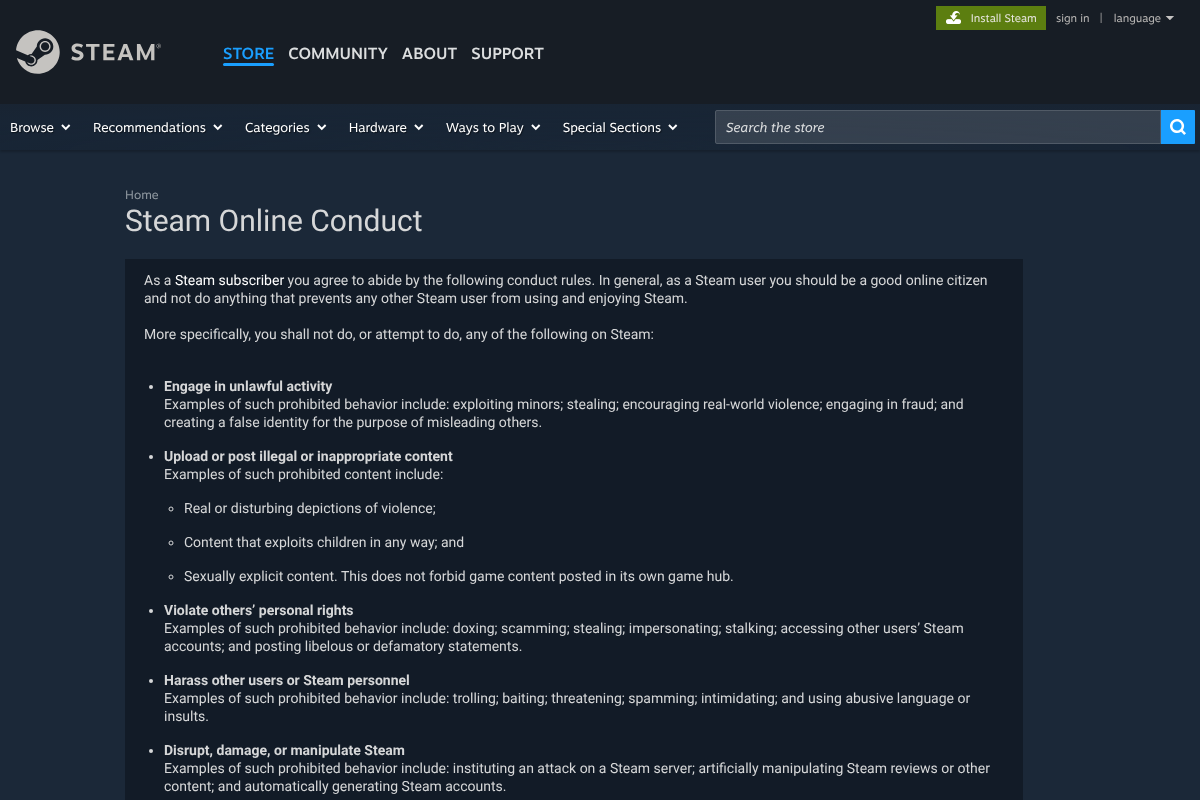
The review-specific guidelines go further. Reviews are not supposed to carry abuse aimed at players or developers, they cannot be used for commercial promotion, and scores are not to be influenced through multiple accounts, coercion, or payment. In other words, that 170-account cluster with 0.1 hours of playtime was not a gray area. It was a textbook violation of a rule Valve already had on the books.
So the frustration is specific: the rules exist and still go unenforced until something goes viral. That distinction matters for anyone trying to understand this story, because it changes where the fix has to come from.
What actually changed
Valve has not ignored the pressure. The company overhauled its community rules with much more granular prohibitions, adding specificity about what counts as off-topic, abusive, or manipulative behavior, as PC Gamer reported. On paper, that is a real tightening.
Actually, before I get to the effect of those changes, it is worth naming the structural problem they run into. SteamDB data suggests Steam is now absorbing something like 2,000 new releases a month, and thousands of games shipped in 2026 alone. Written rules scale instantly. Human review does not. A more detailed rulebook does little for a developer stuck in an appeal queue or a shopper reading a review section that has clearly been gamed.

How enforcement really works
Enforcement on Steam tends to feel binary, and that is most of the complaint. A review or comment is either left alone or removed, and when a moderator bans a review, the reviewer sees a fixed notice and cannot edit it. Developers describe a similar wall on the other side: once a report is “cleared,” there is often no obvious path to escalate short of going public or emailing someone at Valve directly.
Review bombing is its own category. Steam does flag unusual review activity with an on-page notice and can exclude off-topic review spikes from a game’s score, which is a genuine tool. But that system targets sudden coordinated waves. It is far less useful against the slow, quiet manipulation the September thread exposed, where a small pile of throwaway accounts pads a niche title’s rating without ever tripping a “bomb” alert.
There is also a market working against the rules. Off-site services have kept selling manipulated Steam reviews, operating outside the platform precisely so Valve’s automated checks are harder to apply. Rules that live on Steam cannot easily reach a transaction that happens somewhere else.
What this means if you buy or build on Steam
For shoppers, the practical takeaway is to read reviews like a skeptic, especially on small or brand-new titles. A few quick checks catch most of the obvious manipulation:
- Look at playtime on positive reviews. A wall of glowing takes with 0.1 or 0.2 hours logged is a red flag.
- Check the review dates. Dozens of reviews posted inside one or two days, then silence, usually means a coordinated push.
- Sort by “Most Helpful” and by “Recent” and compare. If the two lists tell completely different stories, dig deeper.
- Watch for the review-bomb notice Steam adds to a game’s rating history, and read what triggered it before trusting the score.
For developers, the honest advice is less comforting. Document harassment with screenshots and report through the built-in tools, but assume the first “cleared” decision may be the last automated word, and that public escalation still moves faster than the appeal path. That is not how it should work. It is how it currently works. Platform-trust questions like this increasingly overlap with the broader business story of who moderates the marketplaces we all rely on.
What To Know
- The 2026 controversy is about enforcement and scale, not missing rules.
- Steam’s policies already ban harassment, paid reviews, and fake-account score manipulation.
- Valve tightened its written community rules, but human review has not kept pace with roughly 2,000 new games a month.
- Moderation feels binary: content is cleared or removed, with limited appeal.
- Buyers can filter most fake reviews by checking playtime, review dates, and Steam’s review-bomb notices.
Frequently Asked Questions
What are Steam’s moderation rules?
Steam’s Online Conduct and Rules and Guidelines pages prohibit harassment, threats, doxxing, illegal content, and any attempt to manipulate the platform, including fake accounts and artificially generated reviews. Review-specific rules also ban abuse, commercial promotion, and paid or coerced scores.
Can Steam ban a single review, and why?
Yes. When a Steam moderator removes a review for breaking the Terms of Service, the review is replaced with a fixed ban notice and the reviewer cannot edit it. Common reasons include abuse, off-topic content, and coordinated or paid review activity.
What is review bombing, and does Steam remove it?
Review bombing is a sudden, coordinated wave of reviews meant to tank or inflate a game’s score, often over something unrelated to gameplay. Steam does not delete every bombed review, but it flags unusual spikes and can exclude off-topic review periods from a game’s overall rating.
Are paid or bot reviews against Steam’s rules?
They are. Steam’s guidelines explicitly forbid influencing review scores through payment, coercion, or multiple accounts. The challenge is enforcement, since much of the buying and selling happens on off-site services that Valve cannot police directly.
How can I tell if a game’s Steam reviews are fake?
Check the playtime on positive reviews, look for clusters of reviews posted within a day or two, and compare the “Most Helpful” and “Recent” tabs. Very low playtime, tight posting windows, and thin reviewer histories are the most reliable warning signs.
The Bottom Line
The 2026 pressure on Steam is not really a fight about whether rules exist. It is a fight about a store that grew faster than the team meant to police it, and a community that has learned it can force action by turning private complaints into public threads. Until enforcement scales to match the catalog, expect the next viral moderation story to follow the same script, and expect the smartest Steam users to keep reading reviews with one eyebrow raised. For more platform and consumer-tech coverage, browse The Other Stream’s Tech section.
Related Posts