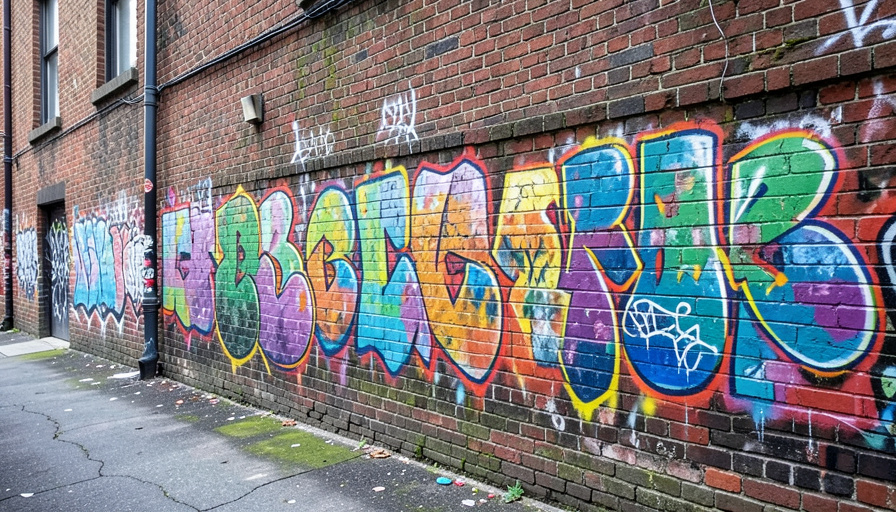
You wake up, walk outside, and there it is: fresh spray paint across your wall. The frustrating twist is not that someone vandalized your property. It is that in many cities, the clock now starts on you, the victim, to clean it up or face a fine.
Graffiti sits on a strange legal fault line. Done without permission, it is a crime committed against you. Yet the law often puts the cleanup burden, and sometimes the bill, on the property owner rather than the person who did it. And in a rarer but stranger case, a mural someone painted on your building might be legally protected, meaning you cannot simply paint over it. Here is how responsibility, cost, and those surprising protections actually break down, so a bad morning does not turn into a worse legal one.
What to know
In most cities, graffiti on private property is treated as a nuisance the owner must remove, often within about 10 days of a notice, or face fines that commonly run from $100 to $300. If you ignore it, the city can remove it and bill you, sometimes placing a lien on the property. The person who sprayed it is criminally liable and can be ordered to pay restitution, but only if they are caught. Separately, a commissioned mural of “recognized stature” can be protected by federal law, so painting over art on your own wall is not always your call.
Table of Contents
Graffiti versus street art: the legal line
The whole question turns on one word: permission. Graffiti applied to a surface without the owner’s consent is vandalism, a criminal offense, no matter how skilled it is. Street art or a mural painted with the owner’s agreement is legal, commissioned artwork. Same spray can, completely different legal category. That distinction decides everything that follows, because the rules for cleaning up an unwanted tag are the opposite of the rules for removing art you invited. If you want the artist’s side of getting that permission right, we covered it separately in our guide on how to legally paint a mural. This piece is about the wall you own.
If your building gets tagged, the clock starts on you
Here is the part that catches owners off guard. Most cities have graffiti abatement or nuisance ordinances that make the property owner responsible for removing graffiti promptly, even though the owner is the victim. Typically the city sends a notice giving you a set window to act, often around 10 days, according to municipal codes like the Los Angeles graffiti removal ordinance. Miss that window and the property can be declared a public nuisance. Many cities soften this by offering free paint, removal kits, or even city crews that will clean it at no charge if you consent, so the first move after reporting a tag is to check what your local graffiti program provides.
Who actually pays for the cleanup
This is the question the viral outrage clips get half right. In practice, the property owner usually pays to remove graffiti from their own building, at least up front. If you do not, and the city steps in to abate it, the city can bill you for its materials, equipment, and staff time, and in many places it can attach a lien to your property until you pay. Commercial owners in particular are often on the hook for full cost recovery. The tagger is legally liable too, and a convicted vandal can be ordered to pay restitution or perform cleanup, but restitution only helps when someone is actually identified and caught, which for a quick overnight tag is often never. So the honest answer is that the cost usually lands on the owner, with the city as a backstop that bills the owner, not a rescuer that pays for it.
The fine for leaving it up
It feels unfair, but leaving graffiti on your wall can cost you directly. Because the ordinances treat lingering graffiti as a nuisance, owners who ignore removal notices face fines that commonly sit in the $100 to $300 range per violation, separate from and on top of any cleanup costs the city recovers. The logic is that visible graffiti invites more of it and drags down a whole block, so cities lean hard on fast removal. Practically, that means the cheapest path is almost always to clean or report it quickly rather than wait and hope it gets ignored.
The twist: you may not be allowed to paint over a mural
Now the strangest corner of this area of law. If the paint on your building is not vandalism but a mural, you might be legally barred from removing it without warning. The federal Visual Artists Rights Act protects certain artworks of “recognized stature” from intentional destruction, and courts have applied it to murals painted on private buildings. The landmark case is 5Pointz in New York, where a developer whitewashed graffiti-art murals he had permitted, and a court awarded the artists $6.75 million in statutory damages for violating the law. The takeaway for owners is not to panic, since most murals never reach “recognized stature,” but to handle commissioned art carefully. If you may want to remove or alter a mural later, get the artist to waive their rights in writing before painting begins, and follow the law’s notice provisions, which can require giving the artist about 90 days to remove or salvage the work.
What to do if you are tagged
Put it together and the response is straightforward:

- Photograph the graffiti first, since a police report can help with restitution and insurance.
- Report it to local police and your city’s graffiti or code program, and ask about free removal or paint.
- Remove or cover it promptly, before any notice deadline turns your loss into a fine.
- Keep records of your cleanup costs in case the vandal is later identified and ordered to pay.
- For any mural you commission, sign a written agreement covering removal rights and VARA waiver up front.
Speed is your friend here. The faster a tag comes down, the less it costs you in fines, in repeat vandalism, and in aggravation.
This article is general information, not legal advice. Graffiti and property laws vary widely by city and state, and VARA questions are fact-specific. Consult your local code enforcement office or a qualified attorney about your particular situation.
Frequently asked questions
Who is responsible for removing graffiti from private property?
Usually the property owner, even though they are the victim. Most cities have abatement ordinances requiring owners to remove graffiti within a set period after notice, often around 10 days, or risk fines and having the property declared a nuisance.
Can a city fine you for graffiti on your own building?
Yes, if you leave it up past the removal deadline in a local ordinance. Fines commonly range from $100 to $300 per violation, and the city can also remove the graffiti itself and bill you, sometimes placing a lien on the property.
Does the person who did the graffiti have to pay?
If caught and convicted, yes. A vandal can be ordered to pay restitution or perform cleanup. The problem is that many taggers are never identified, so in practice the removal cost often falls on the owner regardless.
Can you paint over a mural on your own building?
Not always without care. The federal Visual Artists Rights Act can protect murals of “recognized stature” from destruction, as the 5Pointz case showed. To keep your options open, get a written waiver from the artist and follow any required notice period before removing commissioned art.
What should I do first when my property is tagged?
Photograph it, report it to police and your city’s graffiti program, and ask about free removal or paint. Then clean or cover it promptly, before any notice deadline, and keep your cost records in case the vandal is later caught.
The bottom line
Graffiti law runs on an uncomfortable truth: the wall is yours, so the cleanup is usually your problem, and dragging your feet can turn a vandalism loss into a city fine on top of it. Report it, remove it quickly, and lean on the free programs many cities offer. The one place to slow down is a mural you actually wanted, because federal law may protect it, so put removal rights in writing before the first coat goes on. For more on property rights and everyday legal questions, browse The Other Stream’s Law section.
Related Posts