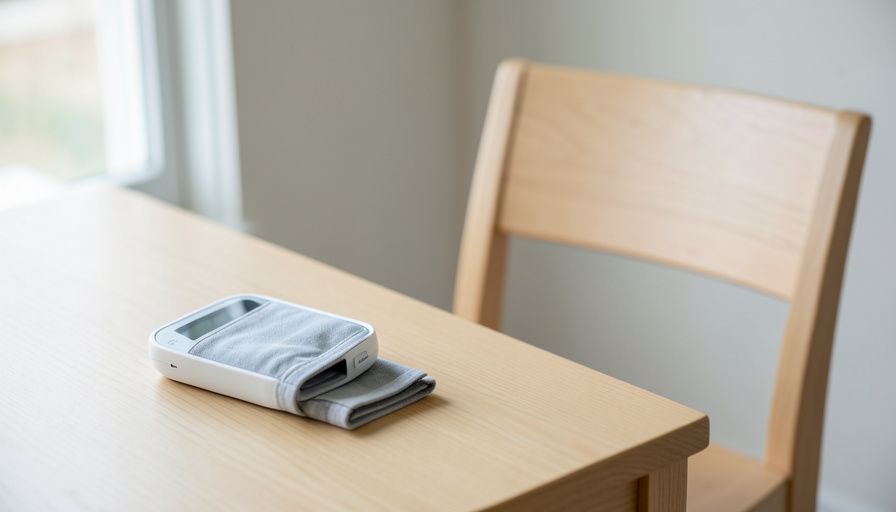
You sit down, wrap the cuff, press start, and the number that comes back is higher than you expected. Before that reading sends you into a spiral, it is worth knowing that home blood pressure numbers are easy to get wrong, and usually not because something changed in your body. The way you sit, where your arm rests, whether the cuff fits, even whether you just talked to someone, can each push the number up by a surprising amount. Stack a few of those together and a perfectly normal reading can look alarming.
None of this is about diagnosing yourself. It is about getting a measurement you can actually trust before you draw any conclusion or worry your doctor with it. Here are nine setup mistakes that commonly throw off a home reading, and the simple fix for each, drawn from how the American Heart Association says it should be done.
The short version
Most wrong home blood pressure readings come from setup, not health. The big ones are using the wrong cuff size, putting the cuff over clothing, and letting your arm hang below heart level, each of which can add anywhere from several to dozens of points. Sitting with your back unsupported, feet dangling, or legs crossed nudges the number up too, as does talking during the reading, taking it with a full bladder, or skipping the few minutes of quiet rest beforehand. The fix is the same routine every time: empty your bladder, rest five minutes, sit with your back and feet supported, put the right-size cuff on a bare arm at heart level, and stay quiet. Then trust the number, and take any real concern to a clinician.
Table of Contents
1. The cuff is the wrong size
This is the most common measurement error and one of the largest. A cuff that is too small for your arm squeezes harder than it should and can overstate your reading by a wide margin, and one that is too large can understate it. The American Heart Association ties cuff size to your arm circumference, so the fix is to measure your upper arm and match it to the cuff sizing on the monitor, rather than assuming the one in the box fits. If your arm is on the larger side, a standard cuff may read high simply because it does not fit, which is worth checking before you trust any number.
2. You put the cuff over clothing
Wrapping the cuff over a sleeve, even a thin one, changes how it grips and can shift the reading by a startling range, in some cases many points. The bunched fabric and the extra layer interfere with the pressure the cuff is trying to sense. The fix is easy: put the cuff on a bare arm. Do not just push a sleeve up either, because a rolled sleeve can act like a tight band above the cuff and skew things further. Slip your arm out of the sleeve so the cuff sits directly on your skin, just above the bend of your elbow.
3. Your arm is below heart level
Arm position is one of the biggest hidden sources of a high reading. If your arm is hanging by your side or resting in your lap rather than supported at the level of your heart, the number can come out well above your true pressure. The reverse also holds: an arm held too high reads low. The fix is to rest your forearm on a table or armrest so the cuff sits roughly level with your heart, and to let the surface hold the weight rather than tensing to hold your arm up yourself. This one change corrects a lot of falsely high readings.
4. Your back is not supported
Perching on a stool or the edge of the bed, with nothing behind you, quietly raises the reading. When your back is unsupported, your body works a little to stay upright, and that effort shows up in the number. The fix is to sit in a chair that supports your back and to actually lean against it, relaxed, for the measurement. It sounds trivial, but an unsupported back is a recognized contributor to a higher reading, and swapping the stool for a proper chair removes it for free.
5. Your feet are dangling or your legs are crossed
What your lower body is doing matters more than most people think. Feet that dangle without touching the floor, or crossed legs, both push the reading upward. Crossing your legs in particular can add a handful of points on its own. The fix is to sit with both feet flat on the floor and your legs uncrossed. If your chair is too tall for your feet to reach, use a footrest or a low stool so your feet are planted. Combined with a supported back, planted feet put your body in the neutral posture the reading assumes.
6. You are talking or on your phone
Holding a conversation, or scrolling and tapping on your phone, during the measurement raises your blood pressure in the moment and inflates the result. Talking especially has a clear effect. The fix is simply to stay quiet and still while the cuff inflates and reads: no chatting, no phone, no answering a question someone just asked. Treat the thirty seconds or so of the reading as a pause. If someone is talking to you, wait until you are done, because even a short exchange can be enough to move the number.
7. You have a full bladder
A surprisingly physical one: needing to use the bathroom can raise your reading, sometimes by around ten points or more. A full bladder puts the body under a small amount of stress that shows up as higher pressure. The fix could not be simpler, which is to empty your bladder before you measure. It is an easy step to overlook when you sit down to take a quick reading, but skipping it is a genuine reason a number can come back higher than your real baseline, so make the bathroom the first stop in your routine.

8. You skipped the rest before measuring
Taking a reading the second you sit down, straight from the kitchen or the front door, captures your body still in motion rather than at rest. Recent activity, and things like caffeine, a cigarette, or exercise in the previous half hour, all push the number up. The fix is to sit quietly for about five minutes before you measure, and to avoid caffeine, smoking, and exercise for at least thirty minutes beforehand. That short settle gives your pressure time to come down to its resting level, which is the number you actually want to track.
9. The cuff is too loose, too tight, or misplaced
Even the right cuff can mislead if it is put on wrong. Too loose and it has to over-inflate, reading high; too tight and it can read low; and placed at the wrong spot on the arm it may not sit over the artery properly. The fix is to position the cuff snugly, with about a finger’s width of room, on your bare upper arm with its bottom edge just above the bend of your elbow, and to follow the arrow or marker many cuffs print to line it up with the artery. A cuff that is level, snug, and correctly placed removes one more reason a reading drifts.
Get the routine right and the number gets honest
The reassuring part is that all nine fixes fold into one short habit. Empty your bladder, skip caffeine and exercise for the half hour before, then sit for five quiet minutes in a chair with your back supported and your feet flat. Put the right-size cuff on your bare arm, snug and just above the elbow, rest that arm at heart level on a table, and stay silent while it reads. Take two or three readings a minute apart and note them. Done the same way each time, your home numbers become something you and your clinician can actually rely on. For the official step-by-step, the American Heart Association’s home monitoring guide and the CDC’s measuring instructions are worth a look.
This article is general information about measurement technique, not medical advice, and it is not a guide to diagnosing or treating high blood pressure. Do not change any medication or treatment based on a home reading. A single number, high or low, is not a diagnosis, so share your home readings with a doctor or other qualified clinician, who should interpret them and address any concern. If you have symptoms of a hypertensive emergency, such as a very high reading with chest pain, shortness of breath, or vision changes, seek emergency care immediately.
Frequently asked questions
Why is my home blood pressure reading higher than at the doctor’s office?
Often it is a setup difference. At home people commonly take the reading over a sleeve, with an unsupported arm or back, feet dangling, or right after activity, all of which raise the number. A clinic follows a stricter routine. Match that routine at home, bare arm at heart level, back and feet supported, quiet and rested, and the gap usually shrinks. Some people also read higher at the office, so share both with your clinician.
How much can bad technique change a reading?
A lot. An ill-fitting cuff or one over clothing can shift a reading by many points, an unsupported arm below heart level can add around ten or more, and a full bladder or talking each add several. Because these stack, poor setup can make a normal reading look high. That is why matching the recommended technique matters before you draw any conclusion from the number.
Does cuff size really matter that much?
Yes. Using the wrong cuff size is the most common measurement error, and a cuff that is too small can substantially overstate your reading while one too large can understate it. The American Heart Association sizes the cuff to your arm circumference, so measure your upper arm and match it to the monitor’s sizing rather than assuming the included cuff fits your arm.
Which arm should I use, and how many readings?
Use the same arm each time for consistency, and if your clinician found a difference between arms, use the one they advised. Take two or three readings about a minute apart at the same time of day, and record them. Averaging several correctly taken readings gives a more reliable picture than any single measurement, which can vary for many ordinary reasons.
When should I be concerned about a home reading?
First, confirm the reading with correct technique, since setup errors cause many scary numbers. If accurate readings are consistently high, or if a very high reading comes with chest pain, shortness of breath, weakness, or vision changes, treat that as urgent and seek emergency care. For anything short of that, bring your recorded readings to a clinician, who can interpret them properly rather than you acting on a number alone.
The bottom line
A wrong home blood pressure reading is far more often a setup problem than a health one. The cuff size and placement, your arm and back and feet, your bladder, your rest, and even whether you were talking each move the number, and they add up fast. Build the whole routine into one repeatable habit and take a few readings the same way each time, and you will get numbers worth trusting. Then let a clinician, not a single measurement, tell you what they mean. For more on staying well day to day, browse The Other Stream’s Health section.
Related Posts